
Engineering Manufacture OCR R109 Practice Test
$69.00
- Buy to unlock unlimited access to all Quiz questions and Answers in this Quiz.
- After purchase you can print a PDF of the whole quiz at any point. The PDF will contain the questions and the correct answers.
About this Exam
The OCR R109 unit, officially titled "Engineering materials, processes and production," is a crucial mandatory component of the OCR Level 1/2 Cambridge National in Engineering Manufacture qualification. This course is primarily designed for students with a keen interest in the practical and theoretical aspects of engineering and manufacturing. This unit provides a fundamental understanding of how materials are selected, the varied processes used to shape them, and the considerations for safe and efficient production. It serves as an excellent stepping stone for anyone aspiring to build a career in the dynamic world of manufacturing, engineering technology, or related trades. The combination of knowledge and its practical application makes this unit highly relevant and engaging for young learners and those seeking foundational engineering skills.
Ready to test your knowledge?
Buy Now to Access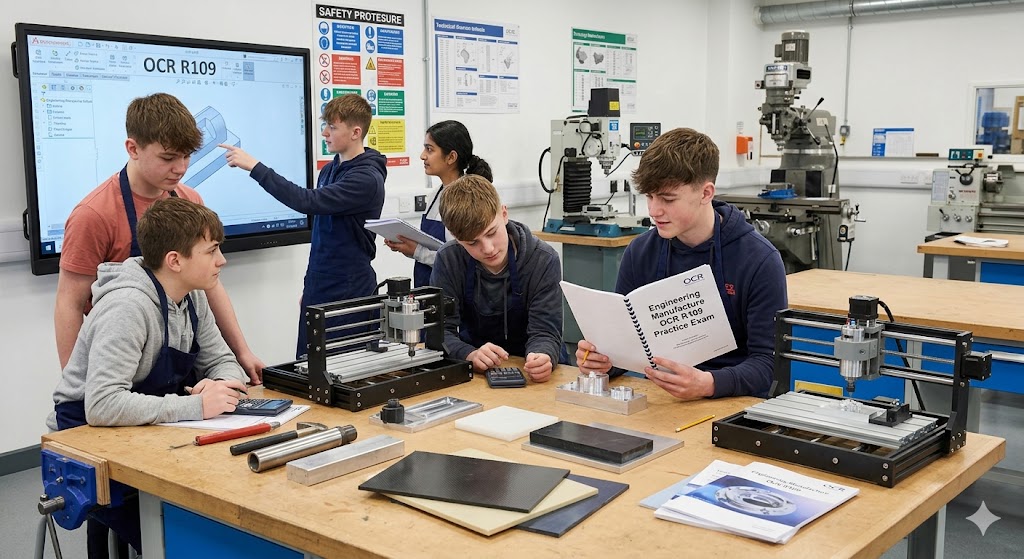
Additional Information
What the Course Entails and Exam Details
The OCR R109 course covers a comprehensive set of topics that lay the groundwork for modern engineering manufacturing. Students will delve into:
Engineering Materials: Understanding the properties, characteristics, and practical applications of various materials, including ferrous and non-ferrous metals, alloys, polymers (plastics), ceramics, composites, and even modern and emerging smart materials. Learners will explore concepts like conductivity, hardness, malleability, and durability.
Engineering Processes: Gaining knowledge and theoretical understanding of different hand skills and machine skills. This includes traditional methods like casting, joining, and machining using lathes and milling machines, alongside more modern techniques such as computer numerical control (CNC) and rapid prototyping.
Developments in Processes: Exploring the evolution and modern applications of manufacturing technologies, including automation, sustainable practices, and the impact of computer-aided design and manufacture (CAD/CAM).
Safe Use of Tools & Equipment: Emphasizing crucial health and safety protocols within an engineering workshop environment. This includes risk assessment, the proper use of personal protective equipment (PPE), and understanding the features and controls of various machinery and tools.
The Final Exam for R109 is a set written paper that is externally assessed. It typically has a duration of approximately one hour or slightly longer, depending on the specific examination series. The exam paper features a variety of question types, including short-answer questions, longer written responses, and questions designed to assess the quality of written communication. It is a mandatory, examined unit, and the marks contribute to the overall Level 1 or Level 2 Cambridge National grade (Pass, Merit, Distinction, Distinction*). There is no single "passing score" for the exam itself; rather, performance determines the level of the unit qualification and its contribution to the final certification.
What to Expect in the Final Exam
Successful candidates for the R109 exam should prepare for a range of testing formats and a focus on both knowledge and its application. You can expect:
Multiple-Choice & Short-Answer Questions: Testing your fundamental knowledge of material properties, process definitions, safety signs, and basic engineering concepts. These often require concise, specific answers or selections from options.
Extended Writing Questions: Questions requiring detailed descriptions, explanations, and analyses of processes, material choices for specific applications, or comparisons of different manufacturing methods. These require structured responses and demonstrate a deeper understanding and an ability to articulate complex concepts.
Synoptic Questions: This means the exam may test your ability to connect knowledge from across the entire R109 syllabus, and potentially apply concepts from other units you have studied, reflecting real-world engineering problem-solving.
Focus on Practical Examples: Many questions will present practical engineering scenarios and ask you to identify appropriate materials, processes, or safety measures, underlining the importance of the practical experience gained during the course.
Time Management is Crucial: With a set duration, candidates must learn to manage their time effectively, ensuring enough time is allocated to each section, particularly the extended writing components.
How to Study and Exam Centers
A strategic approach to studying, combining theoretical knowledge with practical understanding, is key to success in the OCR R109 exam.
Utilize Specimen Papers & Mark Schemes: These are invaluable resources. Practicing with past papers will familiarize you with the question formats, timing, and typical content. Reviewing the mark schemes will show you what examiners are looking for and how to structure high-scoring answers.
Review Examiner Reports: These reports detail common errors and strong performance areas from previous exams, providing valuable insights into what to avoid and what to focus on.
Engage with Practical Work: The course content is rooted in practical application. Regular practical work in the workshop will significantly enhance your understanding of material properties, the feel of tools, and the sequence of manufacturing processes. Connect your practical experience to the theoretical principles.
Consolidate Class Notes & Resources: Regularly review your class notes and use recommended textbooks, online resources from OCR, BBC Bitesize, and relevant engineering websites. Focus on key definitions, safety procedures, and clear explanations of processes and materials.
Active Learning Techniques: Use flashcards for material properties and process terms, create mind maps for different material families and process sequences, and test yourself with short quizzes and summary exercises.
Clarify Health & Safety: Ensure you have a flawless understanding of all relevant health and safety rules, equipment, and protocols.
Regarding Exam Centers, the OCR Level 1/2 Cambridge National qualifications, including the R109 unit exam, are typically administered and sat within the authorized educational institution (your school, college, or training center) where you are enrolled in the course. These institutions act as the "centers" and handle the external assessment coordination. They do not generally have public test centers in the same way some professional certifications do. Your teacher or course coordinator will provide all the necessary details on when and where your specific exam will take place within your center.
Job Opportunities from the Course
Completing Unit R109 as part of the OCR Cambridge National in Engineering Manufacture qualification provides a foundational qualification and a pathway into numerous roles and further educational opportunities. Successful completion unlocks potential careers such as:
Engineering Apprentice (Manufacturing/General)
Trainee/Assistant Engineering Technician
Junior CNC/Machine Operator Apprentice
Manufacturing Production Operative
Entry-Level Quality Control Assistant
Apprentice CAD/CAM Technician
Fabrication Trainee
Assembler/Assembly Worker in Engineering
Frequently Asked Questions
Reviews
5.0
Based on 0 reviews
Leave a Review
No reviews yet. Be the first to review!