
Engineering Utilities 2 – Mechanical Practice Exam
$69.00
- Buy to unlock unlimited access to all Quiz questions and Answers in this Quiz.
- After purchase you can print a PDF of the whole quiz at any point. The PDF will contain the questions and the correct answers.
About this Exam
The Engineering Utilities 2 Mechanical exam is a pivotal certification assessment designed for professionals and students seeking validation of their expertise in building mechanical systems.
This comprehensive exam targets individuals aiming to advance their careers in fields such as mechanical engineering, architecture, facilities management, and construction.
It evaluates crucial knowledge and practical skills required to design, install, maintain, and manage complex mechanical utilities within commercial, industrial, and residential structures, ensuring safe, efficient, and code-compliant building operations.
Ready to test your knowledge?
Buy Now to Access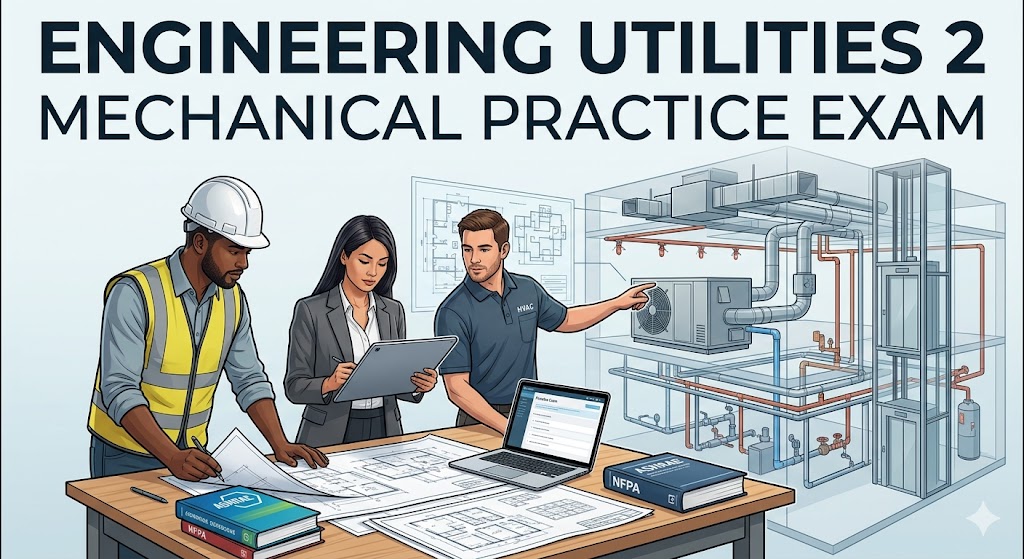
Additional Information
What the Course Entails and Exam Details
A typical Engineering Utilities 2 Mechanical course or self-study program covers an extensive range of subjects related to building services.
Key core topics include:
Heating, Ventilation, and Air Conditioning (HVAC) Systems: Comprehensive design, load calculations, psychrometrics, and equipment selection for various HVAC configurations.
Plumbing Systems: In-depth knowledge of water supply, drainage, waste and vent systems, fixture selection, and plumbing code compliance.
Fire Protection Systems: Principles of fire suppression, including sprinkler systems, standpipes, and fire alarm integration, adhering to safety standards (e.g., NFPA).
Vertical Transportation: Fundamentals of elevators, escalators, and moving walks, covering operation, safety, and capacity planning.
Energy Management and Conservation: Strategies for optimizing mechanical system efficiency, utilizing building automation systems (BAS), and implementing sustainable practices.
Building Codes and Regulations: Understanding and application of relevant national and local codes governing mechanical system design and installation.
The exam itself is rigorous, meticulously assessing proficiency in these critical areas through structured questions and scenarios, ensuring that successful candidates possess the comprehensive skill set needed for real-world application.
What to Expect in the Final Exam
Preparation for the final Engineering Utilities 2 Mechanical exam requires a clear understanding of its structure and expectations.
The examination typically follows a multiple-choice format, designed to test theoretical knowledge and practical application across the syllabus.
The number of questions can vary, often ranging from 80 to 120, to be completed within a specific time limit, commonly between 2 and 3 hours.
A passing score, frequently around 70% or higher, is required to achieve certification.
Candidates may be allowed to reference approved codebooks or standard data sheets during the exam, depending on the specific testing authority's guidelines.
The examination atmosphere is strictly proctored, demanding punctuality and adherence to all test center regulations.
Understanding these details helps manage expectations and focuses study efforts effectively for success on exam day.
How to Study and Exam Centers
Achieving success on the Engineering Utilities 2 Mechanical exam demands a strategic approach to studying.
Systematic Review: Develop a structured study plan, allocating dedicated time to each core topic. Utilize textbooks, lecture notes, and comprehensive review guides.
Practice Exams: Regularly take practice tests, like the one this guide supports. These simulate the exam environment, helping you manage time and identify areas needing improvement.
Codebook Familiarization: Deeply understand and practice navigating relevant building codes (e.g., HVAC, plumbing, fire safety codes). Knowing how to quickly find information is crucial for open-book sections.
Study Groups and Discussions: Engaging with peers or joining online forums can provide diverse perspectives and clarify complex concepts.
Focus on Problem-Solving: Practice calculations related to HVAC loads, plumbing pipe sizing, and fire system requirements, rather than just memorizing facts.
Regarding exam centers, this certification is often administered through various recognized platforms and locations:
Authorized Testing Centers: Many examinations are held at physical locations, including technical colleges, universities, or private testing facilities authorized by the certifying body.
Pearson VUE and Prometric: These global testing providers often host technical and professional certification exams at their secure, proctored centers.
Online Proctored Exams: Increasingly, options exist to take the exam remotely via secure online portals, requiring a compliant computer setup and stable internet connection.
Check the specific engineering board or certification body’s website to locate the most convenient and approved testing method and location for your area.
Job Opportunities from the Course
Completing the Engineering Utilities 2 Mechanical course and passing the exam opens doors to a wide array of career opportunities within the built environment sector.
HVAC Engineer or Designer
Mechanical Systems Engineer
Building Services Engineer
Facilities Manager
Plumbing Designer or Engineer
MEP (Mechanical, Electrical, and Plumbing) Coordinator
Project Engineer (Mechanical focus)
Construction Project Manager
Mechanical Code Inspector
Energy Auditor
Sustainability Consultant
Operations and Maintenance Engineer
Frequently Asked Questions
Reviews
5.0
Based on 0 reviews
Leave a Review
No reviews yet. Be the first to review!