
Entered Apprentice Degree Work Practice Test
$69.00
- Buy to unlock unlimited access to all Quiz questions and Answers in this Quiz.
- After purchase you can print a PDF of the whole quiz at any point. The PDF will contain the questions and the correct answers.
About this Exam
The Entered Apprentice Degree is the foundational step in Freemasonry. It represents the youth of man, focusing on the first stages of moral and intellectual development. The "exam" associated with this degree is not a standard written test, but rather a "proficiency examination" before your local lodge. It is designed for newly initiated candidates who have received the first degree and are seeking to advance to the next stage, the Fellowcraft. Successful completion demonstrates your commitment to the principles of the craft, your ability to memorize essential portions of the ritual, and your understanding of the elementary symbolic teachings of the order.
Ready to test your knowledge?
Buy Now to Access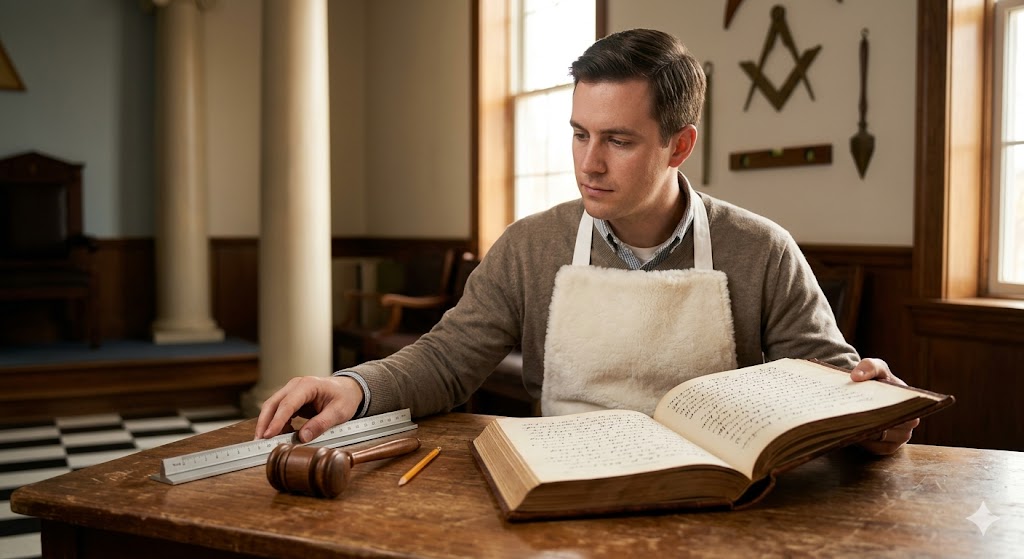
Additional Information
What the Course Entails and Exam Details
The "course" for the Entered Apprentice Degree centers on a structured process of Masonic Education, primarily through a mentor or study partner. While some jurisdictions may provide authorized study guides or ciphers, much of the learning is oral. The proficiency exam tests your grasp of three core areas:
Memorization: You must be able to recite specific, key parts of the Entered Apprentice ritual, including the first lecture or catechism (a series of questions and answers), your obligation, and certain procedural phrases within the lodge. This requires careful practice and retention of precise language.
Symbolism: A deep understanding of the elementary symbols introduced in the degree is crucial. You will be expected to explain the moral and philosophical lessons of the primary working tools of an Entered Apprentice, such as the twenty-four-inch gauge and the common gavel, and the significance of symbols like the lambskin apron, the chalk, charcoal, and clay, and the lights.
Lodge Procedure: You must demonstrate knowledge of the dynamic aspects of the degree, including the signs, tokens (or grips), and words of the degree, and the proper method of entering and moving within an open lodge.
The proficiency exam is an integral part of your progression, ensuring you are "duly and truly prepared" for further light in Masonry.
What to Expect in the Final Exam
Your proficiency examination will take place in an open lodge, specifically on the Entered Apprentice Degree. The process is a formal verification of your readiness. Here is what to expect:
Format: The exam is oral. You will be asked questions from the catechism by an officer of the lodge or your mentor, and you must provide the correct, precise answers from memory. You may also be asked to demonstrate the signs and tokens.
Passing Score: There is no numerical score. The master of the lodge and the members present will listen to your proficiency and collectively judge if it is "satisfactory." The standard is not just perfect recitation, but also a demonstrable understanding of the material.
Time Limits: There are no fixed time limits. You will have as much time as necessary to answer each question, allowing for a thoughtful, deliberate response.
Specific Rules: The examination is conducted within the formal, supportive, and solemn environment of the lodge room. It is a shared experience with your new brothers, who are all invested in your success.
How to Study and Exam Centers
The approach to studying for Masonic proficiency is unique. Here are actionable strategies:
Mentorship is Key: Utilize the mentorship program in your lodge. A seasoned brother will guide you through the memory work, correct your mistakes, and help explain the complex symbols, often through one-on-one sessions.
Repetition and Mnemonics: Regular, frequent repetition is essential for memorizing long passages. Break the ritual into smaller sections and master each one before moving on. Create simple mental associations (mnemonics) to help recall key phrases or lists of symbols.
Practice Out Loud: Reciting the ritual aloud, ideally with your mentor, builds muscle memory and confidence. It also helps you get used to the unique language and cadence of the work.
Contemplate the Symbolism: Don't just learn the words; think about what they mean. Reflect on how the lessons of the working tools can be applied to your daily life. This understanding will make the memory work far more meaningful.
Exam Centers: The "exam center" for the Entered Apprentice Degree Work is your local Masonic lodge. Your proficiency is a demonstration to the body that made you a Mason. You will take the "exam" at a regular or special meeting of the lodge, usually when you and your mentor believe you are ready.
Job Opportunities from the Course
A Masonic degree is not a professional certification and does not lead to job opportunities in the traditional sense. However, "the course" of study for the Entered Apprentice Degree unlocks specific career paths within Freemasonry and provides valuable, transferable skills:
Masonic "Career" Progression:
Advancement: Completion allows you to receive the Fellowcraft Degree, followed by the Master Mason Degree, which makes you a full member of the lodge.
Lodge Leadership: As a Master Mason, you can serve in progressive officer roles, potentially leading to becoming the Worshipful Master of your lodge.
Concordant Bodies: It is the prerequisite for joining other Masonic bodies, such as the Scottish Rite (which has up to 33 degrees) and the York Rite, which offer further systems of philosophical and historical study and leadership.
Transferable Real-World Skills:
Ethics and Integrity: A strong foundation in moral philosophy and principled living, directly applicable to any professional or personal environment.
Leadership: The process of learning and eventually teaching others, and serving in lodge roles, builds effective leadership skills.
Memory and Attention to Detail: The rigorous memory work strengthens cognitive abilities and precision.
Public Speaking: Reciting ritual and participating in lodge discussions enhances oral communication skills.
Civic Engagement: The fraternity emphasizes charity and community service, fostering a sense of civic duty.
Frequently Asked Questions
Reviews
5.0
Based on 0 reviews
Leave a Review
No reviews yet. Be the first to review!