
Enterprise Finish Line Practice Test
$69.00
- Buy to unlock unlimited access to all Quiz questions and Answers in this Quiz.
- After purchase you can print a PDF of the whole quiz at any point. The PDF will contain the questions and the correct answers.
About this Exam
The Enterprise Finish Line certification is designed for ambitious business students and early-career professionals who want to demonstrate their readiness to enter and succeed in a dynamic corporate environment. It serves as a comprehensive "capstone" style assessment, validating the core competencies typically expected at the conclusion of a modern business or entrepreneurship program. This exam is not merely about testing rote memorization; it's a practical evaluation of a candidate's ability to integrate knowledge across multiple business functions, think critically, and make sound decisions in realistic scenarios. Achieving this certification signals to potential employers that you possess not only the theoretical understanding of business principles but also the practical application skills needed to contribute effectively from day one. It is ideal for individuals aiming for entry-to-mid-level management roles, project coordination, business analysis, and other core business functions.
Ready to test your knowledge?
Buy Now to Access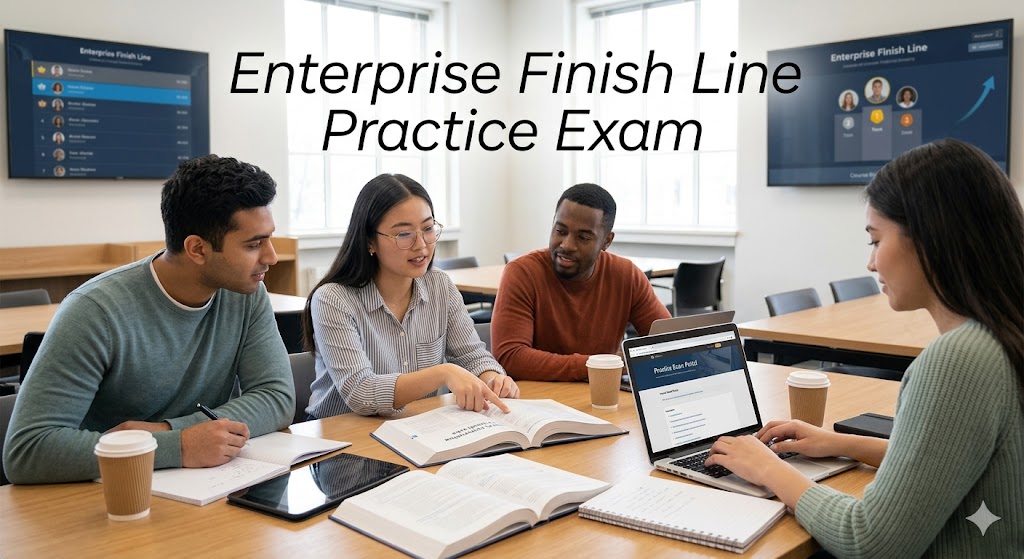
Additional Information
What the Course Entails and Exam Details
This examination is typically the culmination of a dedicated preparation course or curriculum that covers a wide spectrum of essential business topics. The course aims to practicalize and synthesize learning, ensuring that students can apply concepts in a simulated or case-study environment. Key domains and skills covered throughout the course and in the exam include:
Strategic Management & Planning: Understanding competitive analysis, setting organizational goals, and formulating effective business strategies.
Business Operations & Supply Chain: Managing processes, improving efficiency, understanding logistics, and optimizing operational workflows.
Financial Fundamentals: Interpretation of basic financial statements, budgeting, cost analysis, and understanding fundamental financial metrics for decision-making.
Marketing & Customer Relationship Management: Identifying target markets, developing marketing mixes (the 4Ps), and managing customer interactions for value.
Leadership & Team Dynamics: Practical approaches to team leading, motivation, communication, conflict resolution, and managing diversity in the workplace.
Ethical & Legal Considerations in Business: Navigating common ethical dilemmas, understanding corporate social responsibility, and basic business law principles.
The course frequently involves case study analysis, group projects, business simulations, and regular practice quizzes that mirror the format and rigor of the final examination. The goal is to build confidence and fluency in solving real-world business challenges.
What to Expect in the Final Exam
The Enterprise Finish Line Practice Exam is designed to be a comprehensive and challenging assessment. Candidates should expect a multi-format exam that rigorously tests their applied knowledge. Key details and format aspects include:
Format: The exam typically combines various question types, including multiple-choice questions designed to test knowledge and application, scenarios that require brief analysis, and case study-based questions where candidates must make recommendations based on provided information. Some modern versions may also incorporate a short business simulation module.
Duration: Candidates generally have between 90 to 120 minutes to complete the entire exam. The exact time limit is specified by the testing organization.
Passing Score: While passing scores can vary slightly depending on the specific version and difficulty level, candidates usually need to achieve a minimum score of around 70% to 80% to earn the certification.
Environment: The exam is typically proctored, whether taken online or in person, ensuring a fair and secure testing environment.
Focus: The primary focus is on practical application rather than deep academic theory. You must be able to demonstrate how to apply business concepts to solve problems or make decisions in a realistic corporate context.
How to Study and Exam Centers
Preparation is crucial for success. Here are actionable study strategies:
Comprehensive Review: Thoroughly review all course materials, textbooks, and notes. Pay special attention to summaries and case studies discussed in class.
Utilize Practice Exams: This is often the most critical step. Take the provided Enterprise Finish Line Practice Test repeatedly. Focus on understanding the logic behind the correct answers and carefully review the explanations for any questions you get wrong. This will help you identify your weak areas and familiarize you with the question formats.
Analyze Case Studies: Practice dissecting business case studies. Identify the core problem, analyze the relevant data, and formulate a well-supported recommendation.
Group Study: Collaborate with fellow students to discuss complex topics and work through practice problems. Teaching concepts to others is an effective way to reinforce your own learning.
Simulation Practice: If your course included a business simulation, spend extra time practicing within that environment. Understand the interconnectedness of different business decisions.
Exam Centers and Registration:
The Enterprise Finish Line exam is typically administered either online or through specific, authorized institutions.
Authorized Schools: If you are taking this as part of a university or college program, the exam will likely be conducted on-campus in a computer lab or a designated testing center. Your instructor will provide registration and scheduling details.
Online Portals: For individual candidates or those completing the course through an online platform, the exam is usually delivered through a secure, online proctoring system. You will receive login credentials and instructions on how to schedule and launch your exam from your own computer.
Specialized Testing Centers: Depending on the certifying body, there may also be options to take the exam at specific, authorized physical testing centers that maintain high security and proctoring standards. Be sure to check the specific information provided by your course provider or certifying organization.
Job Opportunities from the Course
Earning the Enterprise Finish Line certification demonstrates a strong foundation in practical business skills that is highly valued by employers across various industries. This certification can significantly enhance your resume and open doors to diverse career paths. Common job titles and career opportunities unlocked by this certification include:
Project Manager: Lead and coordinate projects from initiation to completion, ensuring they are delivered on time and within budget.
Business Analyst: Analyze organizational processes and data to identify areas for improvement and recommend effective solutions.
Management Trainee: Enter structured programs designed to prepare promising individuals for future leadership roles within the company.
Operations Supervisor: Oversee daily operations within a department or facility, focusing on efficiency, productivity, and quality.
Account Manager: Cultivate and maintain relationships with key clients, acting as the primary point of contact and driving business growth.
Marketing Coordinator: Assist in the development and execution of marketing campaigns and initiatives across various channels.
Supply Chain Specialist: Optimize the flow of goods and services from suppliers to customers, managing inventory and logistics.
Human Resources Coordinator: Support various HR functions, including recruitment, onboarding, employee relations, and training.
Frequently Asked Questions
Reviews
5.0
Based on 0 reviews
Leave a Review
No reviews yet. Be the first to review!