
Entrepreneurship and Small Business (ESB) Certification Practice Exam
$69.00
- Buy to unlock unlimited access to all Quiz questions and Answers in this Quiz.
- After purchase you can print a PDF of the whole quiz at any point. The PDF will contain the questions and the correct answers.
About this Exam
The Entrepreneurship and Small Business (ESB) certification is a premier qualification designed to validate foundation-level concepts and knowledge in entrepreneurship and small business management. It is specifically crafted for students, aspiring entrepreneurs, and individuals aiming to establish a career within the small business sector. This certification confirms that the holder understands the primary stages of business ownership, including the initial planning, launching, operating, and managing a new venture, setting them apart as ready to contribute effectively to the dynamic business environment.
Ready to test your knowledge?
Buy Now to Access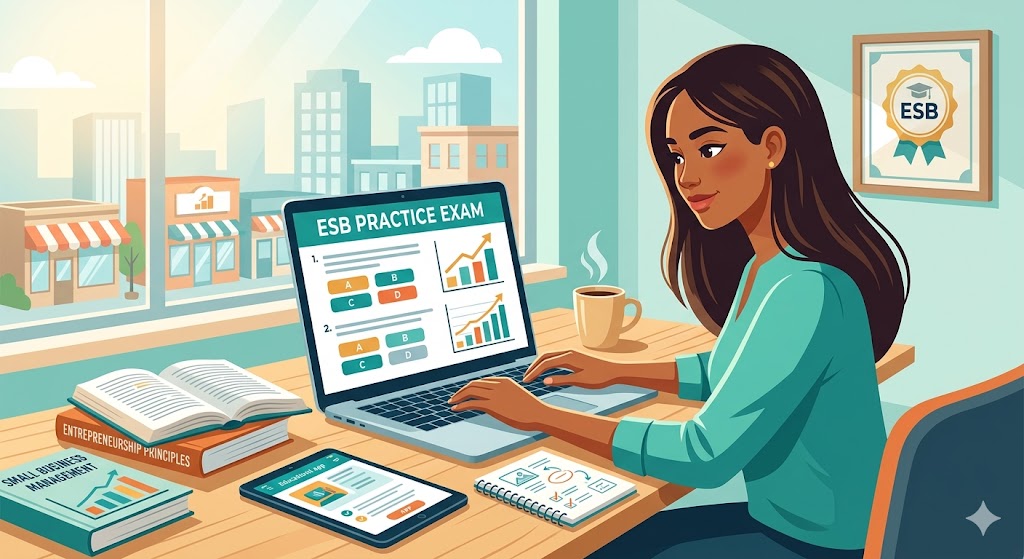
Additional Information
What the Course Entails and Exam Details
This comprehensive guide supports candidates preparing for the ESB certification exam. The course and final assessment cover critical domains essential for business success. Studying this material means mastering the entire life cycle of a business from conceptualization to maturity. The key pillars covered within the ESB syllabus include recognizing and evaluating business opportunities, planning and starting a new business, managing ongoing business operations, implementing marketing and sales strategies, and understanding core financial management principles, including funding options and profitability.
What to Expect in the Final Exam
When you arrive at your official testing session, you must be prepared for a rigorous evaluation of both your knowledge and application skills. The ESB final exam typically consists of approximately 45 multiple-choice questions or performance-based simulation items. Candidates are generally allotted 50 minutes to complete the assessment. To achieve your ESB certification, a minimum passing score is required, often around 700 on a scale of 1000, though this can vary slightly by version. Understanding these constraints is essential for proper time management during the test.
How to Study and Exam Centers
Preparation is the critical differentiator between success and failure on the ESB certification. We recommend starting your journey by thoroughly reviewing the official ESB Exam Objectives to understand exactly what will be tested. Utilize this specialized study guide and regularly take an Entrepreneurship and Small Business ESB Practice Exam to build familiarization with the question format, identify your knowledge gaps, and reduce test anxiety. You should also focus on practical scenario analysis, as the exam requires applying principles to real-world business challenges.
ESB certifications are administered globally through authorized testing centers. Most candidates take their final exam through Certiport Authorized Testing Centers, which include many high schools, technical colleges, and university campuses. Alternatively, professional testing platforms like Pearson VUE may be utilized for individual candidates who are not enrolled in a participating educational institution. Be sure to register well in advance with your chosen local center or through the official online portal.
Job Opportunities from the Course
Earning your ESB certification unlocks a variety of career paths within the competitive small business ecosystem. This credential validates to potential employers that you have the foundational skills needed to contribute immediately to an organization's growth. The specific job titles and roles this certification supports include, but are not limited to, the following list: Small Business Owner or Founder; Startup Entrepreneur; Business Development Associate; Assistant Business Manager; Franchise Manager; Retail Store Manager; Intrapreneur (Innovator within large companies); Business Consultant for small firms; Marketing and Sales Coordinator; Operations Manager for small enterprises; Project Manager; or Client Relationship Manager.
Frequently Asked Questions
Reviews
5.0
Based on 0 reviews
Leave a Review
No reviews yet. Be the first to review!