
Environmental Compliance Inspector Grade 1 Practice Exam
$69.00
- Buy to unlock unlimited access to all Quiz questions and Answers in this Quiz.
- After purchase you can print a PDF of the whole quiz at any point. The PDF will contain the questions and the correct answers.
About this Exam
The Environmental Compliance Inspector Grade 1 Practice Exam is a essential stepping stone for anyone aspiring to enter the vital field of environmental regulation and protection. This entry-level practice exam is specifically designed to help students, new graduates, and career changers measure their readiness for professional certification. By simulating the actual testing experience, it builds confidence and identifies critical knowledge gaps. This exam is ideal for individuals who are passionate about safeguarding the environment, enforcing anti-pollution laws, and ensuring public health by monitoring industrial, commercial, and municipal facilities.
Ready to test your knowledge?
Buy Now to Access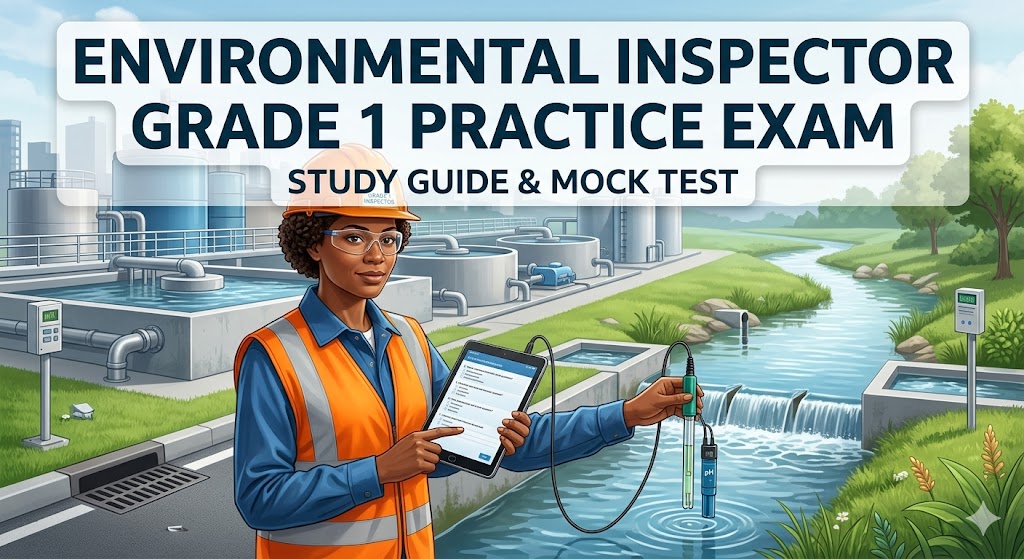
Additional Information
What the Course Entails and Exam Details
This comprehensive practice tool focuses on the foundational knowledge needed by a Grade 1 Inspector. It covers the basic skills required to conduct entry-level inspections, collect samples, and report on compliance status. The test content areas typically include:
Core Environmental Regulations: Understanding key federal, state, and local laws such as the Clean Water Act (e.g., NPDES permits), Clean Air Act, and the Resource Conservation and Recovery Act (RCRA) regarding hazardous waste.
Wastewater and Stormwater Fundamentals: Knowledge of basic wastewater treatment processes, biological principles (like BOD and pH), and stormwater pollution prevention methods.
Inspection Procedures and Documentation: Techniques for initiating inspections, obtaining legal entry, performing facility walk-throughs, and meticulously documenting observations with concise and accurate reports.
Sampling and Field Analysis: Proper procedures for collecting wastewater, stormwater, or soil samples, maintaining the chain of custody, and using basic field testing equipment.
Health and Safety: Essential OSHA standards, personal protective equipment (PPE) requirements, and protocols for working safely around hazardous materials.
Communication Skills: Techniques for effective and professional interaction with facility operators, the public, and regulatory agency staff.
What to Expect in the Final Exam
When you take the actual Environmental Compliance Inspector Grade 1 Final Exam, you can anticipate a standard, structured assessment. While the specific administration can vary by the certifying body (such as a specific state agency or regional association), you can typically expect the following:
Exam Format: The test is almost universally a multiple-choice exam, often including scenario-based questions that ask you to apply your regulatory knowledge to a practical situation.
Number of Questions: You can expect a range of 75 to 100 questions designed to test a breadth of knowledge.
Time Limit: You will typically have a specific time duration to complete the exam, commonly between 2 and 3 hours.
Passing Score: Most certifying organizations require a score of 70% or higher to pass.
Rules: The exam is usually closed-book, and strict proctoring rules, including a ban on electronic devices, are enforced to ensure academic integrity.
How to Study and Exam Centers
How to Study Effectively
Succeeding on your Grade 1 exam requires dedicated preparation. Here are some actionable strategies:
Use the Practice Exam Regularly: Make this practice exam the cornerstone of your study routine. Use it to time yourself and to pinpoint the specific topics where you struggle, then focus your studies there.
Review Official Study Guides: Obtain the official study materials or curriculum outlines provided by your certifying body. These are your primary sources.
Focus on Regulations: Do not just memorize names; understand the core purpose, scope, and specific compliance requirements of the major environmental acts. Create flashcards for key terms, definitions, and regulation codes.
Hands-on Review: If possible, observe an inspection or review sample inspection reports to understand the practical flow and expected level of detail in documentation.
Study Groups: Collaborating with peers can help you view problems from different perspectives and clarify complex topics.
Exam Centers and Registration
The process for taking the final exam varies depending on your location and the certifying organization. Generally, you will register through a specific body, such as a state's environmental department or a specialized regional association. Testing often takes one of two forms:
Computer-Based Testing (CBT): Many organizations utilize large, computerized testing networks like Pearson VUE or PSI, which have numerous physical centers globally. After registering, you can schedule an appointment at a location and time that works for you.
Authorized Local Centers: Some state agencies or local associations conduct exams at specific, pre-scheduled, physical locations, such as municipal training centers or educational institutions.
Key Step: Always visit the official website of your state’s environmental agency or the specific professional organization administering the certification to find the current registration process, fees, approved testing formats, and available exam center locations.
Job Opportunities from the Course
Obtaining an Environmental Compliance Inspector Grade 1 Certification opens the door to numerous entry-level career paths in both the public and private sectors. Key job titles and career paths include:
Environmental Inspector I / Junior Inspector: An introductory role performing initial inspections, taking samples, and reviewing routine permits for compliance.
Stormwater/Wastewater Inspector: Specialized positions focused on monitoring and enforcing regulations related to water pollution from municipal systems or industrial runoff.
Environmental Compliance Specialist (Entry-Level): A role, often within a private company or consulting firm, helping clients understand and comply with complex environmental codes and regulations.
Code Enforcement Officer (Environmental Focus): Working for a municipality to enforce local environmental ordinances.
Water Quality Technician: A position performing essential sampling and field monitoring tasks to ensure safe and compliant water quality.
Hazardous Materials Technician (Entry-Level): A role involving the initial inspection and proper labeling of waste handling areas.
Frequently Asked Questions
Reviews
5.0
Based on 0 reviews
Leave a Review
No reviews yet. Be the first to review!