
EPPP Biological Bases of Behavior Practice Exam
$69.00
- Buy to unlock unlimited access to all Quiz questions and Answers in this Quiz.
- After purchase you can print a PDF of the whole quiz at any point. The PDF will contain the questions and the correct answers.
About this Exam
The Examination for Professional Practice in Psychology (EPPP) is the landmark licensure exam for aspiring psychologists in the United States and Canada. This specific guide is designed to help you conquer the "Biological Bases of Behavior" domain, which accounts for approximately 10% of the total exam. Achieving a passing score on the EPPP is the final, crucial step to earning your license and launching your career as a qualified psychologist. Our comprehensive study guide and practice exam are tailored for doctoral-level psychology graduates aiming to master this core competency and demonstrate their readiness for independent practice.
Ready to test your knowledge?
Buy Now to Access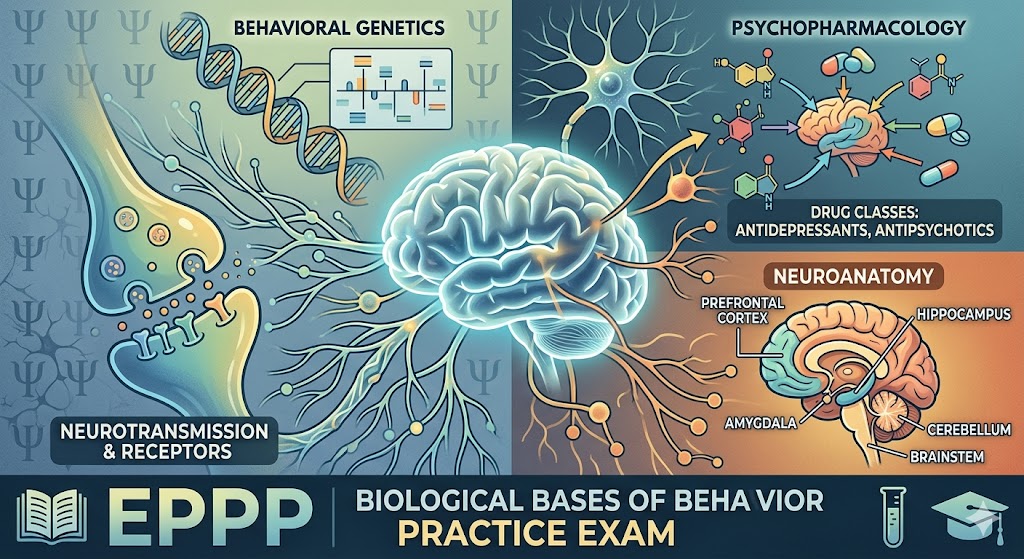
Additional Information
What the Course Entails and Exam Details
This section of the EPPP focuses on the fundamental biological mechanisms that underpin all human behavior, emotion, and thought. To succeed, you must demonstrate sophisticated knowledge in several key sub-domains. This study guide covers the full syllabus, ensuring you are prepared for questions on:
Neuroanatomy and Neurophysiology: Master the structures and functions of the central and peripheral nervous systems, brain regions, and cellular mechanisms of neural communication.
Psychopharmacology: Understand the classification, mechanisms of action, therapeutic effects, and side effects of major classes of psychotropic drugs, including antidepressants, antipsychotics, anxiolytics, and mood stabilizers.
Behavioral Genetics: Grasp the influence of genetic factors on behavior and their interaction with the environment (gene-environment interaction).
Neuroendocrinology: Understand the role of the endocrine system and hormones in regulating behavior, mood, and stress responses.
Methodologies: Familiarize yourself with the research methods used to study the biological bases of behavior, from imaging techniques to animal models.
What to Expect in the Final Exam
The EPPP is a rigorous, standardized computerized examination. It is divided into two parts, but the knowledge portion is the first step. Here is what you can expect on your test day:
Format: 225 multiple-choice questions. Each question has four options, with only one correct answer.
Time Limit: You are allotted 4 hours and 15 minutes to complete the exam.
Scoring: 175 questions are scored, and 50 are unscored pre-test items used for future test development. You will not know which questions are unscored, so treat every question as if it counts.
Passing Score: The ASPPB recommends a scaled score of 500, which falls on a scale of 200 to 800. This roughly equates to answering approximately 70% of the scored questions correctly, though the exact number can vary slightly between test forms.
Specific Rules: No personal materials are allowed in the testing room. You will be provided with a secure locker for your belongings. A digital scratchpad or physical whiteboard is typically provided for notes.
How to Study and Exam Centers
Effective preparation is the key to passing. A high-quality practice exam is your most valuable tool. Combine it with these proven strategies for the Biological Bases of Behavior domain:
Take Multiple Practice Exams: Simulating the actual test environment is crucial. Use our practice exams to build stamina, improve pacing, and identify knowledge gaps. Follow a progression: first, do an "open-book" exam without time constraints; then, do a timed "open-book" exam; finally, take timed, "closed-book" exams as if it were the real day.
Focus on Neuroanatomy and Pharmacology: These are high-yield topics. Create flashcards for brain structures and their functions, as well as drug names, classifications, and side effects. Use concept maps to visualize the different branches of the nervous system.
Analyze Your Mistakes: Spend as much time reviewing the explanations for incorrect answers (and guessed answers) as you did taking the test. Do not just move on; ensure you understand the rationale.
Manage Test Anxiety: Familiarize yourself with the testing center before your date. Practice relaxation techniques, and ensure you get adequate sleep, exercise, and proper nutrition leading up to the exam. A calm, well-rested mind performs significantly better.
Exam Centers: The EPPP is administered exclusively through Pearson VUE professional testing centers. You must register for the exam with your specific state or provincial licensing board, which will then provide you with authorization to schedule your exam date and location at any Pearson VUE center.
Job Opportunities from the Course
Passing the EPPP leads directly to licensure as a psychologist, a credential that unlocks a diverse array of rewarding career paths and job opportunities in numerous settings. Once you hold your license, you can pursue the following roles:
Licensed Clinical Psychologist: Assess, diagnose, and treat mental, emotional, and behavioral disorders in private practice, hospitals, or mental health clinics.
Counseling Psychologist: Focus on facilitating personal and interpersonal functioning across the lifespan, often in university counseling centers or community organizations.
School Psychologist: Work within educational systems to support students' ability to learn and teachers' ability to teach, addressing behavioral and learning challenges.
Industrial-Organizational (I-O) Psychologist: Apply psychological principles to workplace issues, improving productivity, health, and quality of life for employees.
Neuropsychologist: Specialize in understanding the relationship between the physical brain and behavior, often working in medical settings with individuals with brain injuries or neurological conditions.
Forensic Psychologist: Apply psychology within the legal system, including conducting competency evaluations and providing expert testimony.
Academic/Research Psychologist: Teach at the university level and conduct original research on psychological topics.
Geropsychologist: Specialize in the mental health needs of older adults.
Health Psychologist: Study how biological, social, and psychological factors influence health and illness.
Frequently Asked Questions
Reviews
5.0
Based on 0 reviews
Leave a Review
No reviews yet. Be the first to review!