
ESCO Heating 208 Practice Test
$69.00
- Buy to unlock unlimited access to all Quiz questions and Answers in this Quiz.
- After purchase you can print a PDF of the whole quiz at any point. The PDF will contain the questions and the correct answers.
About this Exam
Welcome to your comprehensive guide on the ESCO Heating 208 Practice Test
This essential practice exam serves as a robust assessment of a technician's critical knowledge
It is designed for HVAC professionals seeking specialized certification in heating systems
It specifically caters to those aspiring to demonstrate competence in various aspects of gas heat, oil heat, and modern heating applications
Mastering the ESCO Heating 208 can unlock greater job opportunities, confirming your readiness for real-world heating challenges and certifications
Ready to test your knowledge?
Buy Now to Access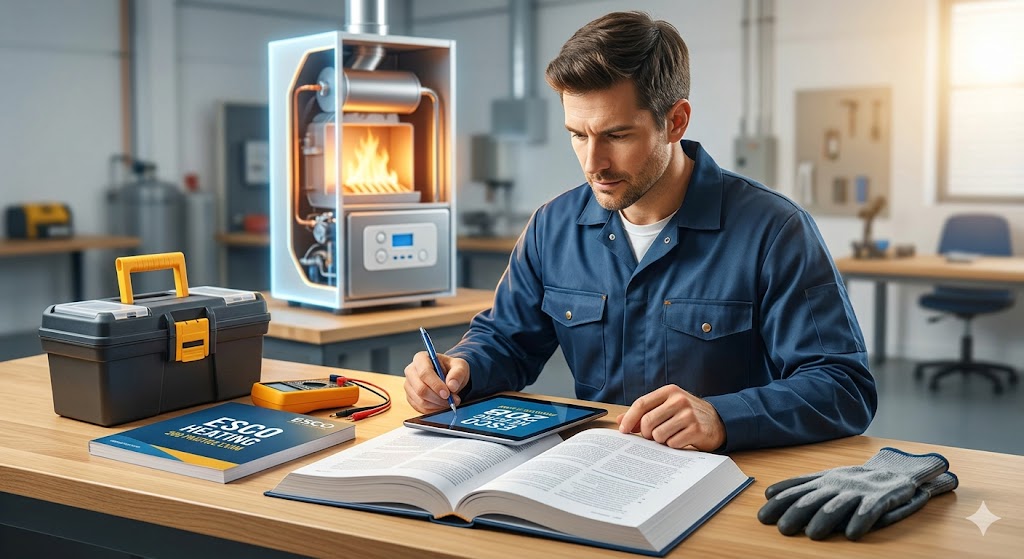
Additional Information
What the Course Entails and Exam Details
The ESCO Heating 208 comprehensive practice covers a wide array of fundamental and advanced heating concepts
You will explore the complexities of gas furnace operation, including detailed study of combustion theory
Understanding the distinct properties of natural gas versus LP (liquefied petroleum) gas is a vital component
The course and exam drill down into ignition systems, including standing pilots and modern electronic methods
Technicians are evaluated on their knowledge of venting standards and air flow management within heating systems
Safety protocols, including carbon monoxide detection and emergency procedures, are integrated throughout
Interpreting electrical schematics and using diagnostic tools to troubleshoot control circuits is a must-know skill
Ultimately, the goal is to validate knowledge and prepare technicians for specific ESCO specialty exams like Gas Heat or Oil Heat
What to Expect in the Final Exam
The actual ESCO Heating 208, usually presented as a comprehensive practice test or study volume, commonly features around 208 multiple-choice questions
This substantial number of questions allows for a deep dive into every relevant heating topic
The format is typically a comprehensive written assessment where you must select the best answer from several options
While specifics can vary by program and testing institution, the passing score often aligns with standard industry assessments, requiring a minimum of around 70% or more
The time limit for this comprehensive test is designed to be substantial, encouraging careful consideration and thoroughness, often spanning several hours
Expect rigorous questions that test both theoretical knowledge and practical, problem-solving scenarios
It is crucial to verify the exact number of questions, passing score, and time constraints with your specific educational provider or ESCO testing coordinator
How to Study and Exam Centers
Preparation is key for the ESCO Heating 208, and your journey starts with a robust study plan
Take advantage of practice materials, including extensive question sets explicitly designed for the 208 exam, which are often provided through textbooks and study guides
Consistent practice with these multiple-choice questions will improve your speed and accuracy
Review official ESCO training materials and reputable HVAC textbooks that detail the topics covered
Engage in hands-on work with furnaces, boilers, and heating controls to solidify your theoretical understanding
Utilize online resources, educational videos, and practice test portals tailored for ESCO certifications
Identify areas of weakness and dedicate focused study to those critical heating concepts and procedures
Once ready, you can often schedule and take the exam through an ESCO authorized educational institution, trade school, or certified training center
Many certifications can also be administered via secure online proctoring portals or third-party testing centers like Pearson VUE, which are widely available in many regions
Contact your local ESCO representative or school to find the most convenient testing location or method
Job Opportunities from the Course
Successfully preparing for and challenging the ESCO Heating 208 comprehensive assessment can significantly enhance your career prospects
Here are some specific job roles and career paths this specialized knowledge helps unlock:
Heating Systems Technician: Specialize in installing, maintaining, and repairing all types of heating equipment.
Gas Heat Service Specialist: Focus specifically on troubleshooting and repairing advanced gas furnace and boiler systems.
HVAC Installer: Take on critical installation roles for a wide range of residential and commercial heating systems.
Facility Maintenance Supervisor: Oversee the upkeep and efficient operation of large-scale heating and climate control systems in industrial and commercial buildings.
HVAC Energy Auditor: Utilize knowledge to analyze heating efficiency and recommend energy-saving upgrades and practices.
Trade School Instructor: Share your expertise by teaching the next generation of HVAC and heating technicians.
Start Your Own Heating Business: Build a career and business on the foundation of your demonstrated expertise and certification readiness.
Frequently Asked Questions
Reviews
5.0
Based on 0 reviews
Leave a Review
No reviews yet. Be the first to review!