
Excavation Safety Practice Exam
$69.00
- Buy to unlock unlimited access to all Quiz questions and Answers in this Quiz.
- After purchase you can print a PDF of the whole quiz at any point. The PDF will contain the questions and the correct answers.
About this Exam
The Excavation Safety Practice Exam is a crucial preparatory tool for professionals seeking certification in trenching and excavation safety, often aligned with OSHA 29 CFR 1926 Subpart P standards. This practice exam is designed for construction workers, supervisors, competent persons, safety managers, and anyone involved in the planning, execution, or oversight of excavation projects. It provides an essential self-assessment opportunity, allowing candidates to evaluate their understanding of critical safety regulations and practical applications before taking the official certification test. Mastering this content is vital for preventing cave-ins and other hazardous incidents in the workplace.
Ready to test your knowledge?
Buy Now to Access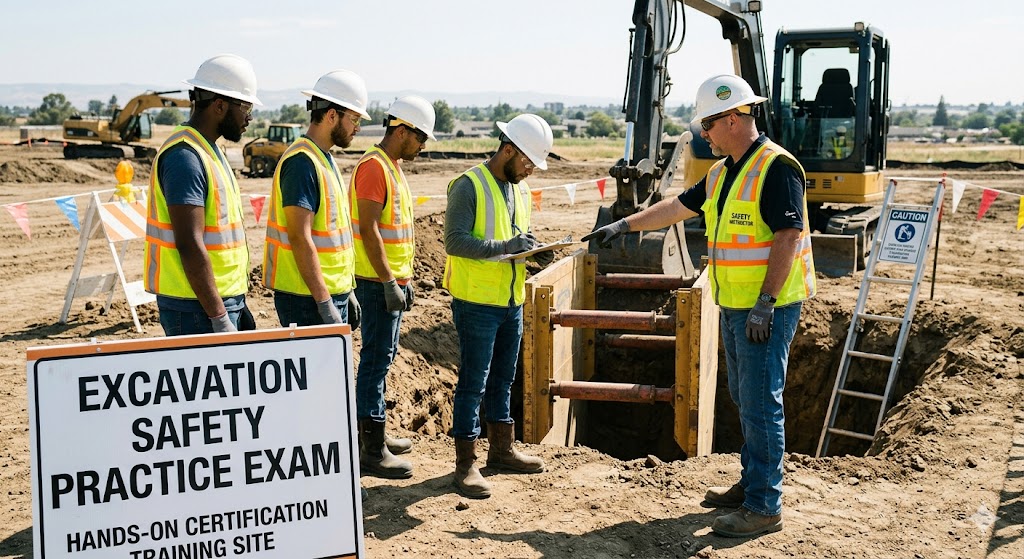
Additional Information
What the Course Entails and Exam Details
This comprehensive practice exam covers all foundational elements of excavation safety. The core syllabus includes soil classification systems (Type A, B, and C soils), identification of underground utilities, and understanding the role and responsibilities of the "Competent Person" on-site. Candidates must demonstrate knowledge of various protective systems, such as sloping, benching, shoring (e.g., hydraulic, timber), and shielding (e.g., trench boxes). Additionally, the exam evaluates proficiency in identifying hazardous atmospheres, implementing proper access and egress (e.g., ladders, ramps), and understanding general safety requirements for excavation sites.
What to Expect in the Final Exam
While the exact final exam format depends on the specific certifying body (such as a private safety institute or a state agency implementing OSHA standards), the official certification exam typically consists of multiple-choice and true/false questions. It may also include scenario-based questions that require candidates to apply their knowledge to practical field situations. A common time limit for such exams is 60 to 90 minutes. A passing score is generally around 70% to 80% to ensure a robust understanding of the critical safety materials. Specific rules, such as being closed-book or open-book, are determined by the testing organization.
How to Study and Exam Centers
Effective preparation is key to success on the certification exam. Begin by thoroughly reviewing the OSHA Excavation Standard (Subpart P) and any provided study manuals. Utilize the Excavation Safety Practice Exam extensively to identify knowledge gaps and simulate exam conditions. Actionable strategies include creating flashcards for key definitions (e.g., competent person, Benching, Shoring) and soil classification criteria, and reviewing case studies of excavation failures. Practice drawing and calculating protective system requirements.
Regarding exam centers, certification testing often occurs through specific online portals managed by safety training organizations. Physical testing may also be available at authorized schools, community colleges, construction association training centers, or specialized computer-based testing facilities, similar to those managed by organizations like Pearson VUE, depending on the certifying entity. Always verify the accepted testing methods and locations with your intended certification provider.
Job Opportunities from the Course
Obtaining an Excavation Safety Certification significantly enhances your qualifications for various roles within the construction and safety industries. This certification opens doors to several rewarding career paths, including:
Excavation Competent Person Trenching and Excavation Supervisor Construction Foreman Site Safety Officer / Manager OSHA Compliance Inspector Heavy Equipment Operator Pipelinelayer Utility Construction Worker Civil Engineering Technician Construction Project Manager
Frequently Asked Questions
Reviews
5.0
Based on 0 reviews
Leave a Review
No reviews yet. Be the first to review!