
Exchange Surfaces Practice Test
$69.00
- Buy to unlock unlimited access to all Quiz questions and Answers in this Quiz.
- After purchase you can print a PDF of the whole quiz at any point. The PDF will contain the questions and the correct answers.
About this Exam
The Exchange Surfaces Practice Test is a crucial assessment tool designed for students pursuing studies in biology, particularly at the A-level, AP, or early undergraduate level. This practice exam is expertly crafted to simulate the rigor and content of a final module test focused on how organisms exchange substances with their environment. It targets students who want to solidify their understanding of transport mechanisms, surface area to volume ratios, and the specialized adaptations of gas exchange and nutrient absorption surfaces in both plants and animals. If you are aiming for top marks in your biology qualification, this practice exam is the perfect resource for you.
Ready to test your knowledge?
Buy Now to Access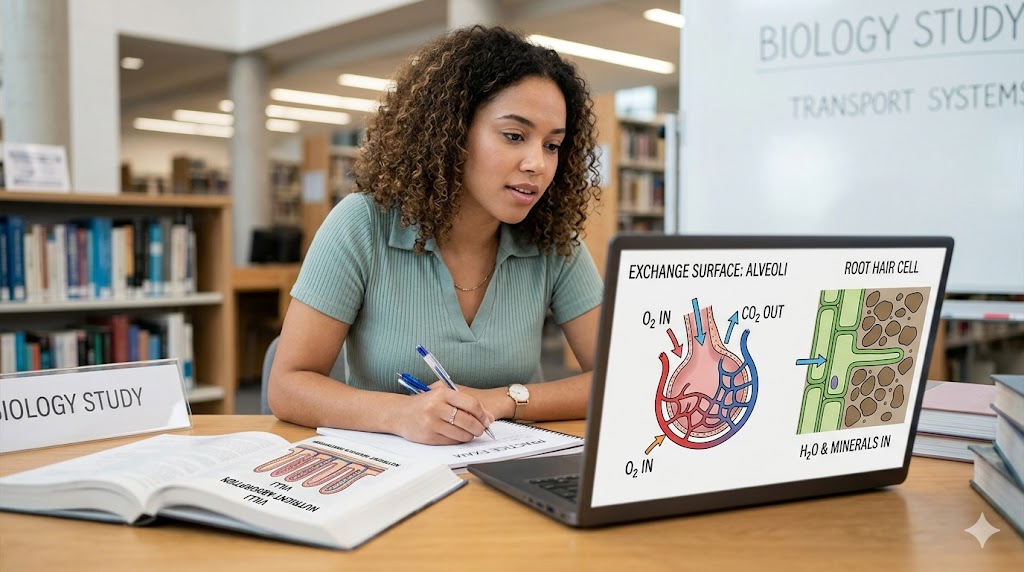
Additional Information
What the Course Entails and Exam Details
This practice exam covers the essential concepts found within a dedicated biology unit on "Exchange Surfaces." The syllabus includes comprehensive questions on the following core topics: The principles of diffusion, osmosis, and active transport; mathematical calculation of Surface Area to Volume (SA:V) ratios and their significance for different sized organisms; the specialized features of efficient exchange surfaces (large surface area, thin layers, blood supply/ventilation); and a deep dive into specific exchange systems, such as the human gas exchange system (alveoli), plant gas exchange (stomata and spongy mesophyll), fish gills (counter-current flow), and insect tracheal systems. Mastery of these skills is fundamental for success in broader biological science courses.
What to Expect in the Final Exam
When you take the simulated "final exam" for Exchange Surfaces, you should expect a format that mirrors official board exams. This practice test includes a mix of multiple-choice questions (testing factual recall and quick application), short-answer responses (requiring clear definitions and explanations of processes), and more detailed, structured questions (often involving data analysis from diagrams, graphs, or calculations). For example, you might be asked to calculate the SA:V ratio of a cube and explain its biological relevance or label a diagram of the human lung and describe how a concentration gradient is maintained. There are no practical, "hands-on" components in this theoretical practice exam. Aim to achieve a score of at least 70% to demonstrate strong proficiency, and try to complete the test within a simulated one-hour timeframe to practice time management.
How to Study and Exam Centers
Effective preparation for this practice exam requires a combination of focused review and active testing. We recommend revising your course textbooks, class notes, and diagrams of exchange systems meticulously. Utilize active recall methods by drawing and labeling diagrams from memory, such as the counter-current system in fish gills or the structure of a villus. Creating flashcards for key terms like "facilitated diffusion" and "Fick's Law" is also highly beneficial. Once you have a strong grasp of the material, take this complete practice exam under timed conditions, without your notes, to identify any remaining weak areas. As this is a digital practice resource, you can take it anywhere with internet access; you do not need to visit an official physical testing facility like Pearson VUE.
Job Opportunities from the Course
A strong foundation in biological principles, proven by excelling in topics like Exchange Surfaces, can lead to numerous career opportunities in the life sciences and healthcare sectors. Achieving high marks in qualifications that include this content is a required step on the path to many specialized professions.
Veterinary Surgeon: Diagnosing and treating medical conditions in animals, requiring deep knowledge of comparative anatomy and physiology.
Biomedical Scientist: Conducting laboratory tests to help diagnose and treat diseases in human patients.
Pharmacist: Understanding cellular drug absorption and transport for safe medication dispensing and advice.
Research Scientist (Biology): Designing and conducting experiments in academic, industrial, or government settings, potentially focusing on physiology or disease.
Secondary School Biology Teacher: Educating the next generation of students in foundational biological concepts.
Ecologist: Studying the relationship between organisms and their environment, which requires understanding metabolic rates and exchange needs.
Nurse / Doctor: Careers in human healthcare demand a robust understanding of systems like gas exchange and nutrient absorption.
Biotechnologist: Applying biological systems (like cell membranes and transport) to develop new products and technologies.
Frequently Asked Questions
Reviews
5.0
Based on 0 reviews
Leave a Review
No reviews yet. Be the first to review!