
Exotics Rodents / Biomed Research Article Practice Test
$69.00
- Buy to unlock unlimited access to all Quiz questions and Answers in this Quiz.
- After purchase you can print a PDF of the whole quiz at any point. The PDF will contain the questions and the correct answers.
About this Exam
Elevate your expertise in the field of lab animal science with the Exotics Rodents & Biomed Article Practice Exam. This study guide is designed specifically for veterinary technicians, laboratory animal caretakers, research assistants, and students in biomedical sciences who are preparing for a specialized certification or final course exam. This practice tool focuses on the unique biology and husbandry needs of exotic rodent species commonly used in research, such as guinea pigs, hamsters, and gerbils. It evaluates critical skills required for understanding complex research methodologies and interpreting scientific articles effectively in a laboratory or clinical setting. Prepare with confidence using a simulated test environment that mirrors professional expectations.
Ready to test your knowledge?
Buy Now to Access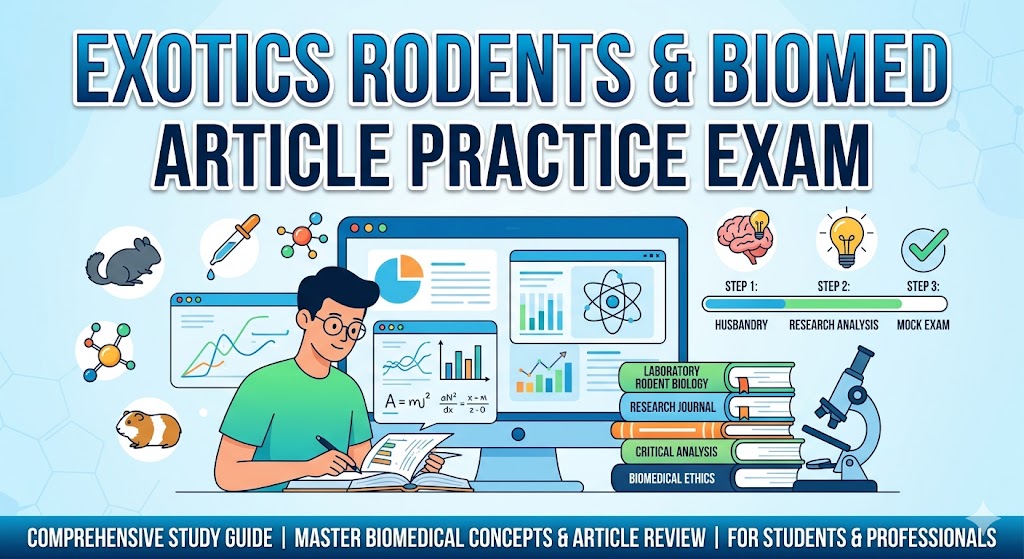
Additional Information
What the Course Entails and Exam Details
The underlying course or module covers several core domains essential for proficiency.
First, candidates must master the distinct biology, husbandry, and specialized care protocols for multiple exotic rodent species, moving beyond common lab mice and rats. This includes detailed knowledge of their nutritional requirements, behavioral characteristics, and physiological differences that make them specific models for biomedical studies.
The material places a heavy emphasis on research literature analysis. You must be able to break down peer-reviewed biomedical articles—understanding the experimental design, control groups, specific techniques used with exotics, statistical methods, and critical discussion of results.
Ethical considerations specific to these species and regulatory compliance for laboratory animal facilities are also integral components. The exam details are structured to test both recall of species-specific facts and higher-level critical thinking applied to research contexts.
What to Expect in the Final Exam
As a comprehensive preparatory tool, this practice test is structured similarly to a final certification or end-of-course exam.
It typically consists of multiple-choice questions, which may be supplemented by short scenario-based scenarios or article analysis sections.
A substantial portion will involve reading excerpts from real or simulated biomedical research articles and answering targeted questions. This section tests your ability to identify key research findings, recognize potential biases, interpret graphs or tables, and apply research methodology concepts to the use of exotic rodent models.
Expect a time limit (e.g., 60–90 minutes, depending on the number of questions) to encourage efficient analysis. A standard passing score for professional assessments is often set around 70% to 80%, ensuring that only candidates with thorough understanding achieve certification. This practice exam replicates that rigorous environment.
How to Study and Exam Centers
Effective preparation requires a multi-faceted approach. Use this practice exam as an assessment tool to identify knowledge gaps, taking it repeatedly under timed conditions.
Go beyond simple memorization; focus on understanding the why behind husbandry and research decisions. Review course textbooks on exotic species medicine or laboratory animal science. Dedicate significant study time to analyzing peer-reviewed journals, practicing article critique using standard checklists. Participate in online study groups or workshops focused on laboratory animal science certifications.
The actual exam this guide prepares you for is generally delivered through secure online testing portals provided by accredited schools, universities, or specific certification bodies. If you are completing a program, check your student portal or Learning Management System (like Moodle, Blackboard, or Canvas) for login instructions and testing schedules. Ensure you meet all technical requirements and arrange for a quiet, distraction-free environment.
Job Opportunities from the Course
A strong performance on an exam like this, often paired with subsequent certification, demonstrates specialized knowledge that is highly valued in the biomedical research and animal care industries.
Possible career paths and roles that benefit significantly from this level of preparation include:
Laboratory Animal Technician (specializing in exotic species)
Biomedical Research Assistant (in academic, pharmaceutical, or government labs)
Veterinary Technician (in exotic pet practice or laboratory animal medicine)
Research Study Coordinator
Compliance Specialist in Animal Research Facilities
Quality Assurance Officer for Laboratory Animal Care
Facility Manager (supporting specialized research programs)
Biomedical Science Editor or Literature Review Specialist
Frequently Asked Questions
Reviews
5.0
Based on 0 reviews
Leave a Review
No reviews yet. Be the first to review!