
Extinguisher Type B (TFM02) Practice Test
$69.00
- Buy to unlock unlimited access to all Quiz questions and Answers in this Quiz.
- After purchase you can print a PDF of the whole quiz at any point. The PDF will contain the questions and the correct answers.
About this Exam
The Extinguisher Type B (TFM02) certification is a vital credential for fire safety professionals, especially those specializing in portable fire suppression systems. In many jurisdictions, such as Texas, this license is mandatory for individuals who sell, plan, install, service, certify, or test portable fire extinguishers in commercial and residential properties. The specific 'Type B' designation focuses heavily on the technical knowledge and practical skills required to handle fires involving flammable liquids, gases, and greases. This practice exam is a cornerstone for preparing prospective technicians to understand critical safety codes, agent characteristics, and the effective operation of suppression systems to pass the state-level certification.
Ready to test your knowledge?
Buy Now to Access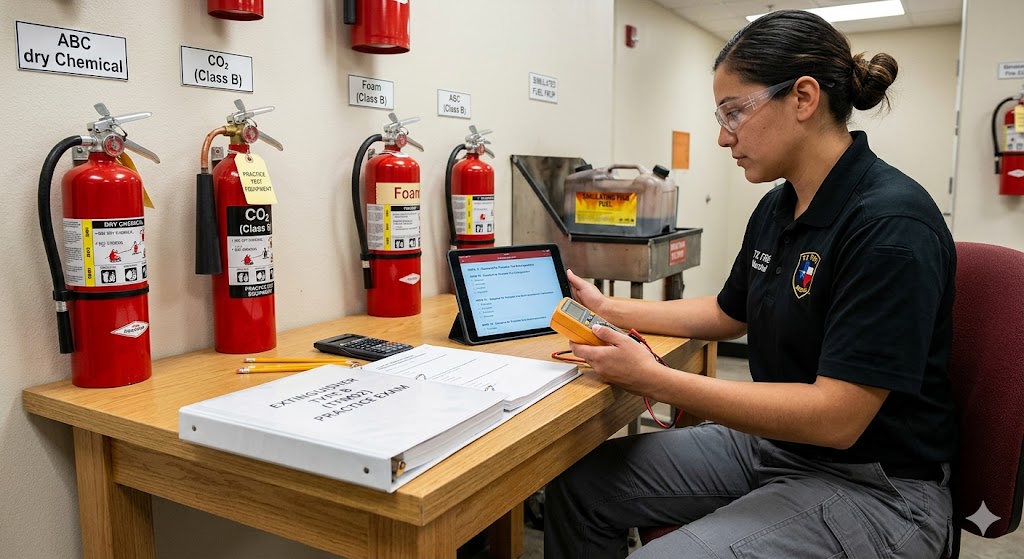
Additional Information
What the Course Entails and Exam Details
This comprehensive study guide is designed to guide you through the theoretical underpinnings of the TFM02 exam. Key topic areas often include: a deep dive into NFPA 10 (the Standard for Portable Fire Extinguishers), detailed fire classifications, selection criteria for different hazards, installation procedures, inspection protocols, maintenance schedules, and hydrostatic testing requirements. You will learn to calculate travel distances, understand recharge procedures, and recognize the specific agents and discharge characteristics necessary for tackling Type B fires effectively, including multi-purpose dry chemical, carbon dioxide, and various foam solutions. The course also reviews state-specific regulations and safety protocols for handling pressurized cylinders.
What to Expect in the Final Exam
The final TFM02 certification exam typically uses a comprehensive multiple-choice and true-false format. The questions are meticulously crafted to test your comprehension of the latest NFPA 10 standards and practical scenarios you may encounter in the field. While specific details can vary by state or testing agency (such as PSI), you can generally expect a time-limited session, often between 90 minutes to two hours, requiring a passing score, usually in the range of 70 to 80 percent. The exam is closed-book and assesses both your rote knowledge of the regulations and your ability to apply safety principles and maintenance techniques to real-world situations, ensuring you are fully prepared to work safely and effectively with portable fire protection equipment.
How to Study and Exam Centers
To optimize your chances, use a comprehensive combination of study methods. First, obtain and thoroughly read the official NFPA 10 standard, as this is the primary reference. Utilize structured practice tests, like this one, to simulate the actual exam experience, refine your time management, and identify specific knowledge gaps. Flashcards are excellent for memorizing extinguisher types, agents, travel distance rules, and maintenance intervals. Consider enrolling in a formal TFM02 training course, often offered by specialized fire protection schools or trade associations, which can provide both theoretical instruction and practical, hands-on experience with equipment. The actual certification exam is often administered through accredited computer-based testing services, such as Pearson VUE, or at specific physical locations designated by the state fire marshal's office. You must register through your state's fire safety licensing body.
Job Opportunities from the Course
Earning your TFM02 certification can unlock several rewarding career paths in the essential and growing fire safety industry. This credential demonstrates specialized competence and a commitment to public safety. Here are some of the job opportunities and career paths you can pursue with this license:
Fire Extinguisher Service Technician
Fire Suppression System Installation Technician
Fire Safety Inspector
Fire Protection Equipment Sales Specialist
Facility Maintenance Manager or Building Safety Officer
Fire and Life Safety Educator
Fire Protection Consultant for insurance companies
Opportunities within Fire Departments as a designated equipment technician or prevention specialist
Frequently Asked Questions
Reviews
5.0
Based on 0 reviews
Leave a Review
No reviews yet. Be the first to review!