
FAA 107 Unmanned Aircraft General (UAG) – Small Practice Test
$69.00
- Buy to unlock unlimited access to all Quiz questions and Answers in this Quiz.
- After purchase you can print a PDF of the whole quiz at any point. The PDF will contain the questions and the correct answers.
About this Exam
The FAA Part 107 Remote Pilot Certificate, officially known as the Unmanned Aircraft General – Small (UAG) rating, is the mandatory qualification for anyone wishing to operate a small Unmanned Aircraft System (sUAS), commonly referred to as a drone, for commercial or non-recreational purposes within the United States. This certification is essential for ensuring that all commercial remote pilots possess the aeronautical knowledge required to operate safely in the National Airspace System. The exam is designed for a diverse range of individuals, including real estate photographers, roof inspectors, filmmakers, agricultural technicians, search and rescue personnel, and entrepreneurs looking to launch a drone-based business.
Ready to test your knowledge?
Buy Now to Access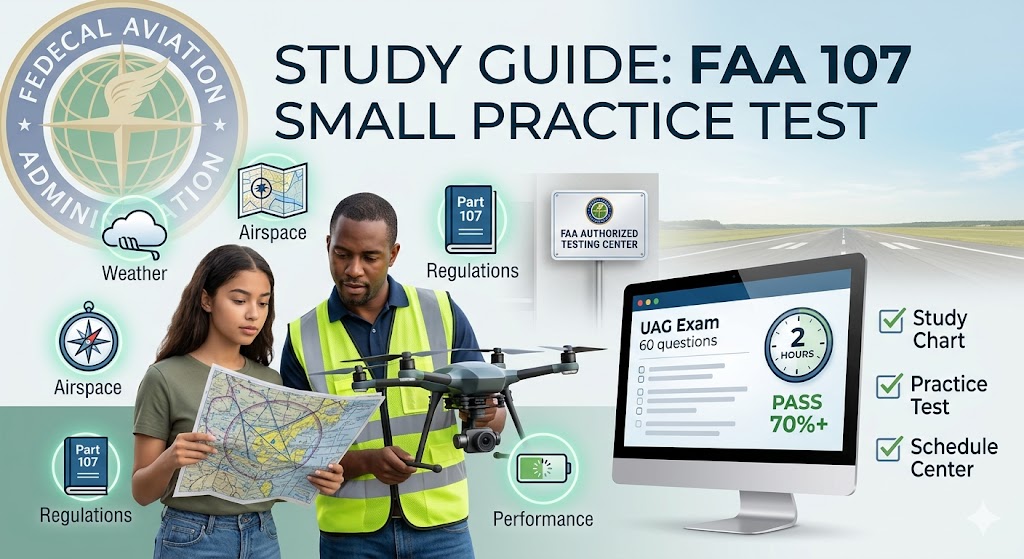
Additional Information
What the Course Entails and Exam Details
Preparing for the UAG exam involves a deep dive into the rules, regulations, and operational practices that govern the commercial drone industry. While "the course" is often a self-study path or a private prep course, the FAA outlines the core topics that will be tested. Key areas of focus include:
Applicable Regulations: Extensive knowledge of 14 CFR Part 107, which includes operational limitations, required safety equipment, pilot-in-command responsibilities, and Remote ID requirements.
Airspace Classification and Operating Requirements: Understanding the different types of controlled and uncontrolled airspace (Class B, C, D, E, G), special-use airspace, and how to read sectional aeronautical charts to identify limitations and requirements.
Weather Effects on sUAS Performance: Learning to interpret aviation weather reports (METARs, TAFs) and understanding how factors like wind, temperature, humidity, and density altitude impact drone flight and performance.
sUAS Loading and Performance: Calculating load factors, understanding center of gravity (CG) limits, and determining how added weight affects drone stability and battery life.
Emergency Procedures: Identifying and managing in-flight emergencies, lost-link procedures, and reporting requirements for accidents.
Crew Resource Management (CRM): Recognizing the importance of communication, decision-making, and risk management among all personnel involved in an operation.
Radio Communication Procedures: Learning standard aviation communication practices and how to monitor air traffic.
Determining Performance of sUAS: Understanding manufacturer specifications, preflight inspection procedures, and maintenance protocols.
Physiological Effects (Drugs and Alcohol): Knowing the strict FAA rules regarding the consumption of substances that could impair judgment and performance.
Airport Operations: Familiarizing yourself with airport layout, traffic patterns, and sources of information for airport operations.
Maintenance and Preflight Inspection Procedures: The importance of regular upkeep and systematic checks to ensure safe flight.
What to Expect in the Final Exam
The FAA Part 107 Knowledge Test is a computer-based exam administered at FAA-approved Knowledge Testing Centers (KTCs) across the country. Here is a breakdown of what to expect on test day:
Exam Format: The test consists of 60 multiple-choice questions, each with three possible answers (A, B, C).
Time Limit: Candidates are given 120 minutes (2 hours) to complete the entire exam, allowing for ample time to carefully read and consider each question.
Passing Score: To earn your Remote Pilot Certificate, you must achieve a score of 70% or higher, which translates to correctly answering at least 42 of the 60 questions.
Test Environment: The exam is in-person and proctored. You will be provided with a pencil, scratch paper, and an electronic or paper Airman Knowledge Testing Supplement containing all necessary charts, graphs, and figures referred to in the questions.
Permitted Items: While electronic devices like smartphones are strictly prohibited, you are allowed to bring a non-programmable, non-communicating calculator and a magnifying glass for chart interpretation.
Results: Upon finishing the exam, you will receive an immediate score report indicating whether you passed or failed, along with a list of the knowledge codes for any questions you answered incorrectly.
Cost: The current cost of the FAA Part 107 exam is $175, which is paid directly to the testing provider, PSI.
How to Study and Exam Centers
Preparation is the absolute key to success on the FAA UAG exam. We recommend a multi-faceted approach to build your knowledge and confidence:
Official FAA Study Materials: Your first and most important resource is the FAA's Remote Pilot - Small Unmanned Aircraft Systems Study Guide (FAA-G-8082-22). This document is a comprehensive outline of the information you must know. Additionally, study the Airman Knowledge Testing Supplement for Sport Pilot, Recreational Pilot, Remote Pilot, and Private Pilot (FAA-CT-8080-2H) to become proficient in reading charts and tables.
Online and In-Person Prep Courses: Numerous reputable online academies and flight schools offer specialized FAA Part 107 prep courses. These provide structured lessons, video tutorials, detailed breakdowns of complex topics, and extensive practice question banks. This is often the most efficient way to learn.
Take Practice Tests: Consistent practice with sample exams, such as the free ones offered by the FAA and various test prep providers, is crucial. This will help you familiarize yourself with the question style, manage your time, and identify areas where you need further study. Aim for consistent scores above 90% in practice before scheduling the final exam.
Locating Exam Centers: The exam is administered by PSI Services LLC. You cannot take the final exam online. To schedule your test, you must first create an Integrated Airman Certification and Rating Application (IACRA) profile to receive an FAA Tracking Number (FTN). With your FTN, you can then log into the PSI system to find a convenient FAA-approved Knowledge Testing Center, pay the fee, and book your appointment. There are hundreds of testing locations across the United States.
Job Opportunities from the Course
A Remote Pilot Certificate unlocks a wide array of exciting and growing career opportunities across numerous industries. Here is a list of job titles and career paths this certification makes possible:
Commercial Drone Pilot
Aerial Photographer/Videographer
Real Estate Drone Specialist
Drone Inspector (Infrastructure, Roofs, Cell Towers, Power Lines)
Mapping and Surveying Drone Technician
Precision Agriculture Specialist
Construction Progress Drone Operator
Drone Flight Instructor
Search and Rescue (SAR) Drone Operator
Public Safety Drone Pilot (Law Enforcement, Fire Departments)
Drone Maintenance Technician
Media Production Aerial Coordinator
Utility Inspection Pilot
Geospatial Data Collector
Drone Program Manager
Freelance Drone Business Owner/Operator
Wildlife Monitoring Drone Pilot
Insurance Claims Drone Adjuster
Frequently Asked Questions
Reviews
5.0
Based on 0 reviews
Leave a Review
No reviews yet. Be the first to review!