
FAA Flight Controls Practice Test
$69.00
- Buy to unlock unlimited access to all Quiz questions and Answers in this Quiz.
- After purchase you can print a PDF of the whole quiz at any point. The PDF will contain the questions and the correct answers.
About this Exam
The FAA Flight Controls Practice Test is an essential tool for aspiring aviators and maintenance technicians striving for FAA certification. This exam evaluates your understanding of the mechanics, systems, and principles governing how an aircraft is steered in the air and on the ground. The comprehensive guide and practice resources are designed for students preparing for the official FAA Knowledge Test sections focused on flight controls, including primary, secondary, and auxiliary systems. Achieving mastery in flight controls is crucial for ensuring aircraft safety and performance, making it a pivotal area of study for aspiring pilots, mechanics, and other aviation technical professionals.
Ready to test your knowledge?
Buy Now to Access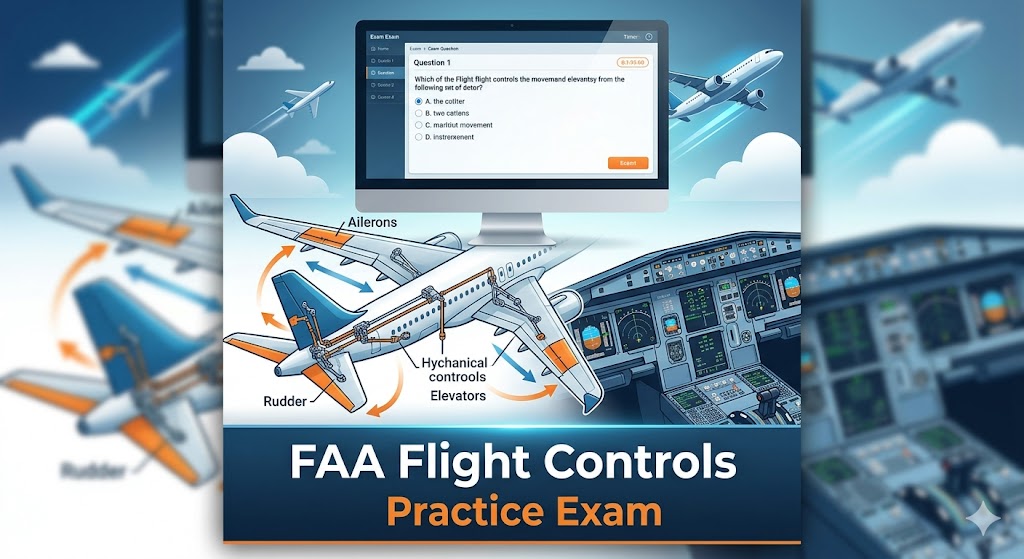
Additional Information
What the Course Entails and Exam Details
The detailed study and preparation for this area cover the core principles and mechanisms of aircraft flight controls. Typically, this involves a deep dive into primary flight control systems (ailerons, elevators, rudders), secondary systems (flaps, slats, trim tabs, and balance tabs), and advanced or auxiliary systems. Students will learn about the various methods of actuation, from direct mechanical linkages to complex hydraulic and fly-by-wire control systems. The underlying curriculum encompasses flight control principles, system components, rigging, inspection procedures, troubleshooting techniques, and standard repairs according to FAA regulations and standards. The official FAA knowledge test details are specific to the license or certificate being sought, but the flight controls portion is often a key segment within larger knowledge exams, such as the 'Airframe' part for mechanic certifications. The questions are multiple-choice and derived from a bank based on specified FAA knowledge areas and official handbooks.
What to Expect in the Final Exam
The actual FAA Knowledge Test is typically a computer-based multiple-choice examination administered at an authorized testing facility. While often integrated into a larger test (like the A&P Airframe Knowledge Test), the flight control-specific questions will be a substantial segment. The time limits and number of questions vary by the specific certificate, but typically, you might see around 100 multiple-choice questions for an 'Airframe' section, which includes flight controls. A passing score of 70% or higher is generally required. There are strict rules regarding what you can bring into the testing room; personal study materials are not permitted. You must possess an official endorsement or meet the necessary qualification requirements to schedule the exam.
How to Study and Exam Centers
Effective preparation is key to success on the FAA Flight Controls exam section. Start with official FAA study guides and relevant handbooks, such as the Aviation Maintenance Technician Handbook – Airframe (FAA-H-8083-31A). Consistent practice is perhaps the single most effective study method. Utilizing a dedicated FAA Flight Controls Practice Test lets you experience a simulated exam environment, enabling you to identify and address knowledge gaps efficiently. Focus on understanding the 'why' behind each correct answer, not just memorizing. To take the official FAA Knowledge Test, you will register through a designated FAA-approved computer testing provider, such as PSI, or through authorized aviation schools. Always check the official FAA website for the most current list of test locations and providers.
Job Opportunities from the Course
Completion of the FAA Knowledge Test requirements, including mastery of flight controls, unlocks diverse career paths in the aviation sector. Specific certifications often associated with this knowledge include the FAA Airframe and Powerplant Mechanic (A&P) certificate and various pilot ratings. This knowledge area is essential for roles such as: Aviation Maintenance Technician (AMT) Aircraft Mechanic (General, Airframe, or Powerplant) Avionics Technician Flight Control System Engineer Aircraft Inspector Helicopter Mechanic Unmanned Aircraft System (UAS) Technician Aerospace Quality Control Inspector Chief of Maintenance Maintenance Instructor
Frequently Asked Questions
Reviews
5.0
Based on 0 reviews
Leave a Review
No reviews yet. Be the first to review!