
FAA Turbine Engine Practice Test
$69.00
- Buy to unlock unlimited access to all Quiz questions and Answers in this Quiz.
- After purchase you can print a PDF of the whole quiz at any point. The PDF will contain the questions and the correct answers.
About this Exam
The FAA Turbine Engine Certification, often part of an Airframe and Powerplant (A&P) mechanic's certificate, is an essential credential for individuals aiming to work on modern aircraft powerplants. This qualification is designed for aspiring aviation maintenance technicians, mechanics, and engineers who wish to specialize in the inspection, repair, and maintenance of turbine engines, which power most commercial airliners, corporate jets, and cargo aircraft. Earning this rating demonstrates a high level of technical proficiency and commitment to aviation safety, making it a critical step for a successful career in aviation maintenance. This guide focuses on the knowledge requirements tested in the "Powerplant" knowledge test, specifically for turbine engine systems.
Ready to test your knowledge?
Buy Now to Access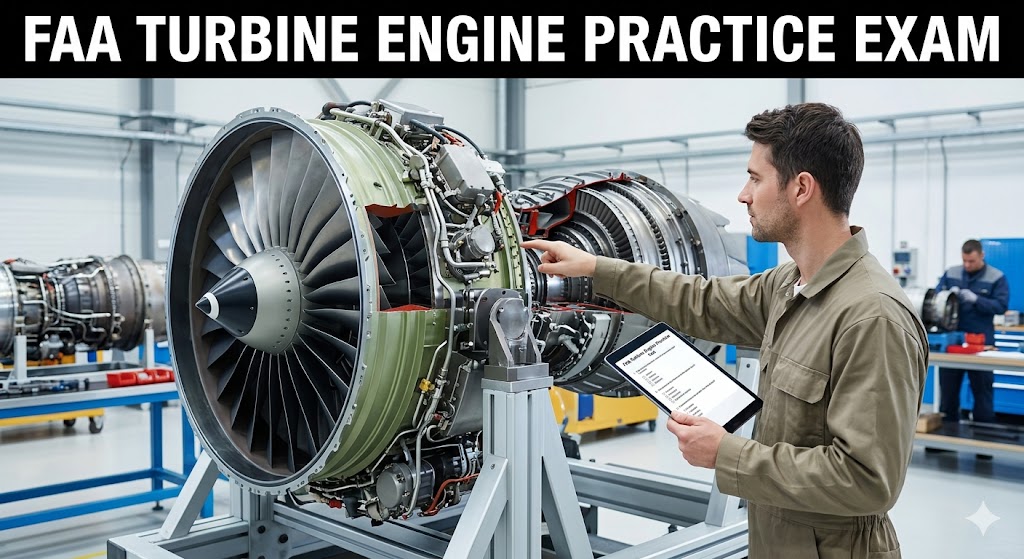
Additional Information
What the Course Entails and Exam Details
The path to earning a Turbine Engine Powerplant rating involves comprehensive training covering the theoretical and practical aspects of jet and turboprop engine technology. Core topics include:
Turbine Engine Theory and Construction: Principles of jet propulsion, engine configurations (turbojet, turbofan, turboprop, turboshaft), and the design and function of major components like compressors, combustion chambers, turbines, and exhaust systems.
Engine Systems: Detailed study of supporting systems, including fuel systems and controls, lubrication systems, ignition and starting systems, air systems (cooling, bleed air), and engine instrument systems.
Performance and Operation: Understanding engine performance parameters, monitoring engine health, troubleshooting malfunctions, and executing standard operating procedures and power checks.
Maintenance and Inspection: Procedures for routine inspections, major overhauls, engine removal and installation, and recognizing and rectifying component wear and damage.
Regulatory Requirements: Knowledge of FAA regulations (Title 14 CFR) relevant to engine maintenance, record-keeping, and airworthiness standards.
What to Expect in the Final Exam
While a practice exam can vary in its parameters, it is built to simulate the official FAA Powerplant knowledge test. Here is what to expect from the official test that this practice material supports:
Format: The FAA Knowledge Test is typically a computer-based, multiple-choice exam.
Number of Questions: The Powerplant test (one of three required for full A&P) consists of approximately 100 questions covering both reciprocating and turbine engines, as well as engine systems.
Passing Score: The required passing score is 70% or higher.
Time Limit: Applicants are allowed a generous time limit, often around 2 hours, to complete the exam.
Rules: The test is proctored at an authorized testing center. You are generally allowed to use a calculator (non-programmable) and must reference figures and diagrams from the FAA-provided Knowledge Test Supplement book. No outside notes or unauthorized resources are permitted. A practice test allows you to rehearse under these timed conditions and become comfortable with the question types.
How to Study and Exam Centers
Preparation is key to succeeding on the FAA Turbine Engine/Powerplant knowledge test. A combination of structured learning and repetitive practice is recommended:
Actionable Study Strategies:
Use Official FAA Publications: The Aviation Mechanic Powerplant Handbook (FAA-H-8083-32A) is the primary source material and should be your core textbook.
Utilize Reputable Test Prep Resources: Purchase reliable practice test software or study guides (like those from Gleim, ASA, or Dauntless) that have extensive databases of real and representative FAA questions.
Engage in Repetitive Practice: Consistently take practice exams to identify weak areas. Don't just memorize answers; focus on understanding the logic behind why the correct answer is right and why the incorrect options are wrong.
Join Study Groups: Interacting with peers or seeking guidance from experienced mechanics can clarify complex concepts and provide motivation.
Where and How to Take the Exam:
Official Knowledge Test: The official FAA knowledge tests must be taken at an authorized PSI Testing Center. You need to register for the test through PSI and create an account on the FAA's IACRA (Integrated Airman Certification and Rating Application) system before scheduling. These centers are located across the United States.
Practice Tests: The practice test itself is accessed through online learning platforms, downloaded software, or mobile applications provided by various flight schools, maintenance schools, and test prep companies.
Job Opportunities from the Course
Earning your FAA Powerplant rating, with its focus on turbine engines, significantly broadens your career horizons in the aviation industry. Specific job titles and career paths this certification can unlock include:
Aircraft Powerplant Mechanic
Turbine Engine Technician
Jet Engine Maintenance Specialist
Turboprop Technician
Powerplant Maintenance Supervisor
Aircraft Engine Overhaul Technician
Aviation Quality Assurance Inspector (Powerplant)
Aerospace Engine Repair Coordinator
Field Service Representative (for engine manufacturers)
Aviation Maintenance Technical Instructor
Frequently Asked Questions
Reviews
5.0
Based on 0 reviews
Leave a Review
No reviews yet. Be the first to review!