
Facial Specialist Practice Exam
$69.00
- Buy to unlock unlimited access to all Quiz questions and Answers in this Quiz.
- After purchase you can print a PDF of the whole quiz at any point. The PDF will contain the questions and the correct answers.
About this Exam
A Facial Specialist Practice Exam is an essential tool designed to help aspiring skincare professionals prepare for their official state licensure or certification tests. While actual titles vary by state (sometimes called an Esthetician license, a Skin Care Specialist registration, or a Facial Specialist license), this exam specifically targets the foundational knowledge required to perform safe and effective facial treatments, skin analyses, and associated beauty services. This study guide is designed for individuals who have completed, or are in the process of completing, a state-approved skin care or esthetics program. It serves as a diagnostic tool to assess your readiness, build confidence, and identify areas needing further review before you face the real final examination that unlocks your professional career in the beauty and wellness industry.
Ready to test your knowledge?
Buy Now to Access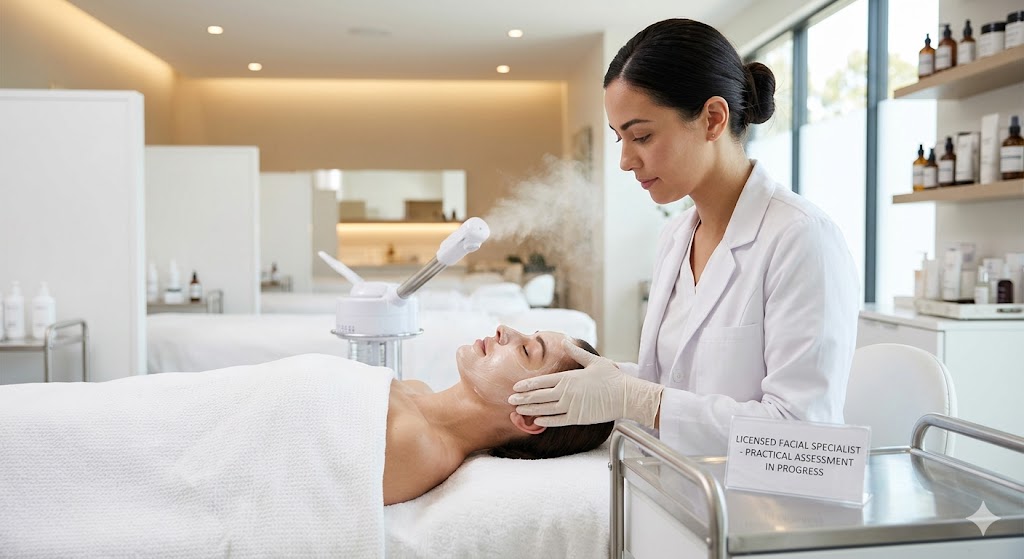
Additional Information
What the Course Entails and Exam Details
The comprehensive facial specialist curriculum and subsequent exam are structured into two distinct areas: theoretical knowledge and practical application. Candidates are tested on their mastery of skincare science and their ability to safely execute procedures. A typical exam covers a broad syllabus, including:
Scientific Concepts: Microbiology, infection control, safety data sheets (SDS), and standard precautions are paramount. You must understand basic skin anatomy and physiology, cell and tissue function, gland structure, and the endocrine and body systems relevant to skin health. Knowledge of skin disorders and diseases (and which require medical referral) is critical.
Skin Care and Services: This section covers client consultation, documentation, and skin analysis to determine client type, condition, and contraindications. Techniques involve cleansing, steaming, exfoliation, extraction, massage movements, and the correct application of various masks. You are also tested on your knowledge of specialized electrical equipment used in facial treatments (e.g., galvanic, high-frequency), as well as basic knowledge of makeup application, body treatments, and temporary hair removal methods like waxing.
What to Expect in the Final Exam
The actual structure of the final facial specialist licensing exam varies by jurisdiction but usually consists of two major components: a written (theory) exam and a practical (hands-on) skills assessment.
Written Exam: This part typically includes between 100 and 120 multiple-choice questions administered via computer. You generally have a time limit of 1.5 to 2 hours to complete this section. The questions are divided between scientific theory and applied skincare concepts. A passing score is usually between 70% and 75%.
Practical Exam: During the practical assessment, you are required to demonstrate core procedures on a mannequin or a live model in front of examiners. You will be evaluated on your skill technique, sanitation procedures, and adherence to safety protocols during tasks such as cleansing, exfoliation, extractions, facial massage, and mask application. You must pass both the written and practical components to receive your license.
How to Study and Exam Centers
Effective preparation requires a combination of rote memorization and hands-on practice.
Study Strategies:
Use Targeted Practice Tests: Treat the practice exam like the real thing by timing yourself to build stamina and identify weak subject areas. Review explanations for every wrong answer.
Create Flashcards: Develop physical or digital flashcards for key terms, skin diseases, muscle groups, and product ingredients.
Outline Procedural Steps: Write down and vocalize the step-by-step process for every facial service to ensure a flawless execution during the practical exam.
Utilize Study Guides: Invest in comprehensive study guides that break down complex scientific concepts into manageable sections.
Exam Centers: The registration for and location of the final exam are determined by your state’s Board of Cosmetology or relevant licensing agency. Upon graduation, your school will usually help you register. Most states utilize large, authorized, third-party testing organizations such as Pearson VUE or PSI Services, which operate designated computer-based testing centers nationwide. The practical exam might be held at these same centers, a specialized testing facility, or an authorized beauty school. Some states are also beginning to offer remote proctoring options for the written portion of the exam.
Job Opportunities from the Course
Successfully passing the Facial Specialist Exam and obtaining your license unlocks a diverse array of exciting career paths in the lucrative beauty and wellness sectors. Licensed professionals can find rewarding employment in various settings, including:
Facial Specialist / Esthetician in a Day Spa or Resort Spa
Medical Esthetician in a Dermatology Clinic or Plastic Surgery Center
Medi-Spa Technician
Skin Care Consultant or Brand Ambassador
Product Representative for Professional Skincare Lines
Spa Manager or Owner
Cosmetics Buyer
Beauty Educator or Instructor (with further certification)
Skincare Content Creator or Influencer
Frequently Asked Questions
Reviews
5.0
Based on 0 reviews
Leave a Review
No reviews yet. Be the first to review!