
Falconry Apprentice Practice Test
$69.00
- Buy to unlock unlimited access to all Quiz questions and Answers in this Quiz.
- After purchase you can print a PDF of the whole quiz at any point. The PDF will contain the questions and the correct answers.
About this Exam
The Falconry Apprentice Exam is a mandatory state-administered certification designed for individuals who want to become licensed falconers.
This rigorous test ensures that aspiring falconers possess the essential knowledge required to safely trap, train, and care for birds of prey.
It is tailored for wildlife enthusiasts, conservationists, and hunting advocates who are ready to commit to the demanding yet rewarding lifestyle of falconry.
By passing this exam, you prove your dedication to raptor welfare and earn the legal right to practice this ancient sport under the guidance of a sponsor.
Ready to test your knowledge?
Buy Now to Access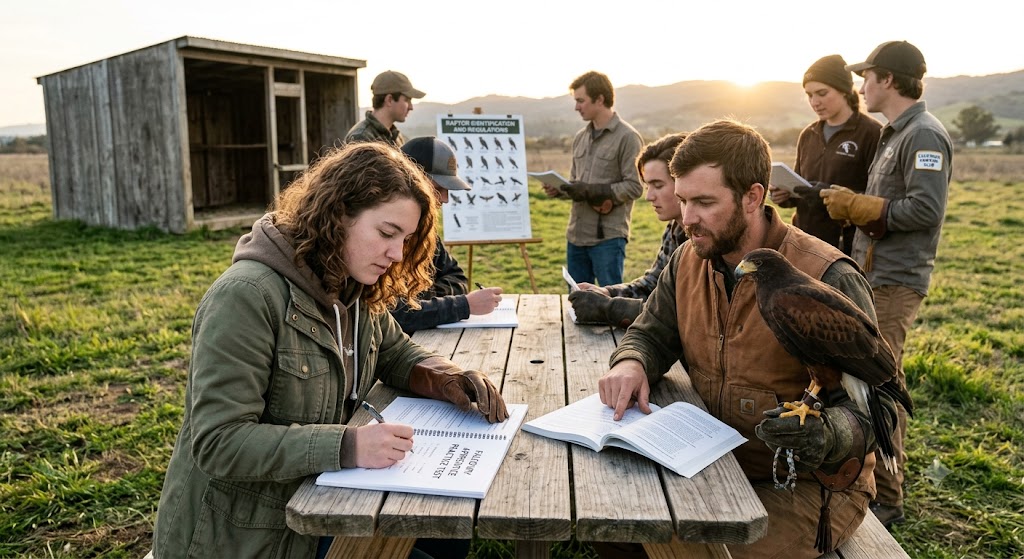
Additional Information
What the Course Entails and Exam Details
Preparing for the apprentice falconer exam requires mastering a wide array of biological and legal topics.
You will study raptor identification, learning how to distinguish various species of hawks, falcons, and owls in the wild.
The syllabus heavily emphasizes bird health, covering common diseases like aspergillosis and bumblefoot, as well as proper nutrition and emergency care.
You will also learn about falconry equipment, understanding how to properly use and maintain jesses, anklets, swivels, and hoods.
Finally, a significant portion of the material focuses on both federal and state wildlife regulations to ensure you remain fully compliant with the law.
What to Expect in the Final Exam
The final exam is typically a closed-book, multiple-choice test consisting of 100 comprehensive questions.
To pass, you are generally required to score a minimum of 80 percent, though this can vary slightly depending on your specific state.
You will usually be given a generous time limit of up to two hours to complete the test, which provides ample time to read and carefully consider each question.
There is no practical handling component during the written exam itself, as your physical skills will later be evaluated and vouched for by your official falconry sponsor.
Be prepared for strict testing conditions, meaning no cell phones, reference books, or outside notes will be allowed in the testing room.
How to Study and Exam Centers
The most effective way to prepare is by thoroughly reading your state's official falconry manual alongside highly recommended textbooks like the California Hawking Club Apprentice Study Guide.
Taking a high-quality practice exam is absolutely crucial, as it familiarizes you with the wording of the questions and helps identify your weak areas before the real test.
Reaching out to local falconry clubs is another excellent strategy, as current falconers can offer invaluable mentorship and study tips.
When you are ready to test, you will not go to a standard commercial testing center like Pearson VUE.
Instead, the exam is exclusively administered by your state's Department of Fish and Wildlife or equivalent natural resources agency.
You will need to contact your local wildlife regional office directly to schedule an appointment and pay any required testing fees.
Job Opportunities from the Course
While falconry is traditionally a sport, earning your apprenticeship and eventually becoming a master falconer opens up several unique professional career paths.
Licensed Falconer: Hunt alongside birds of prey and participate in local or national falconry meets.
Bird Abatement Specialist: Use trained raptors to naturally deter nuisance birds like pigeons or seagulls from agricultural fields, airports, and resorts.
Wildlife Educator: Work with nature centers or schools to conduct public outreach programs using non-releasable birds of prey.
Raptor Rehabilitator: Partner with veterinary clinics and wildlife rescues to heal and release injured wild raptors.
Zoo or Sanctuary Animal Trainer: Apply specialized avian conditioning techniques to care for and train captive birds of prey in professional zoological settings.
Frequently Asked Questions
Reviews
5.0
Based on 0 reviews
Leave a Review
No reviews yet. Be the first to review!