
FBLA Computer Problem Solving Practice Test
$69.00
- Buy to unlock unlimited access to all Quiz questions and Answers in this Quiz.
- After purchase you can print a PDF of the whole quiz at any point. The PDF will contain the questions and the correct answers.
About this Exam
The Future Business Leaders of America (FBLA) Computer Problem Solving competitive event is a prestigious challenge designed for high school students who are passionate about information technology, systems analysis, and technical support. This comprehensive assessment goes beyond basic computer literacy, aiming to find the individuals who possess a deep-seated understanding of how computer systems function and, more importantly, how to fix them when they do not. It is an ideal starting point for future systems analysts, network engineers, help desk managers, and cybersecurity professionals, providing a unique platform to prove their technical acumen on a state and national stage.
Ready to test your knowledge?
Buy Now to Access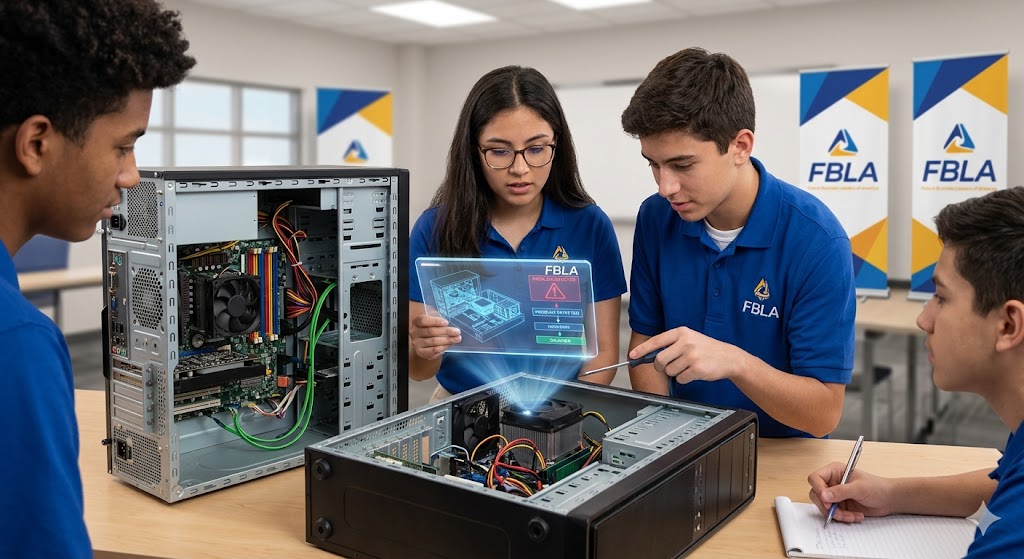
Additional Information
What the Course Entails and Exam Details
To excel in the FBLA Computer Problem Solving event, students must possess a broad and integrated knowledge base that spans several core competencies within the field of Information Technology. The syllabus covers the entirety of a computer system's lifecycle and operational components. Key focus areas include a thorough understanding of current operating systems (Windows, macOS, Linux) and their core components, such as memory management, file systems, and command-line interfaces. Hardware fundamentals, including CPU architecture, storage devices (HDD, SSD), peripheral connectivity (USB, bluetooth, legacy ports), and extensive details on mobile devices and printer technologies are paramount. Furthermore, the exam heavily emphasizes network fundamentals, covering topologies, devices (routers, switches), protocols (TCP/IP, DNS, DHCP), and security principles, including threat types (malware, phishing), protective measures (firewalls, encryption), and risk management. Problem-solving methodology is not a separate section but a red thread throughout the test, testing a candidate's ability to diagnose, analyze, and formulate a step-by-step solution to scenarios.
What to Expect in the Final Exam
The FBLA Computer Problem Solving final exam is an individual, objective test designed to be completed under a strict time limit. Candidates should prepare for a vigorous 100-question multiple-choice examination, which is a standard format for FBLA objective testing. The time allowed to complete the assessment is usually 50 minutes, requiring not only technical knowledge but also decisive thinking and efficient time management, as each question must be answered in an average of 30 seconds. While the passing score can vary slightly between different conference levels and states, it is important to remember that FBLA competitions are performance-based; simply passing is rarely enough. The goal is to achieve one of the highest scores to advance from regional/district competitions to the State Leadership Conference (SLC), and ultimately to the National Leadership Conference (NLC). No reference materials, study guides, or calculators are allowed in the testing area.
How to Study and Exam Centers
Preparation is the absolute key to success. A multi-faceted study approach is most effective. Start by mastering the official FBLA Competitive Events Guidelines, which will give you the precise breakdown of knowledge areas. Utilize resources such as industry-standard certification study guides (e.g., CompTIA A+), and practice tests specifically designed for the FBLA Computer Problem Solving event, which can often be found on chapter websites or educational platforms. Hands-on experience is invaluable; practice building, troubleshooting, and configuring computer systems, setting up basic local networks, and working within different operating system environments. Create flashcards for critical acronyms, port numbers, and commands. FBLA objective tests are typically administered through secure online portals. For initial competition rounds, these might be completed at your own school under the supervision of an adviser. If you advance to the SLC or NLC, the exams are taken in designated, physical testing centers or large ballrooms at the conference venue, equipped specifically for the competitive event.
Job Opportunities from the Course
A strong performance in the FBLA Computer Problem Solving event, especially when followed by advanced education or certifications, serves as a powerful catalyst for numerous successful careers in the booming technology sector. The analytical, diagnostic, and systems-level thinking developed for this exam are directly transferable to the following high-demand roles:
Help Desk Technician
IT Support Specialist
Systems Analyst
Network Administrator
Junior Cybersecurity Analyst
Technical Support Engineer
Database Administrator
Field Service Technician
Information Technology Manager
Frequently Asked Questions
Reviews
5.0
Based on 0 reviews
Leave a Review
No reviews yet. Be the first to review!