
FDA & Electroacoustic Analysis Practice Test
$69.00
- Buy to unlock unlimited access to all Quiz questions and Answers in this Quiz.
- After purchase you can print a PDF of the whole quiz at any point. The PDF will contain the questions and the correct answers.
About this Exam
Welcome to our comprehensive study guide for the FDA & Electroacoustic Analysis Practice Exam! This practice test is specifically designed for professionals and students seeking to validate their expertise in the critical field of auditory technology analysis and regulatory standards. Whether you are aiming to become a Hearing Aid Specialist, an Audiologist, an Audio Engineer working on regulated devices, or a Quality Control Technician in the hearing device industry, this guide is your roadmap to success. You will gain a deep understanding of how to measure and verify the electroacoustic performance of devices like hearing aids, and how these measurements must align with stringent Food and Drug Administration (FDA) regulations to ensure both safety and effectiveness.
This qualification is an invaluable asset for anyone looking to advance their career and demonstrate specialized skills in a highly regulated and rapidly evolving healthcare technology sector.
Ready to test your knowledge?
Buy Now to Access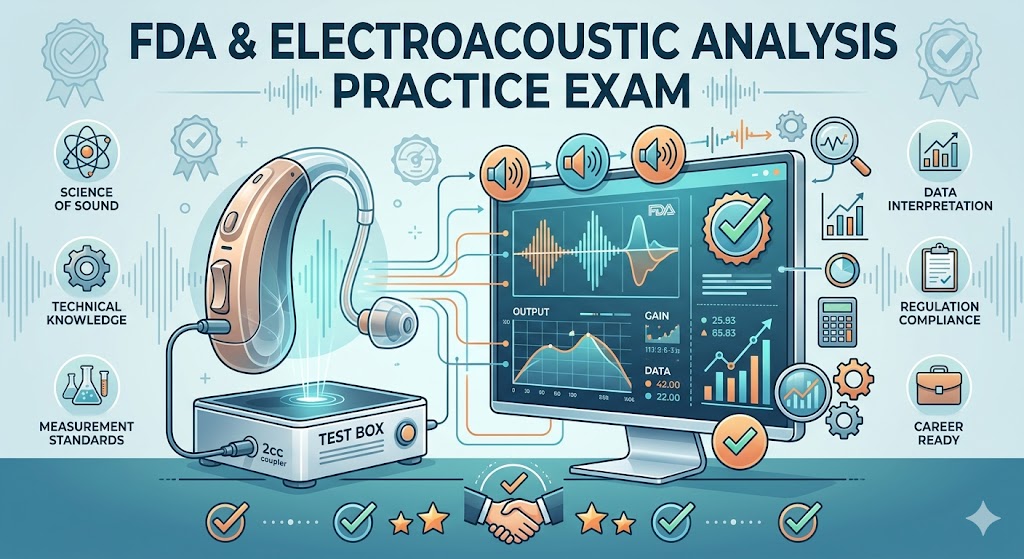
Additional Information
What the Course Entails and Exam Details
A typical course preparing for this type of exam is detailed and practical, focusing on the rigorous science and policy that govern modern hearing technology. Key learning areas include:
Fundamental Acoustics & Sound Wave Properties: Understand the core principles of sound, its measurement, and how it behaves.
Hearing Device Transducers & Amplification: Learn about microphones, receivers, and the electronic circuitry that makes hearing devices work.
Electroacoustic Measurement Principles: Master the techniques for objective measurement, including input-output functions, gain, frequency response, and maximum output.
Specialized Test Equipment: Gain proficiency with tools such as 2cc couplers, artificial ears, and specialized test boxes for accurate analysis.
ANSI & IEC Standards: Understand the specific methods defined by standard bodies like the American National Standards Institute (ANSI) and the International Electrotechnical Commission (IEC) which form the basis for regulatory verification.
FDA Regulations: Deep dive into relevant FDA rules, including safety limits (OSPL90), latency requirements, labeling standards (for both prescription and over-the-counter devices), and overall regulatory classification.
Data Interpretation & Troubleshooting: Develop the critical thinking skills to analyze complex measurement data, identify performance issues, and ensure compliance.
Expect a strong emphasis on both technical knowledge and its practical application to real-world scenarios in the hearing device industry.
What to Expect in the Final Exam
While exact details can vary by certification body, you can generally expect the FDA & Electroacoustic Analysis Final Exam to be a robust assessment of your theoretical knowledge and practical competence. Here's a breakdown of what to anticipate:
Format: The primary component will likely consist of multiple-choice questions, which test your understanding of core concepts, standards, and regulations. Some exams may also include practical elements, data analysis from illustrative diagrams, or case-study scenarios where you must apply your knowledge to solve a specific technical or regulatory problem.
Content: Questions will cover the entire scope of topics outlined in the previous section, with a significant emphasis on applying both measurement techniques and regulatory constraints. You will need to demonstrate your ability to interpret electroacoustic data correctly and determine if a device meets manufacturer specifications and FDA standards.
Passing Score: A passing score is set by the specific exam provider or licensing board to ensure candidates possess a standard level of competency.
Time Limit: You will be given a specific, designated time to complete the examination, requiring efficient time management.
Rules: Standard examination rules will apply. These typically involve requirements for valid identification, a restricted environment (either in a physical testing center or a securely proctored online setting), and strict policies against unauthorized materials or collaboration.
Always consult the official resources and guidelines provided by your specific certification or licensing body for the most accurate and up-to-date information regarding your exam format and requirements.
How to Study and Exam Centers
Effective preparation is the key to conquering this challenging exam. Here are some actionable strategies:
Utilize the Practice Test: The FDA & Electroacoustic Analysis Practice Test is your primary tool! Use it extensively to familiarize yourself with the question styles, identify your weak areas, and build confidence. Repeat the practice test under simulated exam conditions to improve your speed and accuracy.
Review Official Study Guides: If available, always use the study guides, recommended textbook lists, and online resources provided by the official exam body (e.g., ASHA, HIS, a state licensing board, or a professional development academy). These are your most reliable sources.
Study Key Standards: Access and thoroughly study the relevant ANSI and IEC standards (e.g., ANSI S3.22 for hearing aid measurement) and the corresponding FDA regulations for hearing devices. Many related documents are available on official websites or through professional libraries.
Practical Practice: If possible, gain hands-on experience with electroacoustic measurement equipment. Many training programs, workshops, and educational courses offer access to such gear. Understanding the practical application can greatly enhance your theoretical knowledge.
Form Study Groups: Collaborating with peers can provide diverse perspectives and mutual support. Discussing complex topics and testing each other can solidify understanding.
Where to Take the Exam: The final exam is typically administered through recognized and secure platforms. Common locations and methods include:
Online Portals: Many professional bodies and schools now offer securely proctored online testing, allowing you to take the exam from a quiet, dedicated space. This often requires special software to maintain integrity.
Testing Centers: Specialized, authorized testing centers like Pearson VUE or Prometric are frequently used for professional licensing exams. These provide a controlled, standardized environment.
Authorized Schools & Programs: Certain accredited training programs or schools are authorized to administer their own certification exams, often at the conclusion of a relevant course.
Professional Association Sites: For some certifications, specific physical locations or conferences organized by the relevant professional association may serve as testing venues.
Always verify the exact testing locations and registration process with your specific exam provider.
Job Opportunities from the Course
A strong understanding of FDA regulations and electroacoustic analysis is highly valued across the hearing technology industry. Successfully passing a comprehensive exam in this field significantly enhances your resume and can unlock numerous specialized and rewarding career paths, such as:
Hearing Aid Specialist / Hearing Instrument Practitioner: Verify device performance and compliance during fitting and patient management.
Audiology Assistant / Technician: Assist audiologists in equipment calibration and performing technical analysis of devices.
Audiologist (in regulated practice/manufacturing): Apply advanced EAA skills in clinical troubleshooting or within the medical device industry.
Regulatory Affairs Specialist (Auditory Devices): Navigate and ensure compliance with FDA, CE mark, and other regulatory standards for hearing aid manufacturers.
Quality Control Technician / Engineer (Hearing Devices): Oversee the rigorous technical testing of auditory technology during manufacturing.
Acoustic / Sound Engineer (Hearing Science & Devices): Design, develop, and test next-generation hearing technology within a regulated framework.
Calibration Technician (Audiometric Equipment): Certify that audiometers, test boxes, and other audiological equipment are functioning correctly.
Frequently Asked Questions
Reviews
5.0
Based on 0 reviews
Leave a Review
No reviews yet. Be the first to review!