
FDNY CoF Supervision of Piped Non-Flammable Medical Gases (G-71) Practice Exam
$69.00
- Buy to unlock unlimited access to all Quiz questions and Answers in this Quiz.
- After purchase you can print a PDF of the whole quiz at any point. The PDF will contain the questions and the correct answers.
About this Exam
The FDNY Certificate of Fitness (CoF) G-71 for the Supervision of Piped Non-Flammable Medical Gases is a critical certification for professionals operating and managing non-flammable medical gas systems in New York City. This designation is essential for individuals who hold responsibility for ensuring the safe storage, handling, use, and general supervision of systems that deliver medical gases such as oxygen, medical air, nitrogen, and nitrous oxide within healthcare and medical facilities, including hospitals, clinics, and nursing homes. Designed to align with stringent fire safety regulations, this certification ensures that supervisors can effectively manage potential risks and emergency situations associated with these systems. Obtaining the G-71 CoF is a key step for facility engineers, maintenance staff, and safety officers dedicated to maintaining a safe environment for both patients and staff.
Ready to test your knowledge?
Buy Now to Access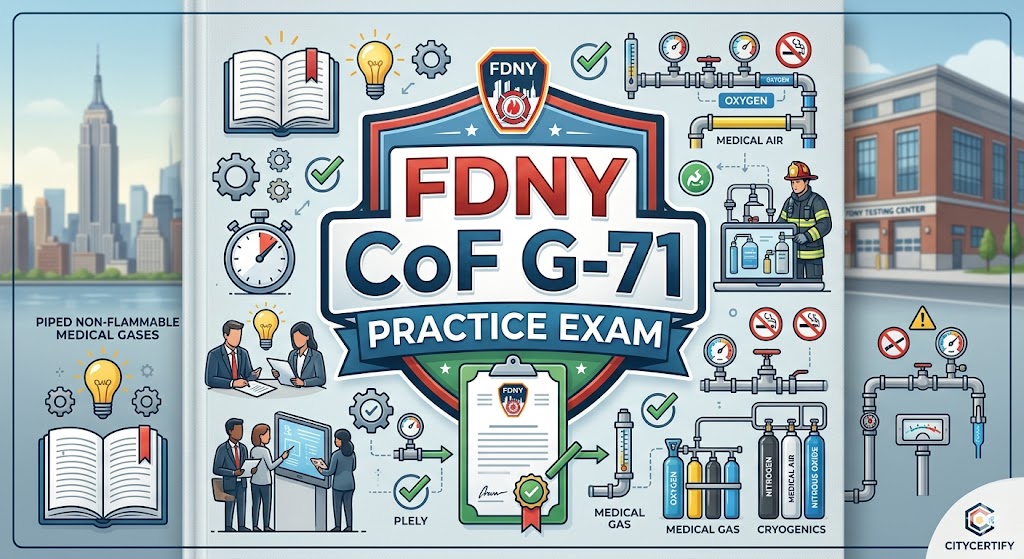
Additional Information
What the Course Entails and Exam Details
This examination assesses a comprehensive range of knowledge and operational skills. Candidates must demonstrate deep understanding of various types of non-flammable medical gases, their specific properties, and the unique safety challenges each presents. The core topics covered include detailed regulations and practices for safe storage—including cylinder handling, manifold systems, and bulk storage units—as well as the proper procedures for connecting and operating distribution piping and alarm systems. The syllabus encompasses FDNY fire codes, relevant NFPA standards, emergency response protocols for leaks or malfunctions, and general safety procedures specifically tailored to high-pressure gas systems in a medical context. Preparing for this exam requires more than simple memorization; it demands the ability to apply practical knowledge to real-world operational scenarios in high-stakes environments.
What to Expect in the Final Exam
The final G-71 exam is a timed, computer-based assessment, featuring multiple-choice questions administered via touch screen monitors at designated FDNY centers. To achieve certification, candidates must secure a passing score, which is typically 70%. The exam itself is structured around a specific number of questions, commonly between 50 and 70, with a limited time allowed for completion, often ranging from 1.5 to 2 hours. Candidates should be aware that strictly only approved materials—such as an official FDNY study guide or a clean, non-electronic dictionary (subject to inspection)—are permitted during the test. All electronic devices, including mobile phones, are strictly prohibited in the examination room and must be turned off. This environment ensures the integrity and fairness of the testing process.
How to Study and Exam Centers
Effective preparation for the G-71 CoF exam requires a structured approach. The primary and most essential resource is the official FDNY study guide booklet specifically for G-71, which provides detailed content and guidance. Supplements should include rigorous practice using dedicated practice exams and online quizzes offered by educational platforms specializing in NYC certification. These simulated tests help candidates familiarize themselves with the question formats, assess their progress, and improve speed and accuracy. Focus should be placed on understanding core concepts, safety protocols, and key definitions rather than just memorization. The examinations are conducted in person at the FDNY Headquarters computer-based testing center, located at 9 MetroTech Center in Brooklyn. Walk-in availability or scheduled appointments can typically be confirmed on the official FDNY website, along with current test fees and required documentation, such as valid government-issued ID and an employer recommendation letter.
Job Opportunities from the Course
A valid FDNY CoF G-71 is a highly valued credential in the New York City healthcare sector and significantly enhances career prospects. Key job roles and paths unlocked or supported by this certification include:
Medical Facility Supervising Engineer
Hospital Maintenance Technician (Gas Systems Focus)
Healthcare Safety Officer (Medical Gas Systems)
Supervising Engineer for piped gas systems
Facilities Manager (Healthcare Settings)
Chief Engineer in a medical institution (as a mandatory or desirable prerequisite for promotion)
Frequently Asked Questions
Reviews
5.0
Based on 0 reviews
Leave a Review
No reviews yet. Be the first to review!