
FDNY Firefighter Probationary Training Cycles 1-6 Practice Exam
$69.00
- Buy to unlock unlimited access to all Quiz questions and Answers in this Quiz.
- After purchase you can print a PDF of the whole quiz at any point. The PDF will contain the questions and the correct answers.
About this Exam
The FDNY Firefighter Probationary Training Cycles 1-6 represents a crucial phase in the journey of becoming a New York City Firefighter. This comprehensive training program, conducted at the FDNY Fire Academy, also known as "The Rock," is designed to transition probationary firefighters from eager recruits into proficient, disciplined, and resilient members of the department. This specific practice exam is an invaluable tool for candidates navigating this rigorous process, allowing them to assess their knowledge and readiness for the critical examinations encountered during the initial six cycles of their training. It is specifically designed for individuals who have already been selected as FDNY Probationary Firefighters (Probies) and are currently enrolled in the training academy, testing their grasp of fundamental firefighting principles, procedures, and safety protocols taught in the classroom and during hands-on drills.
Ready to test your knowledge?
Buy Now to Access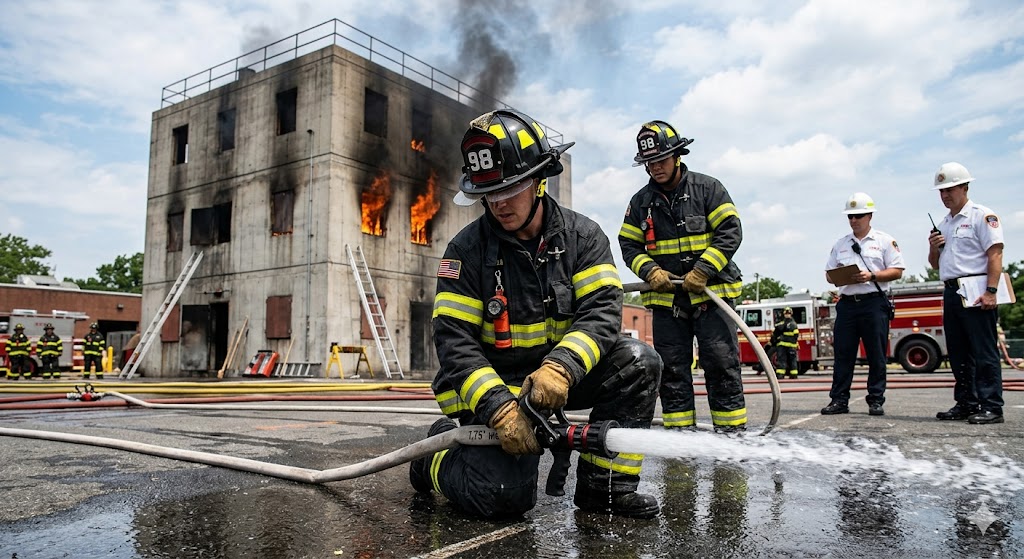
Additional Information
What the Course Entails and Exam Details
The FDNY Probationary Training Program, specifically Cycles 1-6, covers an intense and comprehensive curriculum focused on building the foundational knowledge and practical skills necessary for safe and effective firefighting operations. During these initial cycles, Probies are immersed in a wide range of essential topics, including:
FDNY Organization and History: Understanding the structure, traditions, and core values of the FDNY.
Fire Behavior and Science: Learning the principles of combustion, heat transfer, and fire dynamics within various structures.
Firefighter Safety and Survival: Mastering self-preservation techniques, including Mayday procedures, entanglement drills, and building collapse awareness.
Personal Protective Equipment (PPE) and SCBA: Gaining proficiency in the correct use, inspection, and maintenance of bunker gear and Self-Contained Breathing Apparatus.
Hose Lines and Nozzles: Learning the types of fire hoses, nozzle operations, water flow principles, and advanced techniques for stretching and advancing hose lines in diverse scenarios.
Ladders: Mastering the safe and effective placement, raising, and climbing of various ground ladders.
Forcible Entry: Developing skills in using specialized tools to gain access to locked structures under emergency conditions.
Search and Rescue: Learning systematic techniques for locating and removing victims from fire-involved or hazardous environments.
Ventilation Principles: Understanding the strategic use of positive pressure ventilation, vertical ventilation, and other methods to control smoke and heat flow.
Communications: Gaining proficiency in the use of department radios, terminology, and command structures.
The specific content within Cycles 1-6 lays the critical foundation for all subsequent training, with each cycle progressively introducing more complex skills and demanding higher levels of physical and mental fortitude.
What to Expect in the Final Exam
The formal assessment for FDNY Probationary Firefighters during Cycles 1-6 is not a single "final exam" in the traditional academic sense. Instead, it involves a rigorous and multi-faceted evaluation process throughout the entire training period. Probies must consistently demonstrate proficiency in both classroom knowledge and practical application to successfully advance through each cycle and ultimately graduate from the Academy.
Written Examinations:
Format: Multiple-choice questions are common, testing comprehension of the material covered in lectures, manuals, and standard operating procedures (SOPs). These exams assess a wide range of theoretical knowledge, from fire science principles to departmental policies.
Frequency: Regular written quizzes and modular exams are administered throughout each cycle, with comprehensive exams often concluding major subject areas or groups of cycles.
Passing Score: The FDNY maintains extremely high standards, and probationary firefighters are typically required to achieve a score of at least 70% to pass any written examination.
Practical Skills Evaluations (Evolutions):
Format: Hands-on testing, known as "evolutions," where Probies must perform specific firefighting tasks under the direct supervision and evaluation of instructors. Examples include deploying a specific hose line, raising a 24-foot ladder within a certain timeframe, performing a search and rescue drill in smoke-filled conditions, and correctly utilizing a Self-Contained Breathing Apparatus.
Assessment: Evaluations are typically conducted using standardized checksheets, with a focus on precision, efficiency, safety, teamwork, and adherence to established techniques and procedures.
Passing Requirement: A "Pass/Fail" grading system is common for practical evolutions. Probies must often achieve a 100% mastery level for critical safety-related skills.
Overall Performance Evaluation:
Continuous Assessment: Beyond specific exams and drills, instructors continuously evaluate probationary firefighters on their discipline, attitude, fitness levels, ability to work as a team, and overall conduct.
Graduation Requirement: Successful completion of all written exams, practical evaluations, and physical fitness assessments, combined with a consistently positive overall performance review, is mandatory to graduate from the Probationary Firefighter Training Program and become a Full-Fledged FDNY Firefighter.
How to Study and Exam Centers
Preparation for the rigorous FDNY Probationary Training Cycles 1-6 requires unparalleled dedication, discipline, and a proactive approach to learning. Here are effective strategies for success:
Actionable Study Strategies:
Immerse Yourself in Official FDNY Manuals: These publications are your primary source of technical knowledge. Study them meticulously, taking detailed notes and highlighting critical information, safety protocols, and standard operating procedures (SOPs). Pay close attention to "Bulletins" and "Training Manuals" relevant to each cycle's topics.
Utilize a Variety of Study Formats: Complement manual reading with other methods. Create flashcards for key terms, acronyms, and procedural steps. Use diagrams and flowcharts to visualize concepts like fire behavior and hydraulics. Look for instructional videos that demonstrate proper techniques, especially for hands-on skills.
Active Recall and Practice Quizzes: Regularly test your knowledge using practice questions and quizzes, including this specific "FDNY Firefighter Probationary Training Cycles 1-6 Practice Exam." Actively trying to recall information strengthens memory and reveals areas needing more focus. Simulate exam conditions (e.g., time limits) whenever possible.
Form or Join Study Groups: Collaborate with fellow probationary firefighters. Discussing concepts, quizzing each other, and reviewing practical drills together can provide diverse perspectives and reinforce learning. Teaching a concept to someone else is a powerful way to solidify your own understanding.
Visualize Practical Evolutions: Mentally rehearse every step of each practical skill you learn. Visualize the actions, the commands, the equipment, and the expected outcomes. This mental practice can significantly improve performance when you get onto the training ground.
Prioritize Physical Fitness: Maintain peak physical conditioning throughout the entire training process. Endurance, strength, and agility are crucial for performing demanding practical drills safely and effectively, especially under stress and in full gear. Physical fatigue can impact mental sharpness.
Maintain a Resilient Mindset: The training is intentionally designed to be physically and mentally challenging. Stay focused, learn from your mistakes, and maintain a positive "never quit" attitude. Seek support from your classmates, instructors, and mentors.
Taking the Exams and Evaluatons:
The exams and practical evaluations associated with the FDNY Probationary Training Cycles 1-6 are conducted on-site at the FDNY Fire Academy, located on Randall's Island, New York City. This facility, commonly referred to as "The Rock," serves as the sole testing and evaluation location for all probationary firefighters throughout their training. Written exams are typically administered in designated classrooms, while practical skills evaluations (evolutions) take place on the various training grounds, including smoke buildings, burn buildings, and simulated structural environments. The entire evaluation process is highly structured, supervised by FDNY officers and instructors, and strictly adheres to departmental protocols.
Job Opportunities from the Course
Successfully completing the FDNY Probationary Training Program, including the critical Cycles 1-6 and subsequent phases, leads to the most prestigious firefighting opportunity in New York City:
Firefighter (FDNY): This is the primary role unlocked by this comprehensive training. As an FDNY Firefighter, you are responsible for fire suppression, emergency medical response, rescue operations, hazardous materials incidents, and public fire safety education, serving the communities across New York City's five boroughs.
Specialized Units and Careers (with experience and further training): While graduation marks the start of a firefighting career, it also opens doors to further specialization within the FDNY, such as:
Specialized Company Positions: Engine Company, Ladder Company, Squad Company, Rescue Company (highly competitive).
Technical Roles: Chauffeur (apparatus operator), Fire Marshal (fire investigation).
Leadership Positions: Promoted ranks from Lieutenant, Captain, Battalion Chief, up to high-level administrative positions.
Specialized Rescue Units: High-rise rescue, technical rescue, water rescue, hazardous materials (HAZMAT) operations.
Medical Roles: With Paramedic training, firefighters can transition to FDNY EMS, serving as Emergency Medical Technicians or Paramedics.
Graduating from "The Rock" and earning your helmet and badge as an FDNY Firefighter represents not just a career achievement, but a commitment to a life of service and dedication to the safety of others in one of the world's most dynamic cities.
Frequently Asked Questions
Reviews
5.0
Based on 0 reviews
Leave a Review
No reviews yet. Be the first to review!