
FEMA 480 NFIP Floodplain Management Requirements Practice Test
$69.00
- Buy to unlock unlimited access to all Quiz questions and Answers in this Quiz.
- After purchase you can print a PDF of the whole quiz at any point. The PDF will contain the questions and the correct answers.
About this Exam
The FEMA 480 publication, titled "Floodplain Management Requirements: A Study Guide and Desk Reference for Local Officials," is the cornerstone resource for understanding the National Flood Insurance Program (NFIP). This material is specifically designed for local community officials responsible for administering floodplain management ordinances, zoning administrators, and building code officials. It serves as the definitive guide to the minimum federal requirements that communities must adopt and enforce to participate in the NFIP. This practice test is a critical preparatory tool for anyone seeking to master these regulations or preparing to challenge professional certifications in this field, such as the Certified Floodplain Manager (CFM) exam. Gaining a thorough understanding of this content helps ensure communities remain resilient and that residents have access to federally backed flood insurance.
Ready to test your knowledge?
Buy Now to Access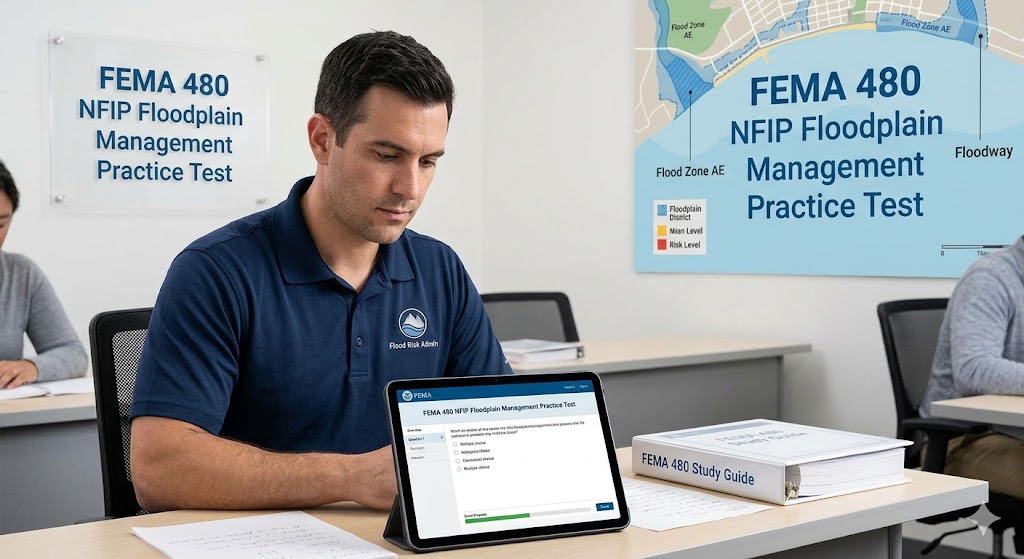
Additional Information
What the Course Entails and Exam Details
As a comprehensive study resource, the material covered here delves deeply into the complex relationship between flooding, mapping, and regulatory requirements. The curriculum is structured to guide students through the administrative, mapping, and regulatory aspects of the NFIP. Key covered topics include the history of the NFIP, understanding flood risks and flood hazards, reading and interpreting Flood Insurance Rate Maps (FIRMs), and applying minimum regulatory standards for development. The course material details specifically how to manage development in riverine and coastal floodplains, including requirements for residential and non-residential structures. It also covers administrative procedures, such as processing permits, conducting inspections, handling violations, and the substantial damage/substantial improvement rule, which is a frequent focus of assessment.
What to Expect in the Final Exam
If you are using this practice material to prepare for the Certified Floodplain Manager (CFM) designation or a formal state-level examination, you should expect a thorough assessment of your ability to apply the FEMA 480 concepts to real-world scenarios. These official exams are typically proctored, timed comprehensive assessments, primarily composed of multiple-choice and scenario-based questions. Test-takers will likely face complex questions requiring the analysis of flood maps, calculations related to Base Flood Elevations (BFE), and the application of specific ordinance language to proposed development projects. The exam requires not just recall of regulations, but a functional understanding of how to implement them to reduce flood risk. While specific passing scores can vary by the administering organization, a score of at least 70-75% is usually required to demonstrate proficiency.
How to Study and Exam Centers
The most effective study strategy is a systematic, thorough review of the entire FEMA 480 Floodplain Management Requirements document, using this practice test to gauge your progress. We recommend reading the guide unit by unit, focusing on the specific regulatory language and the rationale behind each requirement. Pay close attention to definitions, acronyms, and the precise conditions under which certain regulations apply, as detailed in the technical bulletins referenced throughout the guide. Utilize this practice test repeatedly to identify your weak points and return to the text for targeted review.
For professional certification exams based on this material, such as the Certified Floodplain Manager (CFM) exam, registration and scheduling are managed by the Association of State Floodplain Managers (ASFPM). The exam is administered through professional testing center networks, such as Meazure Learning (formerly Scantron), at physical locations nationwide, and occasionally via an online, live-proctored format. Many state floodplain management associations also offer proctored exam sessions in conjunction with their annual conferences. Candidates should consult the ASFPM website or their specific state floodplain association for the most current information on exam availability and registration procedures.
Job Opportunities from the Course
Mastery of the FEMA 480 content, particularly when combined with professional certification, opens the door to a wide range of essential career opportunities in the public and private sectors focused on disaster resilience and land use. This expertise is in high demand by local, state, and federal government agencies to ensure compliance with NFIP requirements and to manage community flood risk effectively.
Below is a list of job titles and career paths directly accessible with this specialized knowledge:
Certified Floodplain Manager (CFM)
Local Floodplain Administrator
City or County Planner
Zoning Administrator
Building Official or Code Enforcement Officer
Emergency Management Specialist
Hazard Mitigation Planner
Coastal Zone Manager
Environmental Consultant focusing on water resources
Hydrologist or Water Resources Engineer
Flood Insurance Specialist or Underwriter
Disaster Recovery Specialist
Frequently Asked Questions
Reviews
5.0
Based on 0 reviews
Leave a Review
No reviews yet. Be the first to review!