
FFA Conduct of Chapter Meetings Written Practice Test
$69.00
- Buy to unlock unlimited access to all Quiz questions and Answers in this Quiz.
- After purchase you can print a PDF of the whole quiz at any point. The PDF will contain the questions and the correct answers.
About this Exam
The Conduct of Chapter Meetings Leadership Development Event (LDE) is a cornerstone of the National FFA Organization, specifically designed for middle school and early high school members (typically grades 7-9). Its primary goal is to introduce young members to the fundamentals of parliamentary procedure and the inner workings of an FFA chapter meeting. By participating, students learn how to lead, participate effectively in, and run efficient and orderly meetings, mirroring real-world organizational governance. This event and the associated written practice test are not just about memorizing rules; they are about fostering confidence, communication skills, and critical thinking in a team environment, preparing the next generation of agricultural and community leaders. The written practice test serves as a vital self-assessment and preparatory tool to gauge understanding of these essential concepts before the actual competition.
Ready to test your knowledge?
Buy Now to Access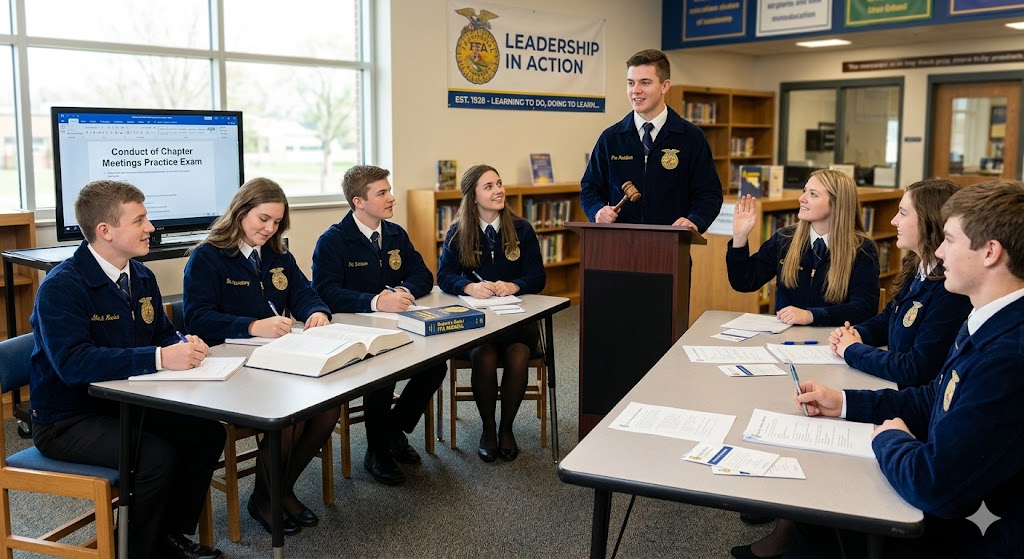
Additional Information
What the Course Entails and Exam Details
This event and the study materials, including the practice test, cover a defined set of topics crucial for a successful team demonstration. Key areas of focus include:
Parliamentary Procedure: Understanding the roles and relationships of various motions (privileged, subsidiary, main, incidental), knowing when and how to correctly use them, making and stating motions, seconding, debating, voting procedures, and handling the order of business. Members must become fluent in the language and process described in the official parliamentary authority, currently "Robert's Rules of Order Newly Revised."
FFA Official Dress & Traditions: Knowledge and adherence to strict FFA Official Dress standards is scored in the live event, and related questions may appear on the written exam. Understanding the standard order of business for an FFA meeting and the correct execution of the official Opening and Closing Ceremonies is essential.
Officer Duties: Detailed understanding of the specific responsibilities of the chapter officers involved in the team demonstration (President, Vice President, Secretary, Treasurer, Reporter, Sentinel, and Advisor).
The actual written exam in the final contest typically consists of a set number of multiple-choice questions (e.g., 25 points, sometimes a set portion of the team's total points). These questions directly mirror the content found in the written practice test and focus on parliamentary law, officer duties, meeting room preparation, and information from the Official FFA Manual.
What to Expect in the Final Exam
While the written practice test is a study tool, the final FFA Conduct of Chapter Meetings LDE is a comprehensive team-based event evaluated by a panel of judges. Here’s what you can expect in the final event:
Team Composition: A team of seven members from the same chapter, each assigned to a specific officer role.
Three Components: The full event typically includes three distinct parts for scoring:
Written Examination: The entire team simultaneously takes a structured written test (like the practice test) focusing on parliamentary procedure, officer duties, and meeting structure within a set time limit (often around 30 minutes). Individual scores are aggregated for a team score.
Team Demonstration: The team must demonstrate, from start to finish, the opening and closing ceremonies verbatim, the correct conduct of business (using parliamentary procedure for a provided main motion and several assigned motions), and effective debate/teamwork in a preset meeting room. Judges score the team on poise, accuracy, expression, and correct procedural use.
Oral Questions: Following the demonstration, each participant is asked a pre-determined oral question related to their officer duties, parliamentary law, or the general purpose of the procedure.
Scoring: Teams and individuals are scored based on the performance in all three components. Competitive events rank teams, and winners are determined by their aggregate scores and judge rankings, using methods like the low point method (the lowest sum of rankings wins). There isn't typically a single "passing" score; instead, it is a competitive event aimed at achieving high proficiency. Strict adherence to Official FFA Dress is required and carries a significant point implication.
How to Study and Exam Centers
Preparation is the key to success in both the practice test and the final event. Use the following strategies and resources:
Practice, Practice, Practice: Utilize the [Exam Name] Practice Exam repeatedly. Identify the types of questions you miss and review the associated material. Work through the official Robert's Rules of Order and Official FFA Manual sections. Memorize the Opening and Closing ceremonies perfectly.
Study Resources: The main study materials are the current edition of Robert's Rules of Order Newly Revised (for all parliamentary procedure) and the Official FFA Manual (for FFA traditions, ceremonies, and officer duties). Past exams and practice material are often provided through state or national FFA websites, or by your chapter advisor.
Team Training: For the demonstration and oral questions, schedule regular team practices. Have mock meetings, assigned roles, and practice using various motions. Use practice score sheets or have your advisor/knowledgeable individuals act as judges to provide constructive feedback. Recording and reviewing your performances can also be beneficial.
Exam Centers / Event Locations: The [Exam Name] is not typically taken at standard commercial test centers like Pearson VUE. Instead, the written test is usually part of the actual competition held at various levels, such as local, area/district, state FFA conventions, and culminating at the National FFA Convention. Chapter advisors will provide specific details on dates, locations, and how to register. The practice test may be accessed online through official FFA portals or provided by your chapter advisor for in-chapter study.
Job Opportunities from the Course
While the Conduct of Chapter Meetings LDE is an educational experience and not a direct professional certification, the unique and transferable skills it develops unlock and enhance opportunities in various career paths. Students who master parliamentary procedure, structured decision-making, clear communication, and teamwork are better equipped for success in a wide range of fields. Possessing these skills is highly valued by employers looking for leadership potential.
Possible career areas and job roles that leverage these skills include:
Agricultural Educator: Teaching and advising young FFA members on structured leadership, communication, and procedural activities.
Association Management: Roles within agricultural, non-profit, trade associations, and other membership organizations often require structured governance and efficient meetings. Roles include Executive Director, Program Manager, or Board Member.
Governmental & Legislative Aides: Positions in local, state, or federal government that involve following protocols, facilitating structured discussion, and understanding formal procedural rules.
Event Planning & Facilitation: Organizing and managing structured meetings, conferences, and conventions for various businesses and organizations.
Corporate Leadership: Skills in structured decision-making, conducting meetings effectively, and team communication are vital in management positions across all industries.
Community Organizer: Actively participating and leading in local boards, committees, or community organizations that use formal structure.
Communications Specialist: Effective verbal and written communication, clear expression, and professionalism are essential skills developed in this event.
Sales & Marketing within Agriculture: Confidence, public speaking, and strategic thinking are fostered through the competitive process.
Non-Profit Management: Utilizing structured approaches for organizational management and stakeholder meetings.
Frequently Asked Questions
Reviews
5.0
Based on 0 reviews
Leave a Review
No reviews yet. Be the first to review!