
Fire and Emergency Services Company Officer Practice Test
$69.00
- Buy to unlock unlimited access to all Quiz questions and Answers in this Quiz.
- After purchase you can print a PDF of the whole quiz at any point. The PDF will contain the questions and the correct answers.
About this Exam
The Fire and Emergency Services Company Officer Practice Test is designed for current and aspiring fire service professionals aiming to transition from a front-line firefighter role to a supervisory position. This critical certification, typically adhering to the NFPA 1021, Standard for Fire Officer Professional Qualifications, validates that an individual possesses the requisite knowledge, skills, and abilities to effectively manage a single fire company.
Designed for individuals pursuing roles such as Fire Lieutenant or Captain, this course and practice exam are vital for demonstrating proficiency in leadership, administration, and emergency operations. It bridges the gap between hands-on technical skills and the managerial, administrative, and safety leadership required of a fire service officer.
Ready to test your knowledge?
Buy Now to Access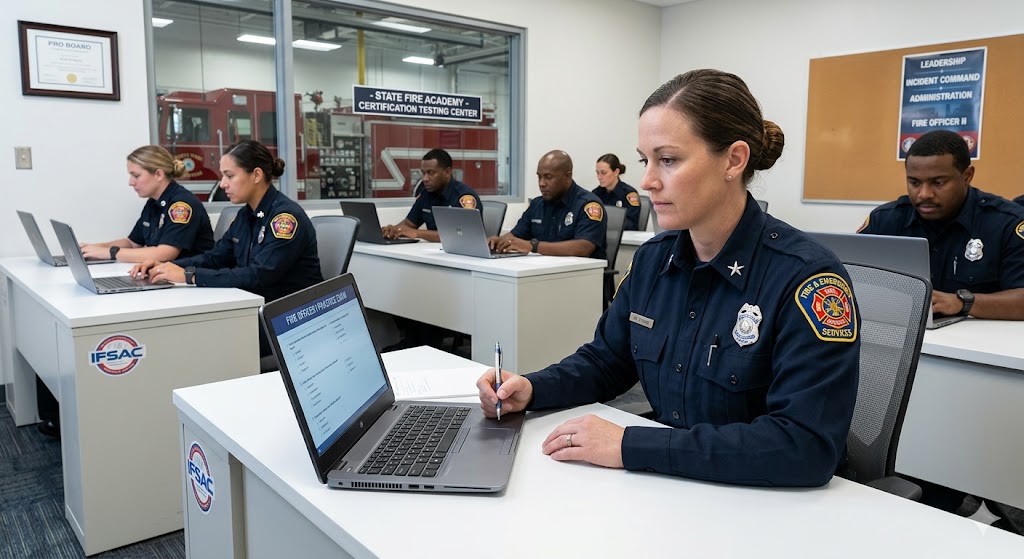
Additional Information
What the Course Entails and Exam Details
This comprehensive program focuses on the multifaceted responsibilities of a Company Officer. It is structured around the six key areas defined by NFPA 1021, providing a blueprint for the modern fire service supervisor.
Core topics typically covered include:
Human Resource Management: Supervising personnel, administering fire department policies, participating in the department’s health and safety program, and managing conflict.
Community and Government Relations: Interacting with the public, managing inquiries and complaints, and participating in the department’s public education programs.
Administration: Executing administrative functions, preparing required reports, and assisting with budget and resource management.
Inspection and Investigation: Conducting initial fire investigations, determining fire origin and cause, and performing code enforcement and pre-incident planning activities.
Emergency Service Delivery: Assuming command at an incident, implementing the incident management system, and managing the delivery of emergency services.
Health and Safety: Ensuring the safety of fire department members and identifying health and safety hazards.
Course and Exam Structure: The associated course often involves dynamic lectures, group exercises, and simulated incident command scenarios. The certification process usually requires successful completion of both a written examination and a practical skill evaluation.
What to Expect in the Final Exam
Preparing for the final exam requires a clear understanding of its format and the performance standards expected. The exam is rigorously structured to test both theoretical knowledge and practical decision-making.
Exam Format: The written component typically consists of 100 to 150 multiple-choice questions. These questions assess your comprehension of the material presented in the course and textbooks, such as IFSTA’s Fire and Emergency Services Company Officer. In many jurisdictions, this is complemented by a practical or scenario-based assessment where you must demonstrate incident command and supervisory skills.
Passing Score Requirements: To receive certification, candidates generally need to achieve a passing score of at least 70% on the written examination. Practical assessments are often graded on a pass/fail basis against a comprehensive checklist.
Time Limits: The written exam has a strict time limit, typically two to three hours. Practical evaluations are timed according to the specific scenarios presented.
Specific Rules: Candidates are usually required to provide a valid government-issued photo ID. The use of course materials, personal mobile devices, or other aids is strictly prohibited during the exam.
How to Study and Exam Centers
Preparation is paramount for success. A structured study plan will significantly enhance your performance on both the written and practical components.
Actionable Study Strategies:
Master the Textbook: Deeply study the current edition of the required textbook, such as IFSTA's Fire and Emergency Services Company Officer. Create detailed outlines for each chapter.
Utilize Practice Tests: Engage with the Fire and Emergency Services Company Officer Practice Test to familiarize yourself with the question style, format, and time constraints. Analyze incorrect answers to identify knowledge gaps.
Form a Study Group: Collaborative study can provide different perspectives and help you clarify complex concepts. Use flashcards for key terms and NFPA standards.
Practice Scenario-Based Decision Making: Use incident command simulations and practice writing Incident Action Plans (IAPs) to prepare for the practical component.
Exam Centers and Registration:
Certification is rarely granted directly by the training provider. Instead, exams are administered by state or provincial fire training agencies or recognized certifying bodies, such as the Pro Board or IFSAC.
Registration is done through the respective agency’s online portal. Exams may be conducted at specific physical testing centers, state fire academies, or through authorized testing organizations like Pearson VUE. It is essential to verify with your local jurisdiction where and how to take the exam.
Job Opportunities from the Course
A Company Officer certification is the essential key that unlocks the door to supervisory roles within fire and emergency services. This qualification is required by the majority of departments for promotional advancement.
Career Paths and Job Titles Include:
Fire Lieutenant
Fire Captain
Station Captain
Incident Safety Officer
Fire Training Officer
Fire Marshal (Assistant/Deputy)
Fire Inspector (Lead)
Fire Investigator
Frequently Asked Questions
Reviews
5.0
Based on 0 reviews
Leave a Review
No reviews yet. Be the first to review!