
Fire and Life Safety Educator Certification Practice Exam
$69.00
- Buy to unlock unlimited access to all Quiz questions and Answers in this Quiz.
- After purchase you can print a PDF of the whole quiz at any point. The PDF will contain the questions and the correct answers.
About this Exam
The Fire and Life Safety Educator Certification is a professional credential designed for individuals dedicated to reducing the risk of fire and unintentional injury in their communities through education and outreach.
This certification, often aligned with the NFPA 1035 standard, is tailored for a wide range of professionals, including fire service personnel, public health educators, teachers, injury prevention specialists, and other safety advocates.
It validates the expertise needed to design, implement, and evaluate effective public education programs.
Achieving this certification demonstrates a commitment to saving lives, preventing injuries, and protecting property by equipping the public with critical safety knowledge.
Sample Questions
Explanation:
Explanation:
Explanation:
Explanation:
Explanation:
Ready to test your knowledge?
Buy Now to Access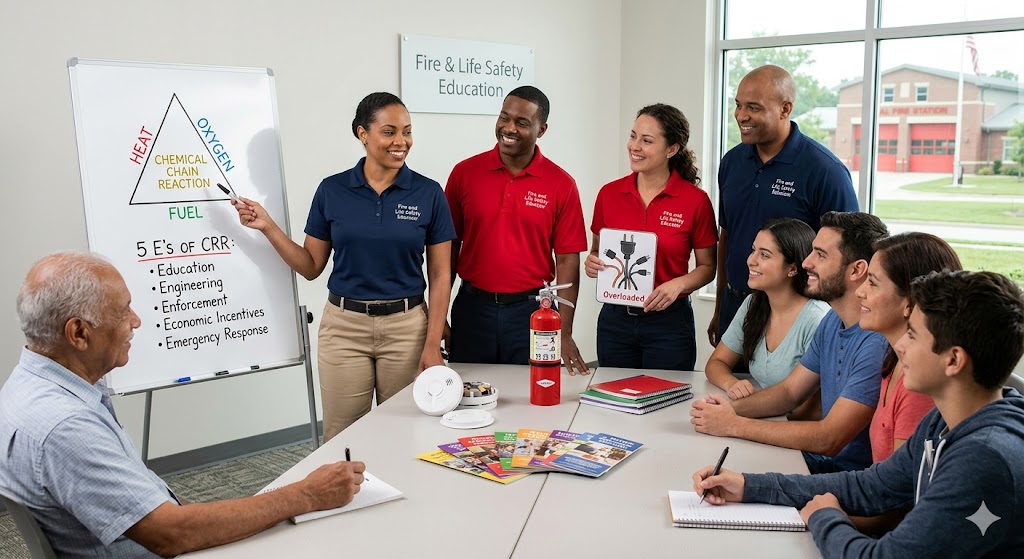
Additional Information
What the Course Entails and Exam Details
A comprehensive Fire and Life Safety Educator course is generally divided into different levels (e.g., Level I and Level II), each building upon the other, covering core competencies outlined in NFPA 1035.
Level I focuses on the foundational skills required to deliver existing programs and make educational presentations.
Core topics at this level include fire behavior and development, community assessment to identify risk areas, injury prevention concepts, basic educational theory, teaching methodologies for diverse audiences, and the proper use of educational materials.
Level II is designed for individuals who will coordinate public education programs and manage resources.
This advanced level delves into program development from concept to evaluation, strategic planning for community risk reduction, budgeting and resource management, public policy development, performance evaluation of personnel, and creating community partnerships.
Throughout both levels, a strong emphasis is placed on the "5E’s of Community Risk Reduction": Education, Engineering, Enforcement, Economic Incentives, and Emergency Response.
What to Expect in the Final Exam
While specific exam formats can vary by state or accrediting body (such as ProBoard or IFSAC), candidates can typically expect a multi-part evaluation that assesses both theoretical knowledge and practical application.
The primary component is usually a formal, written certification exam.
This written exam consists of multiple-choice questions designed to test your understanding of NFPA 1035 standards, fire science principles, educational methods, and program planning.
The exact number of questions, time limit (often ranging from two to four hours), and required passing score (commonly 70% or 80%) are determined by the testing authority in your jurisdiction.
In addition to the written exam, some authorities require candidates to successfully complete a series of practical, skills-based evaluations.
These practical "skill stations" may involve demonstrating teaching a specific fire safety topic to a target audience or developing a detailed public education program plan.
How to Study and Exam Centers
Effective preparation for the Fire and Life Safety Educator exam is essential for success, combining a thorough review of core materials with strategic practice.
Start by obtaining and meticulously studying the relevant NFPA 1035 Standard on Fire and Life Safety Educator Professional Qualifications.
Consult your authority having jurisdiction (AHJ) to identify the specific edition of the standard being tested.
Utilize approved reference texts, such as those published by the International Fire Service Training Association (IFSTA) or other recognized educational providers.
Take as many practice exams as possible. This is one of the most effective ways to identify your knowledge gaps and familiarize yourself with the style of questions on the actual test.
Focus your studies on the key areas mentioned in the course details, especially educational methodology, community risk assessment, and the specifics of target audiences.
If your certification requires a practical evaluation, find opportunities to practice your presentation skills and program planning within your organization before the formal test.
The location for taking the certification exam will be determined by your State Fire Training agency or a licensed certifying entity.
Common testing centers include State Fire Academies, approved community colleges or universities with fire science programs, or through authorized commercial testing vendors like Pearson VUE.
Some jurisdictions also offer online exam options through dedicated portals. Always verify the approved locations and scheduling process with your local fire training authorities.
Job Opportunities from the Course
A certification as a Fire and Life Safety Educator opens doors to a variety of meaningful and impact-driven career paths focused on community risk reduction.
Specific job titles and roles include:
Fire and Life Safety Educator within fire departments and emergency service agencies.
Public Information Officer (PIO) for emergency services.
Community Risk Reduction Specialist focusing on proactive safety initiatives.
Fire Marshal or Deputy Fire Marshal staff specializing in public education and outreach.
Juvenile Firesetter Intervention Specialist working with youth and families.
Safety Coordinator in municipal and county governments.
Prevention Education Specialist in hospital injury prevention programs.
Risk Manager for insurance or private organizations focusing on safety compliance.
Community Relations Manager for public safety organizations.
Frequently Asked Questions
Reviews
5.0
Based on 0 reviews
Leave a Review
No reviews yet. Be the first to review!