
Fire Controlman (FC) Engagement Practice Test
$69.00
- Buy to unlock unlimited access to all Quiz questions and Answers in this Quiz.
- After purchase you can print a PDF of the whole quiz at any point. The PDF will contain the questions and the correct answers.
About this Exam
The U.S. Navy’s Fire Controlman (FC) rate is a critical technical specialty responsible for the operation, maintenance, and repair of complex combat systems, including radars, fire control computers, and missile/gun systems. This comprehensive Fire Controlman Engagement Practice Test is specifically designed for Navy personnel preparing for advanced ratings or specialized certifications within the FC rate. It focuses on the core competencies required to successfully execute an engagement cycle—from target detection and classification to weapon deployment and post-engagement analysis—ensuring that sailors possess the analytical and practical skills needed for modern naval warfare.
Ready to test your knowledge?
Buy Now to Access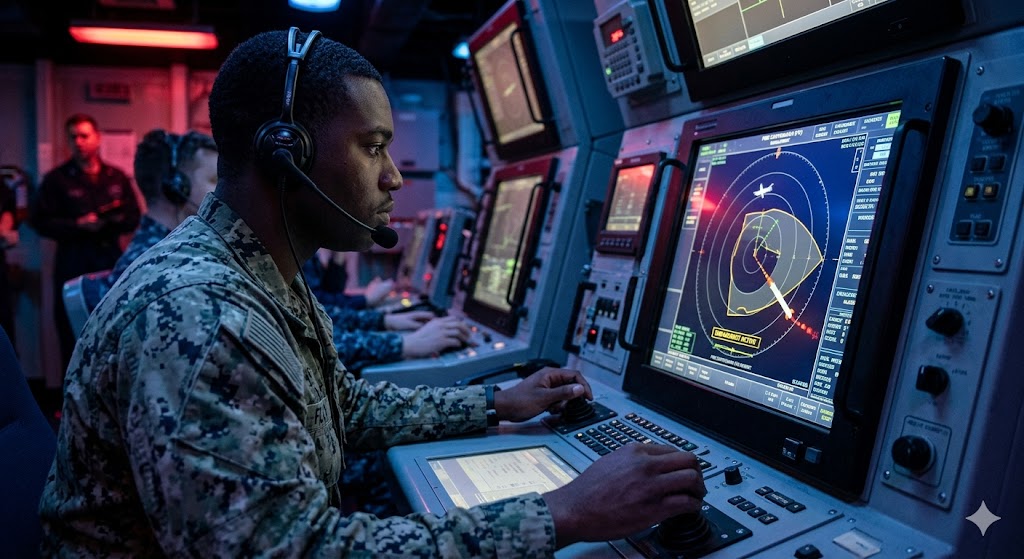
Additional Information
What the Course Entails and Exam Details
The material covered in this practice test delves deeply into the integrated operation of modern naval weapons systems. Candidates must demonstrate proficiency in various technical domains, including:
Radar Fundamentals and System Integration: Understanding the mechanics, waveforms, and capabilities of advanced search and fire control radars (e.g., AN/SPY-1 Aegis system, AN/SPS-49/67).
Combat System Architecture: Mastery of how diverse subsystems—including sensors, communication data links, and weapons control systems—interface to provide a cohesive tactical picture.
Target Acquisition and Tracking: Advanced techniques for identifying, classifying, and maintaining robust tracks on aerial, surface, and subsurface threats.
Weapons Systems Operations: Detailed knowledge of specific weapon capabilities, limitations, and standard operating procedures for firing mechanisms (e.g., Vertical Launch Systems (VLS), Close-In Weapon Systems (CIWS), Standard Missiles).
Engagement Doctrine and Tactics: Application of established naval doctrine and rules of engagement in dynamic, simulated scenarios.
What to Expect in the Final Exam
The formal assessment for Fire Controlman certifications, often delivered as part of a Navy Advancement Exam (NAE) for E-4 through E-6 or through specialized Navy 'C' schools, is typically a rigorous, comprehensive examination.
For advancement exams, the format is generally a multiple-choice test consisting of approximately 175 questions. Candidates must complete the exam within a standard three-hour time limit. The passing requirements are based on a standardized score rather than a strict percentage, comparing your performance against peers within the same rate. This requires comprehensive knowledge across all subject areas to achieve a competitive score needed for advancement quotas. For 'C' school certifications, examinations may also include practical evaluations, scenarios, or system-specific performance tests.
How to Study and Exam Centers
Effective preparation is essential for success. We recommend a structured study plan:
Review Official NAVEDTRA Manuals: The primary source materials include NAVEDTRA 14324 (Fire Controlman) and specialized manuals (OPs) tailored to specific systems like Aegis, Tomahawk, or ship self-defense systems.
Utilize Flashcards and Practice Tests: Memorize technical data, acronyms, and algorithms using active recall. Repeatedly take practice tests, like this one, to simulate the exam environment and identify knowledge gaps.
Study System Schematics and Operations: Understand system flows and standard operating procedures (SOPs) for the engagement cycle.
Physical testing for advancement occurs on authorized examination dates established by the Navy Advancement Center, typically administered by Educational Services Officers (ESO) on base or aboard ship. Certifications linked to Navy 'C' schools are typically conducted at designated Naval Training Centers (e.g., Center for Surface Combat Systems) upon successful completion of advanced system training courses.
Job Opportunities from the Course
Achieving these advanced certifications as a Fire Controlman validates crucial technical expertise that significantly enhances career advancement opportunities within the U.S. Navy and the broader defense sector.
Specific specialized roles unlocked by this mastery include:
Aegis Fire Controlman (FC-11xx): Specialist in the Aegis Combat System, responsible for integrated air and missile defense operations.
Tomahawk Missile Systems Technician (FC-13xx): Expert in the deployment and maintenance of the Tomahawk Land Attack Missile (TLAM) system.
Close-In Weapon System (CIWS) Technician (FC-16xx): Responsible for the operation and maintenance of terminal defense gun systems.
Combat Systems Maintenance Manager (CSMM): Senior supervisory roles overseeing maintenance operations for entire combat system suites.
Navy Instructor/Subject Matter Expert: Technical experts providing training for junior sailors at 'A' and 'C' schools.
Defense Contractor/Systems Engineer: High-demand roles in the civilian defense industry, focusing on system development, testing, and lifecycle management of advanced naval technology.
Frequently Asked Questions
Reviews
5.0
Based on 0 reviews
Leave a Review
No reviews yet. Be the first to review!