
Fire Extinguisher Type 2 Practice Exam
$69.00
- Buy to unlock unlimited access to all Quiz questions and Answers in this Quiz.
- After purchase you can print a PDF of the whole quiz at any point. The PDF will contain the questions and the correct answers.
About this Exam
The Fire Extinguisher Type 2 practice exam is a crucial stepping stone for aspiring fire protection technicians and individuals aiming to validate their expertise in fire safety protocols. This certification is specifically designed for professionals who will be responsible for the installation, inspection, testing, and maintenance of portable fire extinguishing equipment. By successfully navigating this practice exam, candidates prepare themselves for the rigorous final certification required to ensure these vital life-saving devices function correctly during an emergency. The exam is ideal for maintenance personnel, facility managers, and entry-level fire service technicians seeking to solidify their practical knowledge base.
Ready to test your knowledge?
Buy Now to Access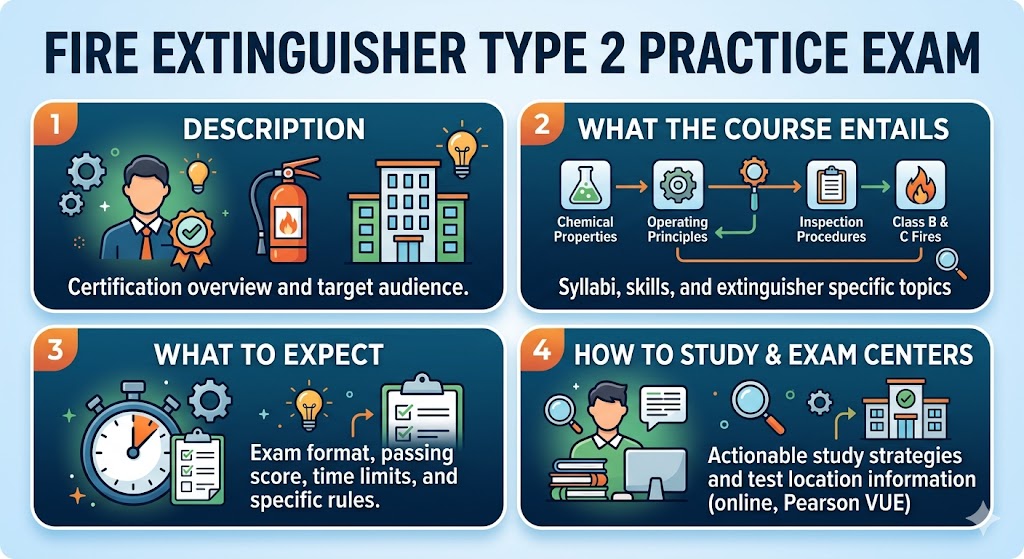
Additional Information
What the Course Entails and Exam Details
Preparation for the Fire Extinguisher Type 2 certification focuses heavily on industry standards and foundational fire safety science.
The coursework covers the essential physics of fire, including understanding the different classifications of fire, such as standard combustibles, flammable liquids, and electrical equipment hazards.
Candidates learn to differentiate between various types of extinguishing agents, from dry chemical and foam to carbon dioxide and clean agents, understanding when and where to apply each one effectively.
A massive component of the exam details involves mastering NFPA 10, the National Fire Protection Association’s standard for portable fire extinguishers.
You will study detailed protocols for performing monthly visual inspections and the intricacies of the annual maintenance routine that Type 2 technicians are authorized to conduct.
Furthermore, you will gain expertise in proper placement strategies, labeling requirements, and the correct operation procedures crucial for maximizing safety and regulatory compliance.
What to Expect in the Final Exam
While exact specifications can vary depending on the local jurisdiction or the specific certifying organization, candidates should expect a comprehensive and rigorous assessment.
The written portion of the exam typically features between 50 and 100 multiple-choice questions designed to thoroughly test theoretical knowledge and regulatory familiarity.
The time limit for the written component is usually tight, often ranging from 60 to 120 minutes, demanding quick and confident recall of detailed safety standards.
A passing score is typically set high, often requiring 75% or better, reflecting the critical, zero-error environment of life-safety systems.
Additionally, in many regions, the certification process includes a mandatory practical exam where candidates must demonstrate hands-on competency in inspecting multiple extinguisher types in a simulated environment, adhering strictly to current safety protocols.
How to Study and Exam Centers
Achieving success on the Fire Extinguisher Type 2 exam requires consistent, focused study and practical reinforcement.
Start by acquiring the latest version of NFPA 10 and making it the foundation of your study plan; create detailed flashcards for specific maintenance timelines and installation requirements.
Utilize resources like this practice exam repeatedly to assess your progress, identify weak areas, and become comfortable with the format and time constraints of the test.
Visualizing the components and mechanisms of different extinguisher types through diagrams or physical inspection helps solidify theoretical concepts.
Regarding testing locations, this exam is rarely self-proctored; you must schedule an appointment at an authorized testing center.
Many state and local jurisdictions require candidates to register through the local Fire Marshal’s office, which often hosts the exams directly.
In other cases, major certification providers utilize established proctored facilities, such as authorized community college testing labs or private testing centers, to ensure exam integrity.
Job Opportunities from the Course
Earning this certification opens immediate doors to essential and consistently in-demand career paths in the safety and service sectors.
Graduates with a Type 2 certification frequently secure positions as Fire Extinguisher Service Technicians, responsible for traveling to client sites to conduct inspections and maintenance.
They are highly sought after as Fire Protection Equipment Installers for both commercial developments and residential properties.
This certification is also a prerequisite for many specialized roles, including:
Facility Maintenance Technician (in large corporate complexes).
Code Enforcement Officer (requiring fire safety knowledge).
Safety Inspector (focusing on workplace compliance).
Asset Management Specialist (for safety equipment fleets).
Warehouse Safety Coordinator.
Fire Safety Consultant.
Industrial Safety Specialist.
Hotel Maintenance Engineer.
Retail Facility Manager.
Hospitals or University Campus Safety Officer.
Frequently Asked Questions
Reviews
5.0
Based on 0 reviews
Leave a Review
No reviews yet. Be the first to review!