
Fire Focus Practice Test
$69.00
- Buy to unlock unlimited access to all Quiz questions and Answers in this Quiz.
- After purchase you can print a PDF of the whole quiz at any point. The PDF will contain the questions and the correct answers.
About this Exam
The Fire Focus preparatory system is an essential stepping stone for dedicated individuals aspiring to join the fire service.
This comprehensive assessment is meticulously designed for entry-level candidates who need to master the critical concepts required to pass their official department written examinations.
It bridges the gap between general knowledge and the specific, high-pressure demands of the fire service recruitment process.
If your goal is to earn your badge, this practice test builds the necessary foundation for success.
Ready to test your knowledge?
Buy Now to Access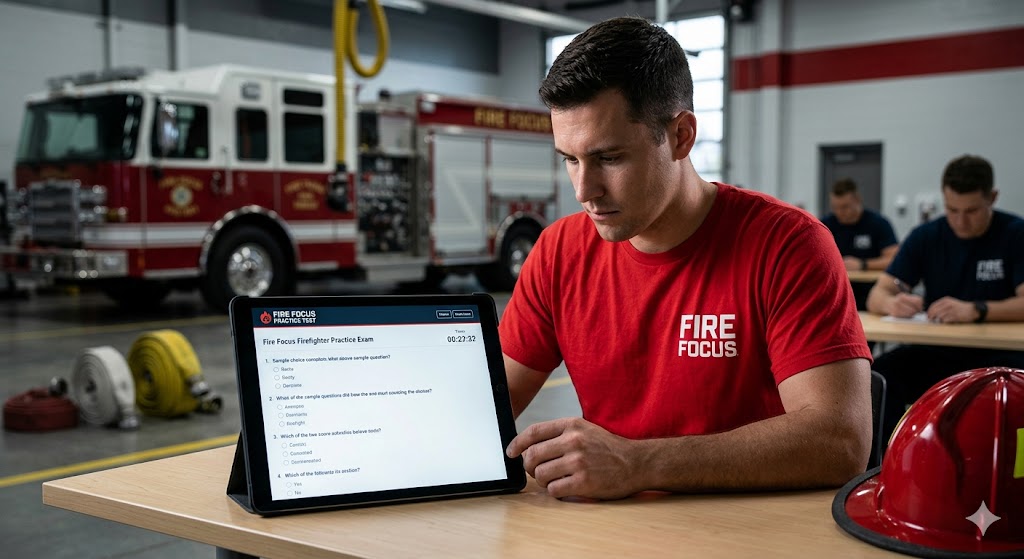
Additional Information
What the Course Entails and Exam Details
The core curriculum modeled by Fire Focus covers the multifaceted knowledge base required of modern firefighters.
Candidates will delve into fundamental principles of fire science, including the chemistry of fire, stages of fire progression, and fire behavior.
The coursework extends to critical operational knowledge such as fire suppression strategies, ventilation tactics, and basic rescue operations.
Furthermore, students learn about fire apparatus operation, hose deployment techniques, and the critical importance of different types of personal protective equipment (PPE).
What to Expect in the Final Exam
The standard assessment modeled after the Fire Focus curriculum is typically a rigorous written examination designed to evaluate cognitive ability and job-related knowledge.
You can expect a format predominantly composed of multiple-choice questions, which may include up to 100 questions requiring completion within a strict time limit, often around 90 to 120 minutes.
While official passing scores vary significantly by department, a benchmark of 70% is commonly required, though top-tier departments often look for significantly higher results to proceed in the selection process.
Specific rules, such as whether a calculator is allowed for hydraulic calculations, depend entirely on the administering agency's specific protocols.
How to Study and Exam Centers
To maximize your score, adopt a disciplined study routine utilizing the Fire Focus materials as a diagnostic tool to identify weak areas.
Take practice exams under simulated time pressure to build stamina and familiarity with the question phrasing, focusing on both rapid recall and logical elimination strategies.
It is crucial to balance study with practical physical training, as mental acuity must be matched by physical readiness during the overall selection process.
While the practice resources are accessed online, the official examinations are typically proctored at specific physical locations, including local community colleges, dedicated testing centers like Pearson VUE (for certain certifications), or municipality civil service testing halls.
Job Opportunities from the Course
Successfully mastering this content is a crucial prerequisite for moving forward in the competitive hiring process for various emergency response roles.
Upon completion of the full recruitment process, including the written exam, physical ability test, and interview, typical career paths and job titles include:
Entry-Level Municipal Firefighter
Volunteer Firefighter (highly demanding service areas)
Firefighter/EMT (Emergency Medical Technician)
Firefighter/Paramedic (Advanced Life Support)
Wildland Firefighter (State or Federal Agencies)
Industrial Fire Brigade Member
ARFF (Aircraft Rescue and Fire Fighting) Specialist
Frequently Asked Questions
Reviews
5.0
Based on 0 reviews
Leave a Review
No reviews yet. Be the first to review!