
Fire Lieutenant Certification Practice Exam
$69.00
- Buy to unlock unlimited access to all Quiz questions and Answers in this Quiz.
- After purchase you can print a PDF of the whole quiz at any point. The PDF will contain the questions and the correct answers.
About this Exam
The Fire Lieutenant Certification is a pivotal milestone for firefighters aiming to advance into leadership roles within their departments. This certification validates that an individual has moved beyond basic firefighting skills and has acquired the knowledge, leadership abilities, and tactical understanding necessary to supervise a company and manage emergency operations at a first-alarm level. It is designed for experienced firefighters ready to transition from being supervised to becoming supervisors, making them responsible for the safety, training, and performance of their crew.
Ready to test your knowledge?
Buy Now to Access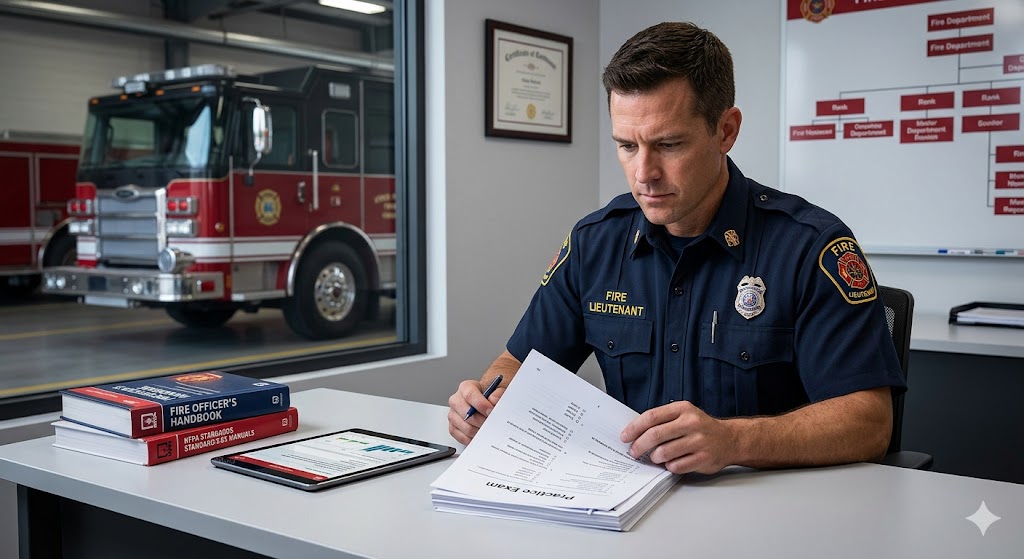
Additional Information
What the Course Entails and Exam Details
The course of study for Fire Lieutenant Certification typically covers a broad spectrum of topics essential for modern fire service management and operations. Key areas of focus usually include:
Human Resources Management: Understanding supervision, personnel evaluation, discipline, and labor relations.
Community and Government Relations: Navigating public education, fire prevention code enforcement, and intergovernmental cooperation.
Administration: Gaining proficiency in budgeting, records management, and policy implementation.
Inspection and Investigation: Recognizing fire hazards, conducting basic fire investigations, and ensuring code compliance.
Emergency Service Delivery: Mastering the Incident Command System (ICS), developing advanced strategy and tactics for structure fires and other emergencies, and prioritizing firefighter safety and survival.
Health and Safety: Implementing safety programs and ensuring wellness within the crew.
The certification exam, often based on NFPA 1021 Standard for Fire Officer Professional Qualifications, assesses competency through two primary components: a written examination and a practical skills or "Assessment Center" evaluation.
What to Expect in the Final Exam
The written portion of the exam is generally a rigorous, multiple-choice test consisting of 100 or more questions that challenge your textbook knowledge and decision-making abilities. It is often time-limited, often allowing between two to four hours for completion. The passing score varies by certifying body but typically ranges from 70% to 80%.
The practical evaluation is frequently conducted through an assessment center, where candidates are put through realistic scenarios. You might be required to role-play scenarios involving subordinate counseling, conduct a tactical exercise using a fire simulation, present a public education topic, or manage a simulated personnel conflict. These skills are essential for demonstrating true leadership and command presence.
How to Study and Exam Centers
Effective preparation for this exam requires a multi-faceted study approach. Dedicate time to thoroughly review the standard textbooks, such as IFSTA’s "Fire and Emergency Services Company Officer" or Jones & Bartlett's "Fire Officer: Principles and Practice." Utilize official "Fire Lieutenant Practice Exams" to become familiar with the questioning style and to identify areas where you need further review. Practice scenario-based questions and consider forming a study group with colleagues to rehearse assessment center exercises.
The written exam is typically administered through officially recognized testing portals, state fire academies, regional training centers, or authorized professional testing organizations like Pearson VUE, depending on the state or certifying body.
Job Opportunities from the Course
Earning your Fire Lieutenant Certification is a definitive career accelerator within the fire service. It makes you eligible for promotion to the rank of Fire Lieutenant and opens the door to numerous specialized roles. The career path this certification unlocks includes positions such as:
Fire Lieutenant
Company Officer
Station Lieutenant
Engine Company Officer
Truck Company Officer
Training Officer
Fire Inspector or Investigator (often a required or preferred certification)
Safety Officer
Frequently Asked Questions
Reviews
5.0
Based on 0 reviews
Leave a Review
No reviews yet. Be the first to review!