
Fire Officer 2D Practice Exam
$69.00
- Buy to unlock unlimited access to all Quiz questions and Answers in this Quiz.
- After purchase you can print a PDF of the whole quiz at any point. The PDF will contain the questions and the correct answers.
About this Exam
Welcome to your guide on the Fire Officer 2D certification, a crucial step for fire service professionals aiming for mid-level command and leadership roles. This certification, often part of the Fire Officer II level within state and national frameworks like IFSAC and Pro Board, validates a candidate's mastery of complex company-level operations. It is specifically designed for practicing firefighters who have completed Level I and are ready to assume advanced supervisory responsibilities. Achieving this certification demonstrates your readiness to lead multiple units, manage personnel and resources on a larger scale, and conduct critical post-incident analyses. This comprehensive practice exam and guide are here to help you navigate the final steps with confidence.
Ready to test your knowledge?
Buy Now to Access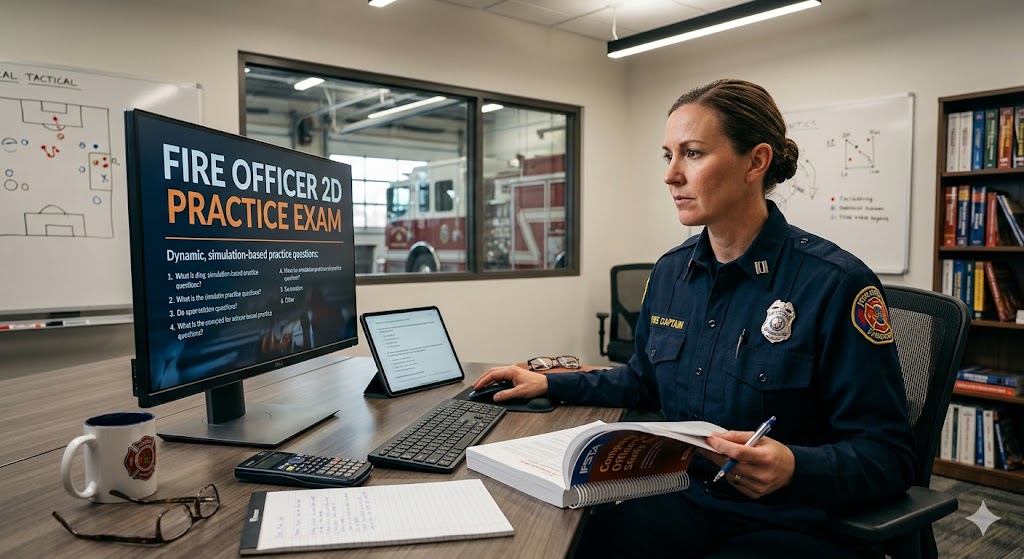
Additional Information
What the Course Entails and Exam Details
The Fire Officer 2D course equips you with the strategic and administrative skills necessary for a Level II Company Officer. The core curriculum focuses on multi-unit emergency operations, challenging you to move beyond single-engine tactics. You will learn to perform comprehensive incident size-ups, develop and implement complex initial plans of action (IAPs), and coordinate the efforts of various fire and emergency service resources to mitigate large-scale situations. Key areas include: conducting pre-incident planning for high-risk properties, developing and conducting thorough post-incident analyses to improve future response, and understanding advanced human resource management and administrative responsibilities, such as budget preparation and policy implementation. This program ensures you can make sound decisions under pressure and lead a diverse team effectively.
What to Expect in the Final Exam
The final certification for Fire Officer 2D is a comprehensive assessment that often consists of two main components: a written exam and a practical skills evaluation. This multi-faceted approach ensures you have both the theoretical knowledge and the practical ability to perform the job.
The written portion typically includes approximately 50 to 100 multiple-choice and true/false questions. Candidates are usually allowed around 60 to 90 minutes to complete this section. To pass, you must achieve a score of 70% or higher. The questions cover the entire breadth of the course material, from strategy and tactics to administrative procedures.
The practical component is designed to test your applied skills through realistic scenarios. These stations measure your ability to perform tasks like: conducting a personnel evaluation and counseling session, writing a formal memo to a supervisor, creating a professional development plan for a subordinate, developing a division-level budget request, and writing a department policy to address a specific organizational issue. Each practical station is time-limited, ranging from 10 to 40 minutes, and requires a passing score of at least 70?sed on a standardized rubric. You will need to demonstrate clear communication, sound judgment, and technical proficiency.
How to Study and Exam Centers
Preparation is paramount for the Fire Officer 2D exam. We recommend beginning with a diagnostic practice test to identify your strengths and weaknesses. Focus your study on the official textbooks, such as the relevant edition of IFSTA's Fire and Emergency Services Company Officer or similar standard materials. Create a structured study plan that breaks down the topics, and use flashcards for key definitions and procedures. Review your own organization's policies and procedures, as many practical questions are framed within realistic departmental context. Practice writing memos, budgets, and policies under timed conditions, and film yourself conducting mock counseling sessions to refine your interpersonal skills. Joining a study group or finding a mentor who is a certified Level II officer can provide invaluable feedback and support.
The exam itself is typically administered through your state’s fire training academy, a local community college with a fire technology program, or specific authorized fire department training facilities. Many bodies offer the written exam via secure, proctored online portals, or at traditional Pearson VUE testing centers. For the practical skills assessment, candidates are often required to attend an in-person testing event at a regional training center. Always confirm the exact location and format with your issuing certification authority well in advance of your desired test date.
Job Opportunities from the Course
Earning your Fire Officer 2D certification unlocks a clear path to advanced leadership and command positions within the fire service. This qualification is a prerequisite for many promotional roles, signifying to departments that you are ready for the responsibilities of higher rank. Common job opportunities and career paths unlocked by this certification include:
Fire Captain
Fire Lieutenant
Battalion Chief (Level II is often a foundational requirement for this command role)
District Chief
Station Commander
Fire Training Officer (advanced level)
Company Officer (Level II, supervising multi-unit stations)
Safety Officer
Frequently Asked Questions
Reviews
5.0
Based on 0 reviews
Leave a Review
No reviews yet. Be the first to review!