
Fire Protection Systems Practice Test
$69.00
- Buy to unlock unlimited access to all Quiz questions and Answers in this Quiz.
- After purchase you can print a PDF of the whole quiz at any point. The PDF will contain the questions and the correct answers.
About this Exam
The Fire Protection Systems certification is a crucial credential for professionals dedicated to safeguarding lives and property from catastrophic fire hazards.
This exam is expertly designed for aspiring fire protection engineers, system designers, fire inspectors, and installation technicians.
It validates your comprehensive understanding of fire safety principles, complex industry codes, and intricate system mechanics.
By conquering this certification, you prove your competence in critical life-safety infrastructure and elevate your professional standing in the highly competitive engineering and construction sectors.
Ready to test your knowledge?
Buy Now to Access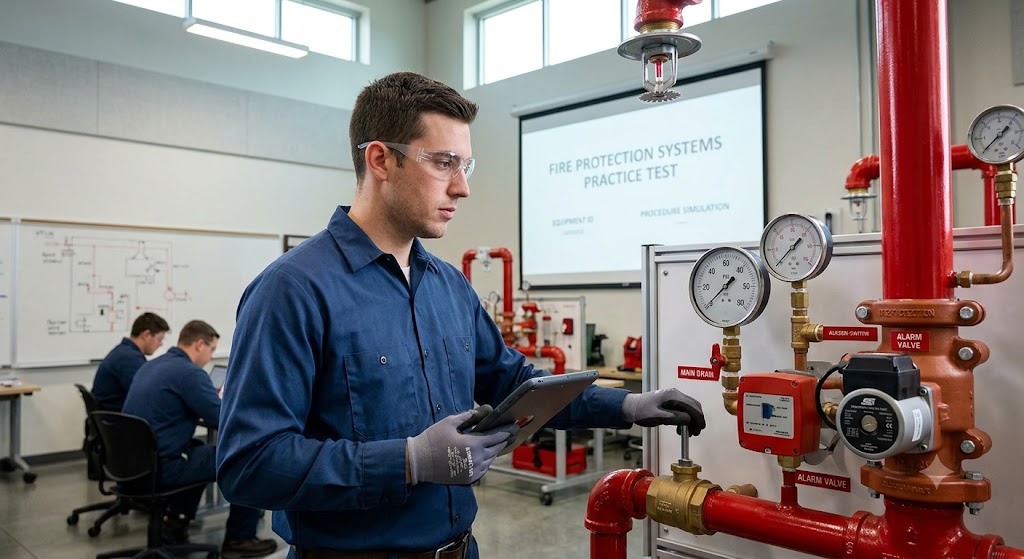
Additional Information
What the Course Entails and Exam Details
Preparing for this certification immerses you in a rigorous curriculum centered around life safety and property protection.
The core syllabus covers the precise design, installation, and maintenance of water-based fire suppression systems, including automatic sprinklers and standpipes.
You will also delve deeply into the mechanics of fire alarm and detection systems, learning how various sensors and mass notification appliances seamlessly integrate.
Furthermore, the course places a massive emphasis on understanding and applying the National Fire Protection Association (NFPA) codes and standards.
Special hazard suppression systems, fire pump operations, and complex hydraulic calculations are also vital technical skills you will master during your preparation.
What to Expect in the Final Exam
The final examination is a rigorous computer-based, multiple-choice assessment designed to test both your theoretical knowledge and practical application skills.
Depending on the specific tier or level of the certification, the exam typically features between 100 and 150 questions.
You will be placed under a strict time limit ranging from two to three hours, which requires excellent time management and quick, confident decision-making.
Many of these credentialing exams operate as open-book tests, meaning you are allowed to bring officially approved, bound NFPA codebooks directly into the testing area.
To achieve a passing score, candidates generally need to correctly answer 70% or more of the questions.
Strict testing rules apply at all centers, including complete bans on unapproved digital devices and heavily enforced guidelines regarding handwritten notes or loose papers in your reference materials.
How to Study and Exam Centers
Success on the exam begins with mastering the layout of your NFPA codebooks through consistent, daily practice and strategic page tabbing.
Because you cannot memorize every single code or standard, your primary study strategy should focus on quickly navigating the index and identifying key reference chapters.
Take full advantage of full-length, timed practice tests to simulate the exact pressure of exam day and to clearly pinpoint your weak areas for further review.
When you are fully prepared to test, you will register through recognized credentialing bodies such as NICET (National Institute for Certification in Engineering Technologies) or the NFPA itself.
The exams are highly secure, proctored, and administered at authorized third-party testing facilities, such as Pearson VUE centers located worldwide.
Additionally, some organizations now offer secure, online-proctored options, allowing you to take the exam from the quiet comfort of a qualified home or office environment.
Job Opportunities from the Course
Earning this esteemed certification acts as a powerful catalyst for your career, unlocking numerous high-demand and lucrative roles in the industry.
Fire Protection Designer: In this role, you will utilize specialized CAD software to draft precise layout plans for sprinkler and alarm systems in both commercial and residential buildings.
Fire Alarm Technician: You will specialize in the hands-on installation, routine testing, and advanced troubleshooting of complex electrical fire detection networks.
Fire Inspector or Code Enforcement Officer: Working frequently for municipalities, government agencies, or insurance companies, you will thoroughly inspect existing buildings to ensure total compliance with local fire safety laws.
Fire Protection Engineer: As a seasoned engineer, you will design comprehensive life-safety strategies, perform necessary hydraulic calculations, and oversee massive commercial infrastructure projects.
Project Manager for Fire Systems: This essential leadership role allows you to oversee entire installation teams, efficiently manage budgets, and ensure that critical fire safety projects are completed perfectly on schedule.
Frequently Asked Questions
Reviews
5.0
Based on 0 reviews
Leave a Review
No reviews yet. Be the first to review!