
Firefighter Practice Exam
$69.00
- Buy to unlock unlimited access to all Quiz questions and Answers in this Quiz.
- After purchase you can print a PDF of the whole quiz at any point. The PDF will contain the questions and the correct answers.
About this Exam
The firefighter candidate exam, often referred to as the entry-level firefighter test, is a critical initial step for anyone pursuing a career in fire services. This exam is designed for individuals seeking employment as structural or wildland firefighters in municipal, state, or federal fire departments. It assesses the fundamental cognitive abilities and critical thinking skills essential for the demanding and unpredictable nature of the job. Passing this exam demonstrates that a candidate possesses the necessary aptitude to learn and apply firefighting techniques, medical protocols, and safety procedures effectively. It serves as a crucial filter in the hiring process, selecting the most qualified applicants for further evaluation, such as interviews and physical agility tests.
Ready to test your knowledge?
Buy Now to Access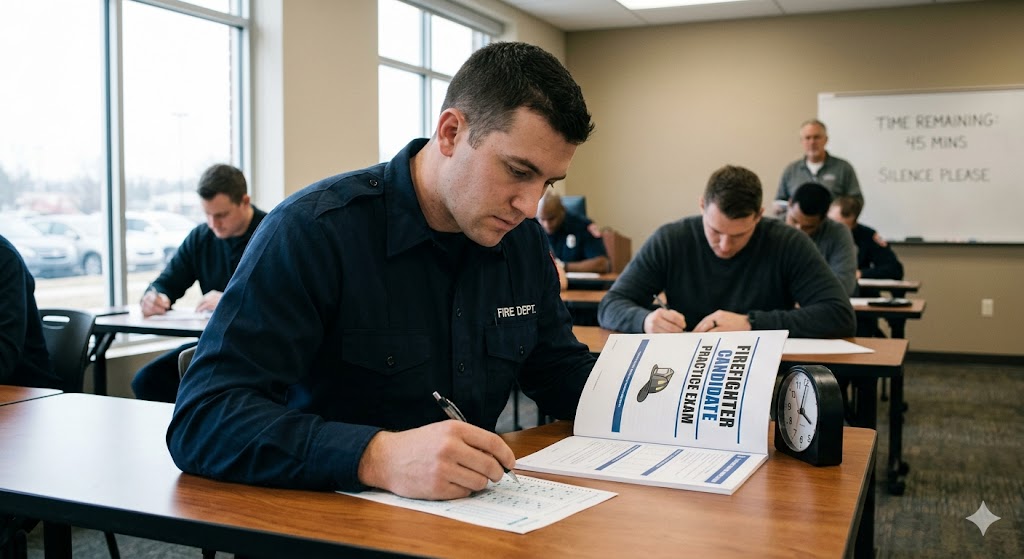
Additional Information
What the Course Entails and Exam Details
This section usually focuses on preparation through practice exams rather than a formal "course." A comprehensive practice exam curriculum for firefighter candidates covers a diverse range of subjects:
Reading Comprehension: Evaluating the ability to understand and interpret written information, such as training manuals, official reports, and safety protocols.
Mathematics: Assessing proficiency in basic arithmetic, fractions, decimals, percentages, and simple algebra, which are vital for calculating water pressure, hose lengths, and chemical dosages.
Mechanical Reasoning: Testing an understanding of mechanical principles, physical laws, and the operation of tools and machinery frequently used in firefighting and rescue operations.
Spatial Awareness: Evaluating the ability to visualize and manipulate objects in three dimensions, crucial for navigating smoke-filled environments and assessing structural integrity.
Observation and Memory: Testing the ability to recall details, identify patterns, and remember sequences of events, essential for scene assessment and investigative purposes.
Situational Judgment: Assessing decision-making skills and the ability to react appropriately to simulated emergency scenarios, demonstrating leadership potential and safety awareness.
What to Expect in the Final Exam
The final firefighter candidate exam is typically a proctored, standardized written test. Candidates can expect the following:
Format: The most common format is a multiple-choice examination.
Time Limit: There will be a strict time limit, often ranging from 2 to 3 hours, which varies by jurisdiction.
Passing Score: The required passing score is generally set around 70%, but it can be higher depending on the competitiveness of the hiring department.
Prohibited Items: Specific rules regarding prohibited items (e.g., calculators, cell phones) are strictly enforced during the test.
No Physical Component (Yet): It's important to note that this written exam is distinct from the subsequent Physical Candidate Physical Ability Test (CPAT) required by most departments.
How to Study and Exam Centers
Effective preparation is key to success. Utilize the following strategies and resources:
Structured Study Guide: Acquire a comprehensive firefighter candidate exam study guide, which includes detailed content reviews and multiple practice tests.
Identify Weaknesses: Take an initial practice test to identify areas where you need the most improvement.
Timed Practice: Simulating the actual test environment is crucial. Practice answering questions under strict time constraints to improve your pacing and accuracy.
Spaced Repetition: Spread your study sessions out over several weeks rather than cramming, allowing for better information retention.
Understanding Rationales: When reviewing practice tests, don't just look at the correct answers; understand the rationale behind them.
The final written exam is typically administered at specific locations designated by the hiring department or municipality. These locations may include:
Civil Service Commissions: Local or regional civil service offices.
Community Colleges: Testing centers within local community colleges that have fire science programs.
Designated Public Buildings: Fire academies, municipal buildings, or large conference centers.
Job Opportunities from the Course
A successful score on the firefighter candidate exam is the primary gateway to a rewarding career in fire and emergency services. This is not a certification in itself, but the essential hurdle required to secure several distinct career paths:
Entry-Level Structural Firefighter
Firefighter / EMT
Firefighter / Paramedic
Wildland Firefighter (Federal, State, and Private Agencies)
Fire Inspector (Career path progression)
Fire Apparatus Operator (Career path progression)
Hazardous Materials Specialist (Career path progression)
Frequently Asked Questions
Reviews
5.0
Based on 0 reviews
Leave a Review
No reviews yet. Be the first to review!