
FISDAP Airway, Ventilation, and Respiratory Practice Test
$69.00
- Buy to unlock unlimited access to all Quiz questions and Answers in this Quiz.
- After purchase you can print a PDF of the whole quiz at any point. The PDF will contain the questions and the correct answers.
About this Exam
The FISDAP Airway, Ventilation, and Respiratory Practice Test is a crucial milestone for emergency medical services (EMS) students, including EMTs and paramedics.
It is specifically designed to evaluate your fundamental knowledge of airway management and respiratory care in emergency situations.
This assessment ensures that pre-hospital medical professionals are fully prepared to handle life-threatening breathing emergencies.
Whether you are completing your initial certification or brushing up on essential clinical skills, this exam serves as a robust benchmark of your readiness.
It acts as a stepping stone toward national registry certification and successful clinical practice.
Ready to test your knowledge?
Buy Now to Access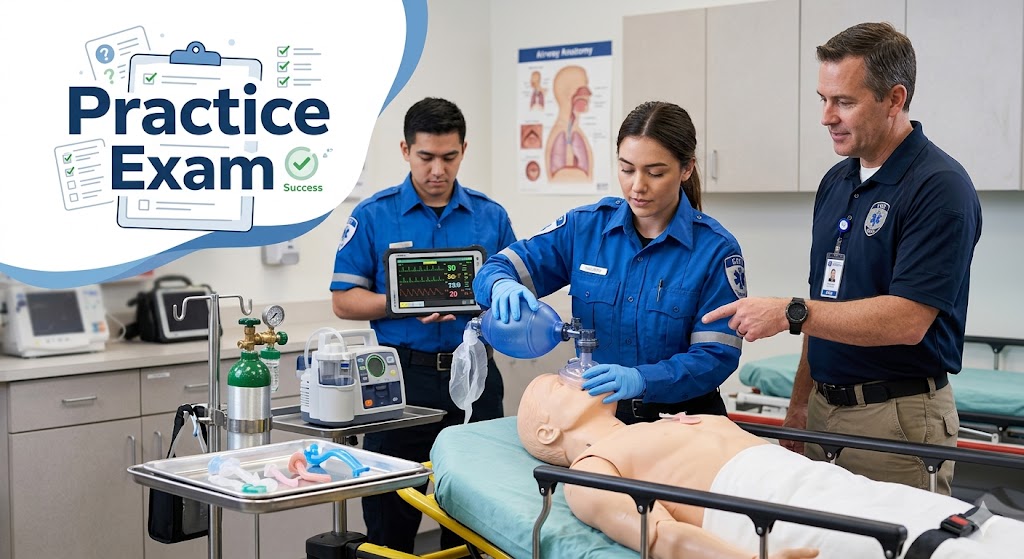
Additional Information
What the Course Entails and Exam Details
This comprehensive module covers the essential anatomy, physiology, and pathophysiology of the human respiratory system.
Students will delve deeply into airway assessment techniques, oxygen administration, and the use of basic and advanced airway adjuncts.
You will also explore the principles of artificial ventilation, including bag-valve-mask (BVM) operations and continuous positive airway pressure (CPAP).
The curriculum strongly emphasizes recognizing respiratory distress, failure, and arrest in varied patient populations ranging from pediatrics to geriatrics.
Additionally, you will master the indications, contraindications, and potential complications associated with various airway interventions.
What to Expect in the Final Exam
The final FISDAP unit exam primarily consists of multiple-choice questions formulated to test critical thinking rather than just rote memorization.
You can expect heavily scenario-based questions where you must determine the most appropriate next step in patient care based on detailed clinical presentations.
The exam is timed, typically giving students about one to two minutes per question, meaning efficient time management is critical to success.
Passing scores often depend on the specific institution's requirements, but a benchmark score of 70% to 75% or higher is commonly expected to demonstrate competency.
Be prepared for questions to incorporate tricky distractors, requiring you to carefully differentiate between "good" interventions and the absolute "best" intervention for a given scenario.
How to Study and Exam Centers
To achieve a high score on this exam, active recall and repeated practice are your best strategies.
Start by thoroughly reviewing your primary textbook chapters on airway management, paying special attention to skill sheets and algorithms.
Take advantage of online study portals, specifically the FISDAP Study Tools platform, which offers comprehensive practice quizzes and detailed rationales for every answer.
Forming study groups to run through mock patient scenarios can also greatly enhance your clinical reasoning skills.
When it comes time to take the test, exams are typically administered through the official FISDAP online portal.
Depending on your EMS program, the exam will either be proctored in-person at your authorized school's computer lab or taken from home using strict online proctoring software to ensure academic integrity.
Job Opportunities from the Course
Successfully mastering the airway and ventilation modules is a mandatory step toward unlocking numerous rewarding careers in emergency medicine.
Emergency Medical Technician (EMT): Serve as a crucial first responder on ambulances, providing fundamental life support and airway management.
Paramedic: Take on an advanced clinical role, performing intubations, administering emergency medications, and managing complex respiratory failures in the field.
Flight Medic: Work in aeromedical transport, utilizing critical care airway skills to manage highly acute patients during helicopter flights.
Emergency Room Technician: Assist doctors and nurses in hospital emergency departments with patient monitoring, oxygen therapy, and emergency airway setups.
Critical Care Transport Specialist: Transport critically ill patients between medical facilities while maintaining advanced ventilation systems and respiratory support equipment.
Frequently Asked Questions
Reviews
5.0
Based on 0 reviews
Leave a Review
No reviews yet. Be the first to review!