
FISDAP OB-GYN Practice Test
$69.00
- Buy to unlock unlimited access to all Quiz questions and Answers in this Quiz.
- After purchase you can print a PDF of the whole quiz at any point. The PDF will contain the questions and the correct answers.
About this Exam
The FISDAP OB-GYN Practice Test is an indispensable tool designed for Emergency Medical Services (EMS) students, including those training as Emergency Medical Technicians (EMTs) and Paramedics. This exam is a key component of a robust study plan for mastering the complex, life-saving skills required in obstetric and gynecological emergencies. Developed by subject matter experts, this practice test serves as a crucial check of your readiness for both course finals and the National Registry of Emergency Medical Technicians (NREMT) certification. It provides instant feedback, pinpointing areas where you can improve your knowledge and clinical decision-making.
Ready to test your knowledge?
Buy Now to Access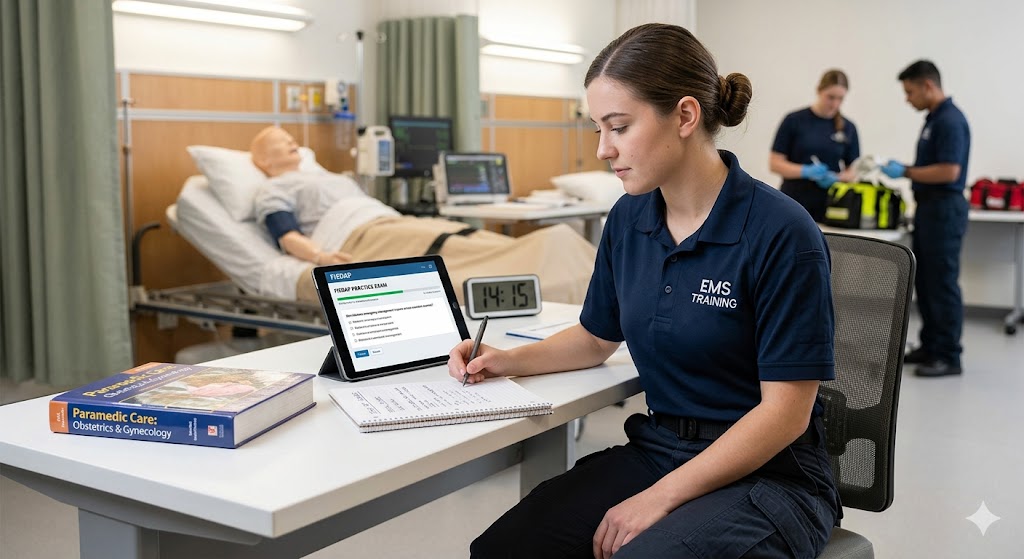
Additional Information
What the Course Entails and Exam Details
The core content of this practice test covers the full spectrum of maternal and neonatal care within an EMS context. While the specific number of questions may vary based on your program's configuration, you can expect a comprehensive assessment of topics, including:
Gynecological Emergencies: Addressing non-pregnancy-related issues like pelvic inflammatory disease, sexual assault care, and vaginal bleeding.
Obstetrics: Comprehensive coverage of prenatal care, fetal development, and physiological changes during pregnancy.
Complications of Pregnancy: Critical assessment and management of pre-eclampsia/eclampsia, gestational diabetes, and placenta previa/abruptio.
Labor and Delivery: Step-by-step management of normal delivery, including imminence assessment and field delivery procedures.
Complications of Delivery: Emergency management of breech presentation, prolapsed cord, and shoulder dystocia.
Postpartum Care: Managing maternal hemorrhage and care of the mother and neonate immediately following birth.
Neonatology and Resuscitation: Essential skills for newborn assessment (APGAR) and active resuscitation procedures in the field.
What to Expect in the Final Exam
While a practice test is designed to be a learning tool, it simulates the rigor of the actual FISDAP cognitive exams. The real FISDAP course final for OB-GYN is a timed, online, multiple-choice examination. Unlike simple recall exams, these questions are uniquely constructed to test your high-level critical thinking and ability to apply knowledge. You will face "You should" and "You should suspect" style questions that require you to synthesize a patient's signs, symptoms, and history to make immediate, life-saving clinical decisions. The final exam results include a "learning prescription," a detailed report showing your performance in specific content areas, helping you fine-tune your studying for the national certification.
How to Study and Exam Centers
Success on the FISDAP OB-GYN exam requires a blend of didactic study and active practice. Start by thoroughly reviewing your paramedic-level textbook's chapters on obstetrics and gynecology. However, the best strategy is to actively use the FISDAP Study Tools. This practice test itself allows multiple attempts; use them to build your confidence and become familiar with the "critical thinking" question format. We highly recommend forming study groups to go through "call skeleton" scenarios and role-play simulated OB-GYN deliveries. For location, you will not go to a commercial testing center. This is an integrated institutional exam. You will take the final, proctored exam at your authorized training school or through their specific secure online testing portal.
Job Opportunities from the Course
Mastering the information provided in the FISDAP OB-GYN practice and course final directly translates to better patient outcomes and professional advancement. Employers heavily favor paramedics with exceptional, validated critical thinking skills in high-stakes areas like maternal and neonatal emergencies. Graduates with this expertise are well-prepared for a variety of critical roles, including:
Paramedic (City/County EMS): Delivering advanced life support and emergency care as a lead responder.
Flight Paramedic: Providing critical care in helicopter or fixed-wing air ambulance environments.
Critical Care Transport Paramedic (CCT): Managing complex inter-facility transfers of unstable obstetric or neonatal patients.
Tactical Paramedic: Operating in specialized law enforcement support roles.
EMS Educator/Instructor: Teaching future generations of first responders.
Community Paramedic: Working in preventative, non-emergency roles within a health system.
Frequently Asked Questions
Reviews
5.0
Based on 0 reviews
Leave a Review
No reviews yet. Be the first to review!