
FISDAP Paramedic Airway and Breathing V2 Practice Exam
$69.00
- Buy to unlock unlimited access to all Quiz questions and Answers in this Quiz.
- After purchase you can print a PDF of the whole quiz at any point. The PDF will contain the questions and the correct answers.
About this Exam
The FISDAP Paramedic Airway and Breathing V2 exam is a critical milestone for paramedic students aiming to validate their respiratory management skills.
Designed specifically for prospective paramedics and advanced emergency medical personnel, this rigorous assessment ensures that candidates can competently handle complex airway emergencies in the field.
It serves as a widely recognized benchmark for clinical competency.
Paramedic training programs frequently rely on this exam to gauge a student's readiness for high-stakes national registry exams and real-world emergencies.
Ready to test your knowledge?
Buy Now to Access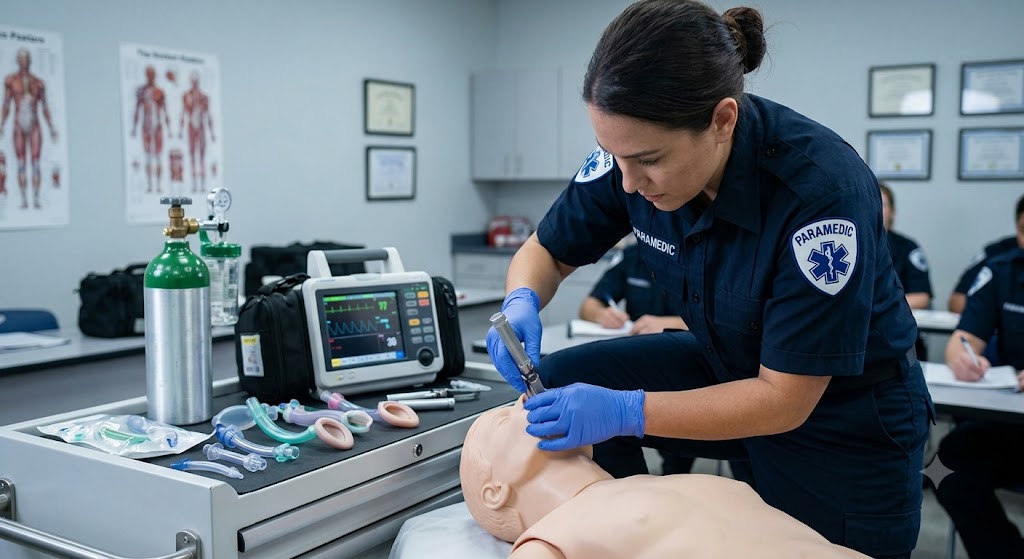
Additional Information
What the Course Entails and Exam Details
The coursework leading up to this exam covers a comprehensive syllabus centered entirely on the respiratory system and advanced airway management.
Core topics include complex respiratory anatomy and physiology, the pathophysiology of breathing disorders, and the critical application of supplemental oxygen.
Students delve deep into advanced airway techniques, mastering skills such as endotracheal intubation, CPAP administration, surgical and needle cricothyrotomy, and the use of various supraglottic airways.
Furthermore, the curriculum heavily tests the ability to interpret capnography accurately.
Candidates must also demonstrate a strong understanding of the pharmacology of respiratory medications used during emergencies.
What to Expect in the Final Exam
The final exam consists primarily of challenging, scenario-based multiple-choice questions that closely mimic real-world EMS emergencies.
You can expect to navigate through complex patient presentations where critical thinking, differential diagnosis, and rapid decision-making are absolutely essential.
While the exact passing score varies by the specific paramedic program, FISDAP exams generally require a high level of proficiency.
They often utilize a predictive cut score to accurately determine your National Registry readiness.
The test is strictly timed, requiring candidates to manage their pace effectively while under the pressure of simulated emergency scenarios.
How to Study and Exam Centers
To succeed, your study strategy should involve a rigorous mix of active recall, hands-on skills practice, and taking full-length FISDAP practice exams.
These practice exams are vital to help familiarize yourself with the specific question style and logic used by FISDAP.
Focus heavily on pathophysiology and understanding the "why" behind each intervention, rather than just memorizing procedural steps.
The exams are typically administered online through the secure FISDAP testing portal.
They are strictly proctored within authorized paramedic training schools, approved college testing centers, or recognized EMS academies.
Always confirm the specific testing protocols, technical requirements, and physical location with your course instructor well in advance of your test date.
Job Opportunities from the Course
Earning this validation opens doors to high-stakes, incredibly rewarding careers in emergency medicine and critical care.
Graduates most often step into roles as Lead Paramedics for municipal fire departments or private EMS agencies.
It also serves as a critical foundational step for highly specialized positions, such as Flight Paramedics or Critical Care Transport Paramedics.
Additionally, professionals with this documented expertise can pursue fast-paced careers as Emergency Department Technicians within hospital settings.
For those interested in education, mastering this content paves the way to becoming clinical educators or lab instructors within EMS training programs.
Frequently Asked Questions
Reviews
5.0
Based on 0 reviews
Leave a Review
No reviews yet. Be the first to review!