
FISDAP Paramedic Trauma Practice Exam
$69.00
- Buy to unlock unlimited access to all Quiz questions and Answers in this Quiz.
- After purchase you can print a PDF of the whole quiz at any point. The PDF will contain the questions and the correct answers.
About this Exam
The FISDAP Paramedic Trauma Practice Exam is a powerful tool designed specifically for paramedic students enrolled in training programs that utilize FISDAP educational resources.
This practice exam serves as a comprehensive self-assessment to gauge knowledge and preparedness specifically in the critical area of trauma management at the paramedic level.
It simulates the structure and difficulty of official certification and program-specific exams, helping students identify weak points and build the confidence necessary to excel in high-stakes testing scenarios.
Whether you're gearing up for your program's final trauma evaluation or the NREMT (National Registry of Emergency Medical Technicians) paramedic certification exam, this resource provides targeted practice to sharpen your skills.
By reflecting real-world clinical judgment, it prepares students for the rapid decision-making required when caring for trauma patients.
Utilizing this tool allows students to rehearse complex protocols and assessments in a controlled, supportive environment.
It's an essential component of any serious paramedic student's study plan, ensuring they are not just knowledgeable, but test-ready and clinically sound in trauma care.
Ready to test your knowledge?
Buy Now to Access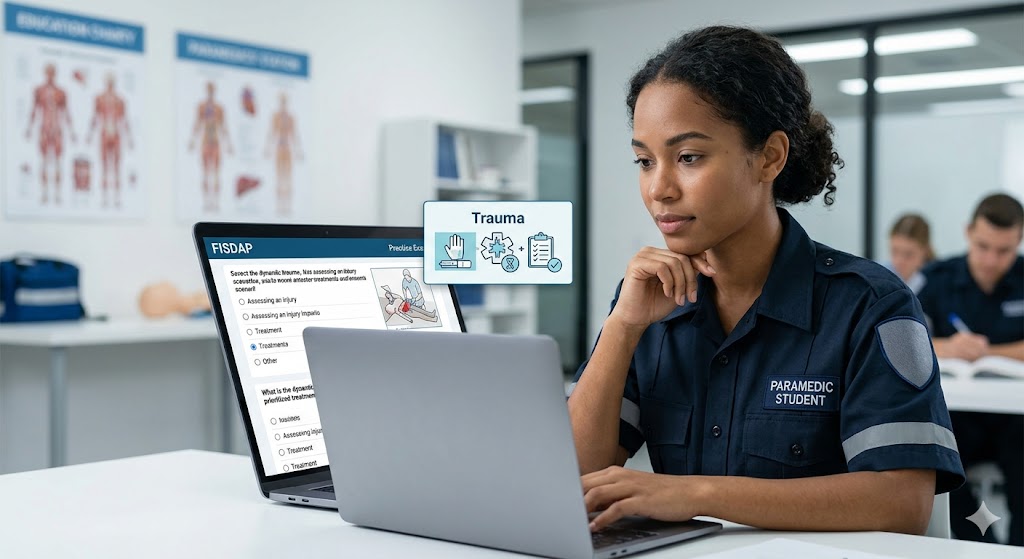
Additional Information
What the Course Entails and Exam Details
This practice exam covers a broad spectrum of advanced trauma life support knowledge relevant to paramedic practice.
Key topics include detailed patient assessment protocols (primary and secondary surveys), massive hemorrhage control, advanced airway management in trauma, thoracic and abdominal trauma, and the management of hypovolemic shock.
Students are tested on their ability to recognize and prioritize care for life-threatening injuries like tension pneumothorax, flail chest, cardiac tamponade, and significant multisystem trauma.
Assessment of neurological emergencies, spinal cord injuries, and musculoskeletal trauma (including splinting and traction splint applications) is also critically covered.
The content aligns with national EMS education standards and emphasizes evidence-based practices for pre-hospital trauma care.
While specific details like the number of questions can vary by implementation, these practice exams are generally comprehensive and aim to represent the breadth of content students will face.
Understanding this range of complex topics is crucial for success on any major paramedic certification.
Preparing through this practice exam ensures deep familiarity with diverse trauma scenarios and appropriate interventions.
What to Expect in the Final Exam
The FISDAP Paramedic Trauma Practice Exam typically mirrors the style and format common in EMS testing.
It is often presented as a timed, online examination, requiring students to work through a series of multiple-choice questions and sometimes interactive, scenario-based items.
Questions may include patient scenarios where you must analyze dynamic data and choose the most appropriate, prioritized interventions.
You might see diagrams or short descriptions of trauma incidents and be asked to identify the most critical next step or the standard protocol.
While "passing" is often defined by target scores set by your specific training program for educational purposes rather than official licensure, the practice exam provides valuable feedback.
Programs might set minimum scores like 70% or 80% to indicate readiness, but students should strive for higher proficiency.
There are usually strict time limits per question or for the entire exam to encourage efficient decision-making under pressure, similar to real-world scenarios.
Understanding this structure helps in managing time effectively during actual testing and identifying areas needing further study before official exams.
How to Study and Exam Centers
Active learning and deliberate practice are key to success.
Utilize flashcards for key terms, assessments, and prioritized treatments until you achieve instant recall.
Review your paramedic textbooks (especially Nancy Caroline's or other comprehensive guides) and official EMS protocols in detail, focusing heavily on all trauma chapters.
Discuss complex trauma cases with peers in study groups and practice physical assessments and skills on a simulator or partner whenever possible.
Mimic exam conditions when taking practice tests to manage time efficiently and reduce anxiety.
Job Opportunities from the Course
Completing this practice exam and subsequently achieving full paramedic certification opens a wide array of career paths in emergency medicine.
Here are some specific job opportunities:
Paramedic (Emergency Medical Services): Work as a core provider on ambulances, responding to 911 calls, treating diverse injuries and illnesses.
Firefighter/Paramedic: Enjoy a dual role with fire departments, performing firefighting duties and providing crucial advanced medical care.
Flight Paramedic (or Critical Care Transport): Deliver advanced, life-saving care during air medical transport for critically ill or injured patients.
Tactical Paramedic: Provide medical support to special operations teams in high-risk environments, requiring specialized training.
Industrial Paramedic: Manage occupational health and safety, provide emergency medical care, and conduct health screenings within large industrial or corporate settings.
Frequently Asked Questions
Reviews
5.0
Based on 0 reviews
Leave a Review
No reviews yet. Be the first to review!