
Floral Design Practice Exam
$69.00
- Buy to unlock unlimited access to all Quiz questions and Answers in this Quiz.
- After purchase you can print a PDF of the whole quiz at any point. The PDF will contain the questions and the correct answers.
About this Exam
The Certified Floral Design Practice Exam is a comprehensive assessment tool designed for individuals pursuing professional certification in floral design. This exam targets aspiring florists, creative professionals, and hobbyists who wish to validate their skills and knowledge against industry standards. It provides a realistic simulation of the actual certification exam, helping candidates gauge their readiness, identify knowledge gaps, and build confidence before taking the final test. This practice exam is often a critical step towards earning recognized credentials that can significantly enhance career prospects in the competitive floral industry.
Ready to test your knowledge?
Buy Now to Access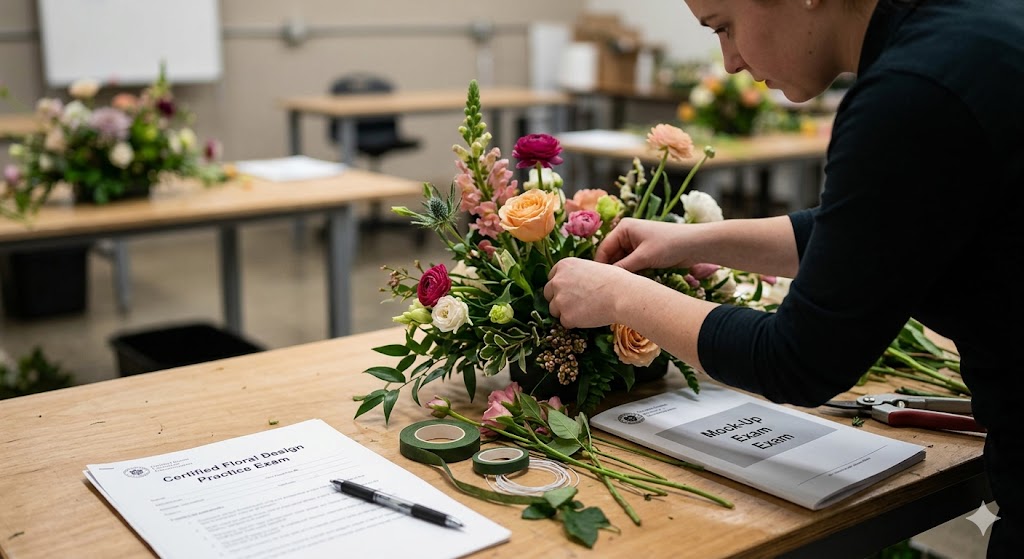
Additional Information
What the Course Entails and Exam Details
A typical floral design certification curriculum, which this practice exam mirrors, covers a wide range of topics essential for professional competency. Core skills include flower and plant identification, proper care and handling techniques, principles and elements of floral design (such as balance, proportion, color theory, and focal point), and practical applications. Students will learn how to create various types of arrangements, including vase arrangements, hand-tied bouquets, wedding work, sympathy designs, and event decor. The course also often touches upon business aspects like pricing, customer service, and basic marketing for florists. Understanding different styles of floral art, historical influences, and modern trends is crucial. The exam details usually include a mix of theoretical knowledge and practical skills evaluation. Candidates are tested on their ability to apply the concepts learned to real-world scenarios, demonstrating both creative flair and technical proficiency.
What to Expect in the Final Exam
The final certification exam typically consists of two main components: a theoretical knowledge test and a practical skills assessment.
Theoretical Component: This part is often a multiple-choice exam that assesses your understanding of terminology, principles of design, botany related to floristry, color theory, flower ID, and best practices for flower care and business operations. You might encounter scenario-based questions that test your problem-solving abilities within a floral design context. The number of questions and time limit will vary depending on the specific certification body.
Practical Component: This is arguably the most critical part of the exam. Candidates are required to create specific types of floral arrangements within a strict time limit. This demonstrates their ability to apply design principles, select appropriate materials, work efficiently, and handle flowers correctly. You might be asked to create a hand-tied bouquet, a symmetrical triangle arrangement, and a corsage, for example. Judges, who are often experienced industry professionals, will evaluate your work based on established criteria such as technical skill, design quality, adherence to instructions, and appropriate use of materials. Passing scores for both components are required to achieve certification. Be prepared for specific rules regarding tools allowed and materials provided or required.
How to Study and Exam Centers
Effective preparation is key to success on the floral design exam. Here are some actionable study strategies:
Enroll in a Comprehensive Course: Take a structured floral design program or workshop that aligns with the certification standards.
Practice Regularly: Hands-on experience is invaluable. Create as many arrangements as possible, focusing on different styles and techniques. Time yourself to mimic the exam environment.
Review Design Principles: Study the fundamentals of design until they are second nature.
Use Official Study Guides: Many certification bodies provide detailed study materials and reference lists.
Utilize Practice Exams: Regularly taking practice tests like this one helps you become familiar with the question types and formatting, manage your time effectively, and reduce anxiety.
Seek Feedback: Get constructive criticism on your practice arrangements from experienced florists or instructors.
Regarding exam centers, they vary widely depending on the certification body (e.g., AIFD, specific state associations). Theoretical parts might be proctored online or taken at authorized testing centers such as Pearson VUE. The practical portion is typically administered in person at designated locations like floral schools, industry conventions, or specific testing facilities equipped with the necessary floral supplies. Check with your chosen certification provider for a list of approved centers and scheduling procedures.
Job Opportunities from the Course
Earning a floral design certification opens doors to various rewarding career paths within the horticulture and event industries. Specific job titles include:
Certified Floral Designer (CFD)
Professional Florist / Shop Owner
Event and Wedding Decorator / Stylist
Hotel and Corporate Floral Arranger
Floral Department Manager (in retail settings)
Wholesale Floral Sales Representative
Garden Center Floral Consultant
Floral Design Instructor / Workshop Leader
Freelance Floral Artist
Visual Merchandiser (specializing in plant and flower displays)
Frequently Asked Questions
Reviews
5.0
Based on 0 reviews
Leave a Review
No reviews yet. Be the first to review!