
Florida Aquatic Weed Control Pesticide Practice Exam
$69.00
- Buy to unlock unlimited access to all Quiz questions and Answers in this Quiz.
- After purchase you can print a PDF of the whole quiz at any point. The PDF will contain the questions and the correct answers.
About this Exam
The Florida Aquatic Weed Control Pesticide Certification is a vital credential for professionals responsible for managing invasive aquatic plants in Florida's diverse water bodies. This certification ensures that applicators possess the knowledge and skills to use pesticides safely, effectively, and in compliance with state and federal regulations, minimizing environmental impact on sensitive aquatic ecosystems. This exam is designed for individuals seeking employment in mosquito control, lake management, environmental restoration, and governmental agencies involved in water resource management.
Ready to test your knowledge?
Buy Now to Access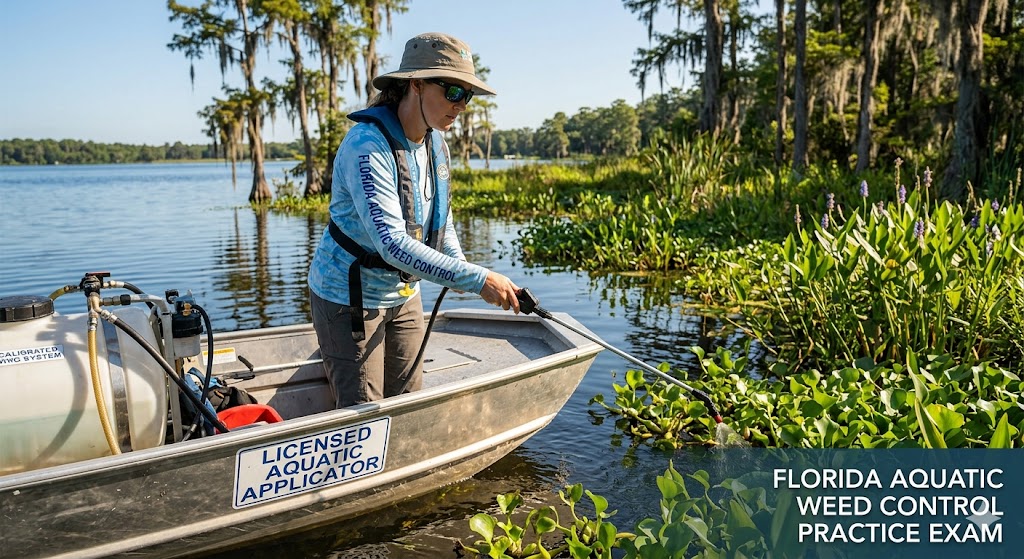
Additional Information
What the Course Entails and Exam Details
This comprehensive certification program covers a wide range of essential topics crucial for effective and responsible aquatic weed control. The course material typically includes:
Aquatic Plant Identification: Accurate identification of both native and invasive aquatic plant species common to Florida.
Pesticide Laws and Regulations: In-depth understanding of federal and Florida-specific laws governing pesticide use, including registration, labeling, and applicator responsibilities.
Pesticide Safety: Proper handling, storage, mixing, loading, and disposal of aquatic pesticides to protect applicators, the public, and the environment.
Equipment and Calibration: Understanding different types of application equipment and methods, including calibration techniques to ensure accurate pesticide delivery.
Environmental Impact: Assessing the potential effects of aquatic pesticides on water quality, non-target organisms, and overall ecosystem health.
Integrated Pest Management (IPM): Principles of IPM strategies, emphasizing the use of multiple control methods and minimizing reliance on chemical pesticides.
What to Expect in the Final Exam
The final exam for the Florida Aquatic Weed Control Pesticide Certification is typically a proctored, closed-book examination. Key details about the exam include:
Format: The exam usually consists of multiple-choice questions designed to assess candidates' knowledge across all core topic areas.
Passing Score: A minimum passing score, often 70% or 75%, is required to obtain certification.
Time Limit: Candidates are typically allotted a specific time frame, often two to three hours, to complete the exam.
Specific Rules: Specific rules may vary slightly depending on the testing center or online proctoring service, but generally include prohibitions on using unauthorized materials or communicating with others during the exam.
How to Study and Exam Centers
Effective study strategies are crucial for success in the Florida Aquatic Weed Control Pesticide Certification exam. Actionable study methods include:
Review Official Study Manuals: Utilize the official study manuals provided by the University of Florida Institute of Food and Agricultural Sciences (UF/IFAS), which are the primary resource for exam preparation.
Practice with Practice Exams: Engage with practice exams, such as the one described in this guide, to familiarize yourself with the exam format, question types, and identify areas requiring further study.
Form Study Groups: Collaborate with peers to discuss key concepts, share study resources, and quiz each other on course material.
The exam is typically administered through various channels, including:
UF/IFAS County Extension Offices: Many county extension offices across Florida offer in-person testing options.
Online Proctoring Services: Some organizations may utilize online proctoring services, allowing candidates to take the exam remotely under supervision.
Authorized Testing Centers: Specific physical testing centers or authorized schools may also be designated to administer the exam.
Candidates should check with the Florida Department of Agriculture and Consumer Services (FDACS) or UF/IFAS for the most up-to-date information on exam registration and testing locations.
Job Opportunities from the Course
Obtaining the Florida Aquatic Weed Control Pesticide Certification opens up a variety of rewarding career paths in the field of environmental management and water resource conservation. Potential job opportunities include:
Certified Aquatic Pesticide Applicator: Applying pesticides to manage aquatic weeds and invasive plants in lakes, rivers, canals, and other water bodies.
Lake Management Specialist: Developing and implementing comprehensive management plans for lakes and ponds, including vegetation control, water quality monitoring, and habitat restoration.
Environmental Scientist/Technician: Conducting research, monitoring water quality, and assessing the environmental impact of aquatic weed control activities.
Mosquito Control Technician: Applying larvicides and adulticides to control mosquito populations in aquatic habitats.
Park Ranger/Naturalist: Managing invasive plants and protecting native ecosystems within state and local parks.
Golf Course Superintendent: Overseeing the maintenance of golf course water bodies, including vegetation management.
Private Contractor: Providing aquatic weed control services to private landowners, homeowners' associations, and commercial clients.
Frequently Asked Questions
Reviews
5.0
Based on 0 reviews
Leave a Review
No reviews yet. Be the first to review!