
Florida Boating Certification Practice Test
$69.00
- Buy to unlock unlimited access to all Quiz questions and Answers in this Quiz.
- After purchase you can print a PDF of the whole quiz at any point. The PDF will contain the questions and the correct answers.
About this Exam
The Florida Boating Safety Education Identification Card is a mandatory state requirement rather than a traditional license.
This essential certification is designed specifically to ensure that waterway users understand safe vessel operation, navigational rules, and emergency procedures.
It is legally required for anyone born on or after January 1, 1988, who intends to operate a motorized vessel of 10 horsepower or greater in Florida waters.
Whether you are a local resident planning weekend fishing trips, a teenager getting behind the wheel of a personal watercraft for the first time, or a vacationer renting a pontoon boat, this certification ensures you have the foundational knowledge to keep yourself and your passengers safe.
Taking a practice test is the perfect way to build confidence and guarantee you are ready to earn your official card on the first attempt.
Ready to test your knowledge?
Buy Now to Access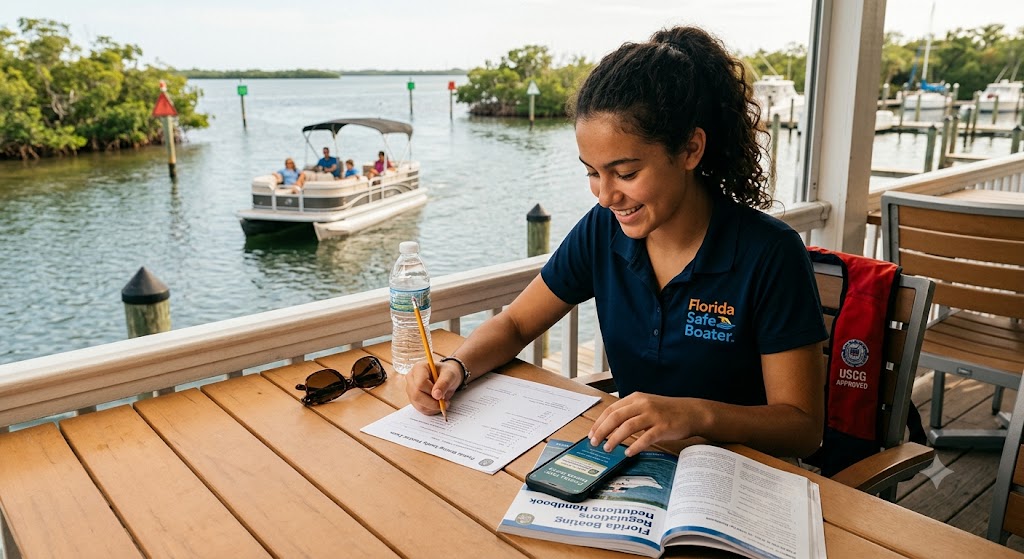
Additional Information
What the Course Entails and Exam Details
The Florida boating safety course is a comprehensive program authorized by the Florida Fish and Wildlife Conservation Commission (FWC).
It covers a wide array of vital topics designed to create responsible and knowledgeable boaters.
Students will dive deeply into essential navigational rules, commonly known as the "rules of the road" for the water, which dictate right-of-way and safe passing procedures.
The syllabus also includes a thorough review of state and federal boating laws, ensuring operators understand speed zones, wake restrictions, and legal operational ages.
Furthermore, the course provides in-depth training on required safety equipment, such as proper life jacket sizing, fire extinguishers, and visual distress signals.
Emergency preparedness is another core focus, teaching students how to handle capsizing, man-overboard situations, and severe weather changes.
Finally, the curriculum touches on environmental protection, educating boaters on how to protect Florida's delicate marine ecosystems, seagrass beds, and protected wildlife like manatees.
What to Expect in the Final Exam
When you are ready to take the final Florida boating certification exam, knowing the format will help reduce test anxiety.
The official final exam consists entirely of multiple-choice questions, typically featuring 60 distinct questions.
To successfully pass and earn your safety card, you must achieve a minimum passing score of 80 percent, which means answering at least 48 questions correctly.
Because the exam evaluates your practical knowledge of boating safety, it is heavily focused on real-world scenarios, marker identification, and legal requirements.
Most state-approved online providers offer an open-book format with no strict time limit, allowing you to pace yourself and carefully read through each question.
However, if you fail the final exam on your first attempt, do not worry.
Most platforms allow you to retake the exam after a brief waiting period or after reviewing the course material, ensuring you truly understand the content before hitting the water.
How to Study and Exam Centers
Effective preparation is the key to passing your Florida boating certification exam with flying colors.
Begin by reading the official Florida Boating Safety Handbook, which is available online for free and covers all the state-specific regulations you will be tested on.
Taking multiple practice exams is highly recommended, as this will familiarize you with the wording of the questions and highlight any knowledge gaps you might have regarding navigational markers or safety equipment.
Create flashcards for the different types of buoys and markers, as visual identification is a major component of the test.
When it comes to actually taking the course and exam, Florida offers maximum flexibility.
The vast majority of students choose to complete the exam through FWC-approved online portals, such as BoatUS Foundation, Boat Ed, or BoaterExam, which allow you to study and test from the comfort of your own home.
If you prefer a traditional classroom setting, you can also take the course and exam in person through the U.S. Coast Guard Auxiliary, local United States Power Squadrons, or authorized local maritime schools.
Job Opportunities from the Course
Earning your Florida Boating Safety Education Identification Card is not just for recreational fun; it can also be the first step toward a rewarding career on the water.
Many marine-based employers require this certification as a baseline qualification for entry-level positions.
You could pursue a career as an Eco-Tour Guide, navigating groups through the Everglades or coastal mangroves to spot wildlife.
It is also an essential credential for a Watersports Instructor, allowing you to legally operate vessels to teach wakeboarding, water skiing, or parasailing.
Marina Staff and Dockhands frequently need this certification to safely move client boats within crowded harbors and fuel docks.
For those looking into equipment leasing, becoming a Boat Rental Agent requires you to understand these safety rules so you can properly brief tourists before they head out.
Finally, this foundational knowledge is an excellent stepping stone for those who eventually want to pursue a professional U.S. Coast Guard Captain's License or a career as a Marine Patrol Officer enforcing waterway safety.
Frequently Asked Questions
Reviews
5.0
Based on 0 reviews
Leave a Review
No reviews yet. Be the first to review!