
Florida Correctional Officer Safety Practice Test
$69.00
- Buy to unlock unlimited access to all Quiz questions and Answers in this Quiz.
- After purchase you can print a PDF of the whole quiz at any point. The PDF will contain the questions and the correct answers.
About this Exam
The Florida Correctional Officer certification process is a mandatory and rigorous pathway for anyone looking to build a rewarding career in the state’s criminal justice system.
This specific certification and its accompanying practice exams are designed for aspiring correctional officers, detention deputies, and jail personnel who are required to pass the Florida State Officer Certification Examination (SOCE).
By taking a comprehensive safety practice test, candidates can measure their readiness, build confidence, and ensure they fully grasp the critical safety protocols required to maintain order and security within correctional facilities.
Whether you are a recent high school graduate, a transitioning military veteran, or a professional seeking a career change, this exam is your gateway to joining Florida's dedicated law enforcement community.
Ready to test your knowledge?
Buy Now to Access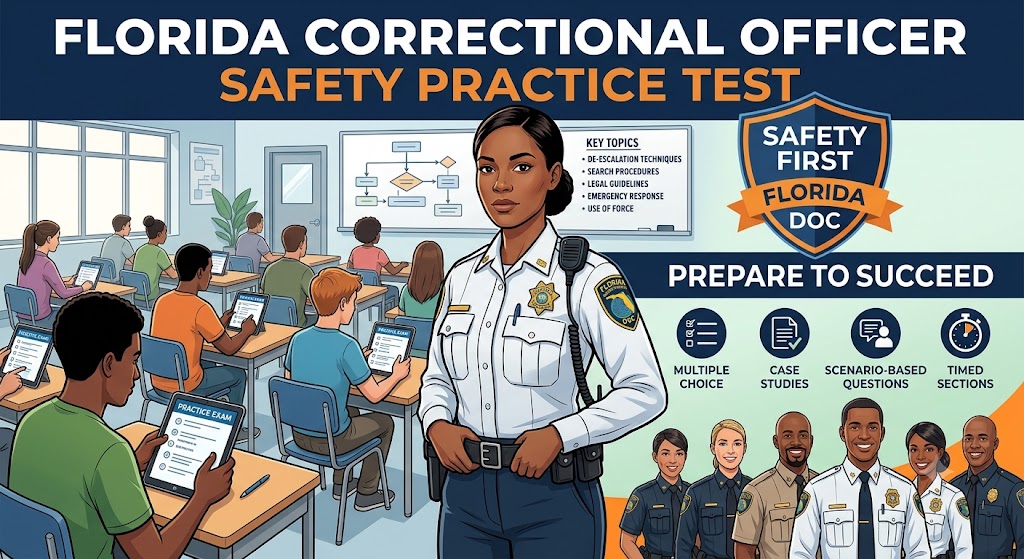
Additional Information
What the Course Entails and Exam Details
Preparing for the Florida Correctional Officer exam requires a deep understanding of facility operations and inmate management.
The core syllabus is built around the Florida Department of Law Enforcement (FDLE) curriculum, which heavily emphasizes officer safety, legal guidelines, and emergency preparedness.
You will cover essential topics such as defensive tactics, first aid, CPR, and the safe handling of firearms.
Additionally, the coursework entails mastering interpersonal communication skills, recognizing contraband, understanding the psychological aspects of inmate behavior, and executing proper search and transport procedures.
The exam tests not only your theoretical knowledge of state laws and facility rules but also your ability to make rapid, safe decisions in high-stress environments.
What to Expect in the Final Exam
The final State Officer Certification Examination (SOCE) for Correctional Officers is a comprehensive, computer-based test that demands thorough preparation.
The exam typically consists of 120 multiple-choice questions that cover all the primary modules taught during your basic recruit training.
You will be given a strict time limit, generally up to three hours, to complete the examination.
To achieve certification, candidates are required to meet a passing score of at least 80%.
Strict testing rules apply on exam day; candidates cannot bring personal items, electronics, or study materials into the testing room, and you must present valid, government-issued identification to be admitted.
How to Study and Exam Centers
Success on the Florida Correctional Officer exam comes down to consistent, targeted study strategies.
Begin by taking multiple practice exams to familiarize yourself with the wording of the questions and to identify your weak areas.
Use flashcards for legal definitions and safety codes, and form study groups with fellow recruits to discuss complex scenario-based questions.
When you are ready to take the official exam, you will need to register through the Pearson VUE online portal.
Pearson VUE operates numerous authorized physical testing centers across the state of Florida, ensuring you can find a convenient location near you.
Always book your exam slot well in advance and plan to arrive at the testing center at least 30 minutes early to complete the mandatory check-in procedures.
Job Opportunities from the Course
Passing this exam and obtaining your certification unlocks a stable, respected, and benefit-rich career path within the criminal justice system.
Below are some of the primary roles you can pursue:
State Correctional Officer – Overseeing inmate safety, security, and rehabilitation within Florida Department of Corrections state prisons.
County Detention Deputy – Managing the daily operations and security of county jails and local detention centers.
Correctional Probation Officer – Monitoring offenders who have been placed on probation or community control, ensuring they adhere to court-ordered guidelines.
Juvenile Detention Officer – Working within the Department of Juvenile Justice to supervise, mentor, and secure youthful offenders.
Facility Security Supervisor – A promotional track role involving the management of lower-ranking officers and the coordination of facility-wide safety protocols.
Transport Officer – Specializing in the safe and secure transportation of inmates between facilities, courts, and medical appointments.
Frequently Asked Questions
Reviews
5.0
Based on 0 reviews
Leave a Review
No reviews yet. Be the first to review!