
Florida Licensed dispenser Practice Exam
$69.00
- Buy to unlock unlimited access to all Quiz questions and Answers in this Quiz.
- After purchase you can print a PDF of the whole quiz at any point. The PDF will contain the questions and the correct answers.
About this Exam
The Florida Licensed Dispenser certification is a vital credential for aspiring healthcare professionals wishing to legally dispense specific medical devices, such as optical goods or hearing aids, within the state of Florida.
This rigorous examination is designed to ensure that all practitioners possess the necessary technical knowledge, ethical grounding, and practical skills to serve patients safely and effectively.
It is specifically tailored for individuals who have completed their formal education or apprenticeship in dispensing and are now ready to transition into fully licensed, practicing professionals.
By passing this exam, candidates demonstrate their commitment to public health and their mastery of both state laws and specialized patient care.
Sample Questions
Explanation:
Explanation:
Explanation:
Explanation:
Explanation:
Ready to test your knowledge?
Buy Now to Access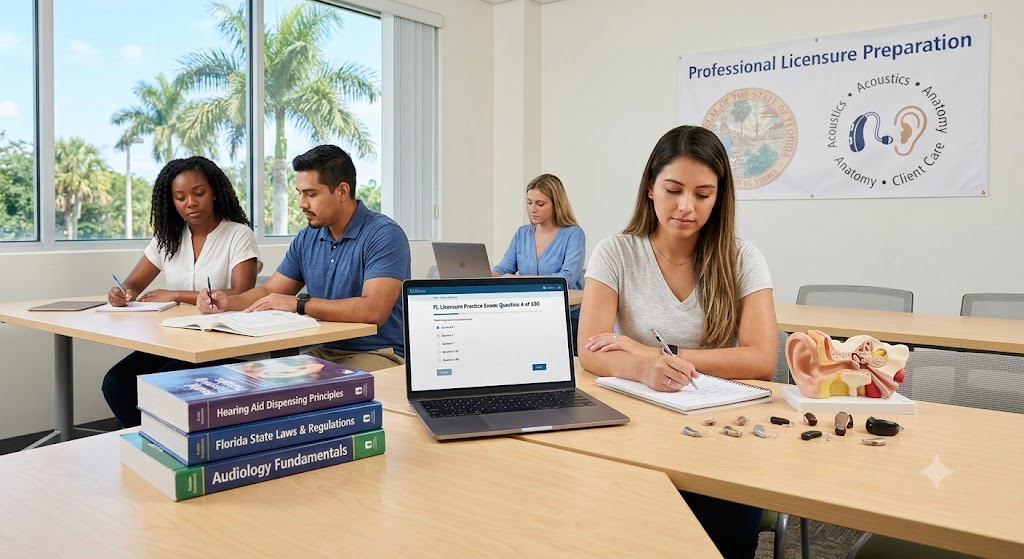
Additional Information
What the Course Entails and Exam Details
Preparing for the licensed dispenser exam requires a deep dive into several critical areas of healthcare practice and state regulation.
The core syllabus covers the anatomy and physiology relevant to the specific field, whether that involves the human eye for opticianry or the auditory system for hearing aid specialists.
Students must master the principles of device fitting, troubleshooting, and maintenance to ensure optimal patient outcomes.
Additionally, the curriculum entails a thorough review of infection control procedures and patient consultation techniques.
A significant portion of the material is also dedicated to Florida-specific health statutes, professional ethics, and regulatory compliance, ensuring all dispensers operate strictly within the bounds of the law.
What to Expect in the Final Exam
The final licensure examination is a comprehensive evaluation designed to test both theoretical knowledge and practical application.
Candidates can generally expect a computer-based format consisting of multiple-choice questions, which rigorously assess their understanding of anatomy, physical fitting principles, and state regulations.
The exam typically features between 100 and 150 questions, and candidates are usually granted a time limit of two to three hours to complete the test.
To achieve certification, candidates must meet a minimum passing score, which is generally set around 70% or calculated via a scaled scoring system by the state board.
Strict testing rules apply, including mandatory government-issued identification, restrictions on personal items in the testing room, and continuous proctor monitoring to ensure academic integrity.
How to Study and Exam Centers
Success on the Florida Licensed Dispenser exam requires a strategic, multi-faceted approach to studying.
Candidates are highly encouraged to utilize comprehensive practice exams to familiarize themselves with the question formats and identify areas needing improvement.
Creating flashcards for key anatomical terms, device specifications, and specific Florida statutes can significantly boost retention.
Joining study groups or seeking mentorship from currently licensed professionals can provide practical insights that textbooks alone cannot offer.
When you are ready to take the exam, registration is typically handled through the Florida Department of Health or its authorized third-party testing partners, such as Pearson VUE or Prometric.
Testing centers are located in major cities across Florida, offering secure, proctored environments, and candidates must schedule their appointments well in advance through the official online portals.
Job Opportunities from the Course
Earning your Florida Dispenser License opens the door to a variety of rewarding and stable career paths in the healthcare sector.
Licensed Dispensing Optician
Licensed Hearing Aid Specialist
Clinical Dispensary Manager
Healthcare Device Sales Representative
Independent Practice Owner
Ophthalmic or Audiology Clinic Coordinator
Product Training Specialist for Medical Device Manufacturers
Frequently Asked Questions
Reviews
5.0
Based on 0 reviews
Leave a Review
No reviews yet. Be the first to review!