
Florida Mortgage Loan Officer Practice Exam
$69.00
- Buy to unlock unlimited access to all Quiz questions and Answers in this Quiz.
- After purchase you can print a PDF of the whole quiz at any point. The PDF will contain the questions and the correct answers.
About this Exam
The Florida Mortgage Loan Officer (MLO) Practice Exam is a crucial preparatory tool for individuals seeking a dynamic career in the sunshine state's flourishing real estate and lending markets. It is designed specifically for aspiring mortgage loan originators who must pass the rigorous Florida-specific state licensing examination, often administered in conjunction with the National MLO Exam through the Nationwide Multistate Licensing System (NMLS). This practice exam is essential for anyone aiming to fulfill the professional education requirements and legally operate as a state-licensed MLO in Florida, enabling them to assist homebuyers and homeowners in securing residential mortgage loans within the state.
Sample Questions
Explanation:
Explanation:
Explanation:
Explanation:
Explanation:
Ready to test your knowledge?
Buy Now to Access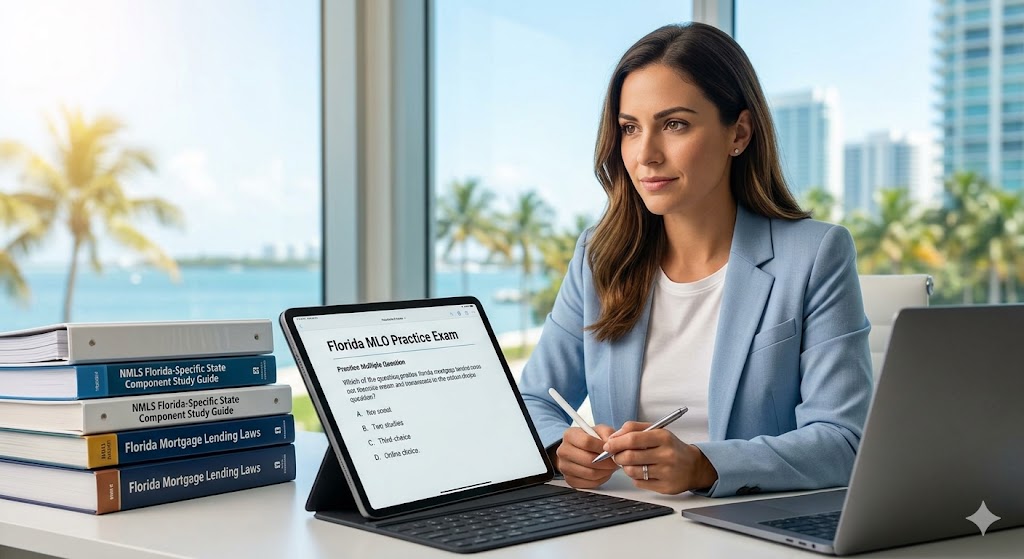
Additional Information
What the Course Entails and Exam Details
This comprehensive preparatory course and the accompanying Florida MLO Practice Exam focus intensely on state-specific lending regulations, consumer protection laws, and ethical practices unique to Florida. The content precisely mirrors the material that is covered in the 20 hours of mandatory NMLS-approved pre-licensing education, emphasizing the Florida-specific portion. Key learning areas include:
Florida Mortgage Lending Laws (FL Statutes 494): Mastering the nuances of Chapter 494 of the Florida Statutes, which governs the licensure and regulation of mortgage brokers, lenders, and originators in the state.
Florida-Specific Disclosure Requirements: Detailed knowledge of required disclosures to Florida consumers throughout the mortgage process, beyond federal mandates.
Prohibited Practices and Discipline: Comprehensive understanding of acts prohibited by Florida law, potential penalties, and the state’s disciplinary procedures for MLOs.
Foreclosure and Fair Lending in Florida: In-depth review of Florida's specific foreclosure processes and laws governing fair lending and predatory lending practices within the state.
Role and Authority of the Office of Financial Regulation (OFR): Understanding the powers, duties, and regulatory oversight of the Florida Office of Financial Regulation over the mortgage industry.
The course and practice exam ensure candidates possess the critical knowledge needed to legally and ethically originate mortgage loans in Florida’s complex regulatory environment.
What to Expect in the Final Exam
While the practice exam helps build your confidence, the final Florida state exam is typically a challenging component that complements the broader National MLO Exam. While exam structures and passing requirements can slightly vary (always check the current NMLS Candidate Handbook), applicants usually face a dedicated Florida state content section.
Exam Format: The Florida state portion is typically structured as a set of multiple-choice questions. It might be taken as a stand-alone component or integrated with the national exam as separate sections.
Number of Questions: The dedicated Florida component generally consists of approximately 40 to 60 scored multiple-choice questions, covering the state-specific laws and regulations described above.
Passing Score: To pass the state exam (like the national exam), candidates must achieve a high score, commonly a minimum of 75% or higher on the Florida section, to qualify for licensure.
Time Limit: When taken combined, candidates are often allotted a specific amount of time for the combined national and state exam. The Florida portion itself typically has a dedicated timeframe proportional to its question count, often around 90 minutes.
Rules: The final official exam is proctored, strictly timed, and held in a secure environment. No outside materials, notes, or electronic devices are permitted during the testing session. The practice exam aims to prepare you precisely for these high-stakes conditions.
How to Study and Exam Centers
Preparation is paramount for success on the Florida MLO Exam. A strategic and disciplined study approach is key:
Actionable Study Strategies:
Utilize NMLS-Approved Courses: Completion of the required 20-hour pre-licensing education (which must include the 2 hours of Florida-specific state law) is mandatory. Choose a reputable, NMLS-approved education provider.
Intense Document Review: Thoroughly study the Florida specific curriculum, including Chapter 494 of the Florida Statutes and related administrative rules. The OFR website provides direct access to these laws.
Repetitive Practice Testing: Take multiple practice exams. The Florida MLO Practice Exam simulates the actual testing experience, allowing you to identify knowledge gaps, familiarize yourself with question phrasing, and build your test-taking speed and stamina.
Focus on Disclosures and Penalties: Pay extra attention to detailed rules regarding timing, specific disclosure content required in Florida, and the severity of different violations.
Simulate Test Conditions: When taking practice tests, create a quiet, distraction-free environment and time yourself accurately to get a realistic sense of pacing.
Exam Centers and Registration:
The official Florida MLO State Exam (like the National MLO Exam) is not taken directly on educational portals but is administered through the NMLS test vendor, usually Pearson VUE.
NMLS Registration: Candidates must first register and pay for the exam through their individual NMLS account.
Scheduling with Pearson VUE: Once registered, candidates schedule their actual exam appointment at a secure, physical Pearson VUE testing center. Pearson VUE has numerous authorized testing locations throughout Florida and nationally. Online proctoring (OnVUE) may also be an option for certain exam types; check the current NMLS guidelines for the state-specific component.
On Exam Day: Arrive early at the designated testing center with the required identification, as stated in the candidate handbook.
Job Opportunities from the Course
Successfully passing the Florida MLO Exam and obtaining licensure unlocks a clear pathway to several specific and impactful job titles in the dynamic residential real estate lending sector. Individuals who complete this certification path typically advance into these careers:
Florida Licensed Mortgage Loan Originator (MLO)
Residential Mortgage Broker
Mortgage Lender Representative
Mortgage Branch Manager (with additional experience)
In-House Lender for Real Estate Firms
Independent Mortgage Consultant
Private Money Loan Originator (specializing in residential property)
Frequently Asked Questions
Reviews
5.0
Based on 0 reviews
Leave a Review
No reviews yet. Be the first to review!