
Florida Psychology Laws and Rules Practice Exam
$69.00
- Buy to unlock unlimited access to all Quiz questions and Answers in this Quiz.
- After purchase you can print a PDF of the whole quiz at any point. The PDF will contain the questions and the correct answers.
About this Exam
This comprehensive practice exam is meticulously designed for psychologists, school psychologists, and other qualified mental health professionals seeking to obtain licensure in the state of Florida. It focuses specifically on the essential Florida statutes and administrative rules that govern the ethical and legal practice of psychology within the state. As a critical component of the licensure process, this exam ensures that candidates are well-versed in the state's regulatory framework, thereby protecting the public and maintaining high professional standards. This practice exam serves as an invaluable tool for candidates to assess their knowledge and readiness for the actual Florida Psychology Laws and Rules examination.
Sample Questions
Explanation:
Explanation:
Explanation:
Explanation:
Explanation:
Ready to test your knowledge?
Buy Now to Access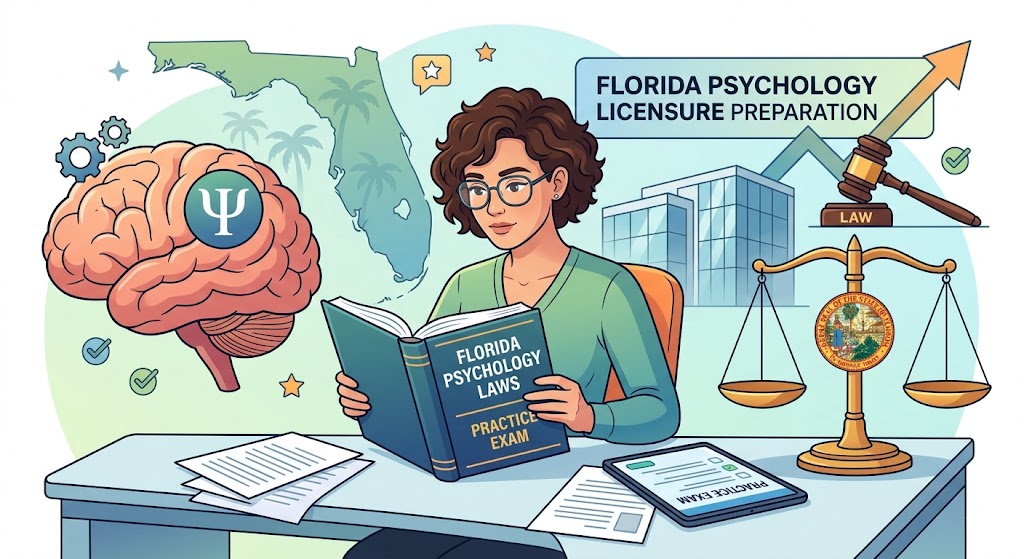
Additional Information
What the Course Entails and Exam Details
The Florida Psychology Laws and Rules Practice Exam focuses solely on the relevant Florida statutes and rules, particularly Florida Statute Chapter 490 (Psychological Services Act) and Florida Administrative Code Rule 64B19 (Board of Psychology). The practice material covers crucial topics such as:
Florida Statutes: In-depth review of Chapter 490, which defines the practice of psychology, outlines licensure requirements, and addresses disciplinary actions.
Board of Psychology Rules: Comprehensive understanding of Rule 64B19, including rules on ethical conduct, confidentiality, mandatory reporting laws, and administrative procedures.
Professional Ethics: Ethical standards for psychologists in Florida, including relationships with clients, advertising, and competence.
Licensure Requirements: Steps and criteria for obtaining and maintaining licensure in Florida.
Disciplinary Procedures: Understanding the process for investigating complaints and potential grounds for disciplinary action.
Legal Responsibilities: Laws regarding informed consent, record keeping, and patient access to records.
Candidates are tested on their ability to interpret and apply these statutes and rules to various practice scenarios. The format typically mirrors the actual exam, providing multiple-choice questions that require critical thinking and a deep understanding of the legal and ethical landscapes specific to Florida.
What to Expect in the Final Exam
The actual Florida Psychology Laws and Rules Examination is a computer-based test administered at approved testing centers or through online proctoring services. Candidates can expect the following details:
Exam Format: Multiple-choice questions, which evaluate knowledge and application of Florida laws and rules.
Number of Questions: The exam usually contains approximately 40 to 50 scored questions, with possible unscored pretest questions.
Passing Score: The passing score is determined by the Florida Board of Psychology and may vary, but candidates should aim for a high percentage, often around 75% or above, based on the specific psychometric scoring methods used.
Time Limit: Candidates are generally allotted 1.5 to 2 hours to complete the examination.
Rules and Regulations: Strict rules apply to the exam environment, and unauthorized materials are typically prohibited. It is essential to be familiar with all examination procedures and policies.
Successfully passing this exam is a required step for licensure, indicating the candidate's preparedness to practice within Florida's specific legal and ethical guidelines.
How to Study and Exam Centers
Preparation for the Florida Psychology Laws and Rules Examination requires dedicated study of the actual statutes and rules. Actionable strategies include:
Review Official Documents: Thoroughly study Florida Statute Chapter 490 and Florida Administrative Code Rule 64B19. These are the primary sources for all exam content.
Use Practice Exams: Take high-quality practice exams, like this one, to simulate the actual test environment, understand question formats, and identify areas needing improvement. Reviewing rationales for correct and incorrect answers is crucial.
Create Study Aids: Develop flashcards and summaries for key terms, legal requirements, and ethical standards specific to Florida.
Focus on Application: Understand how statutes and rules apply to practical scenarios and case studies rather than just memorizing definitions.
Check Updates: Ensure you are studying the most current versions of the statutes and rules, as regulations can change.
Exam Centers: The exam is administered through authorized testing providers. Once approved by the Florida Board of Psychology, candidates can schedule their examination through a specific online portal or via phone. Testing options include:
Approved Testing Centers: Multiple physical locations throughout Florida and sometimes in other states are available through testing partners like Pearson VUE.
Online Proctoring: Candidates might have the option to take the exam remotely through a secured, proctored online platform, provided their equipment meets specified technical requirements.
Detailed information on scheduling and specific testing locations will be provided directly to approved candidates by the board or its testing administrator.
Job Opportunities from the Course
Successfully passing the Florida Psychology Laws and Rules Examination, along with meeting all other licensure requirements, opens numerous career paths for psychologists in Florida. Job opportunities include:
Licensed Psychologist (Private Practice): Providing individual, family, or group therapy, psychological assessments, and consulting services.
Clinical Psychologist (Hospitals and Clinics): Working in mental health facilities, general hospitals, or specialized clinics, diagnosing and treating mental and emotional disorders.
School Psychologist (Educational Settings): Working within the Florida school system (K-12 or higher education), addressing students' learning, emotional, and behavioral needs.
Neuropsychologist: Specializing in the relationship between brain function and behavior, often working in medical and rehabilitation centers.
Forensic Psychologist: Applying psychology within the legal and criminal justice systems, including evaluations for courts and consulting with legal professionals.
Organizational-Industrial Psychologist: Working with businesses and organizations in areas like talent management, training, and improving workplace productivity in Florida companies.
Research Psychologist: Conducting research in academic, government, or private research institutions located in Florida.
Community Psychologist: Designing and implementing programs to promote community well-being and address social issues within Florida communities.
Frequently Asked Questions
Reviews
5.0
Based on 0 reviews
Leave a Review
No reviews yet. Be the first to review!