
Florida Right-of-Way Pest Control Practice Exam
$69.00
- Buy to unlock unlimited access to all Quiz questions and Answers in this Quiz.
- After purchase you can print a PDF of the whole quiz at any point. The PDF will contain the questions and the correct answers.
About this Exam
The Florida Right-of-Way Pest Control certification is a specialized credential designed for professionals who manage weed and pest issues along public areas and utility lines.
This certification is mandatory for those applying restricted-use pesticides to maintain right-of-way areas such as public roads, electric power lines, pipelines, and railway lines.
It is tailored for agricultural workers, utility maintenance crews, department of transportation personnel, and commercial applicators who need to ensure these critical infrastructures remain clear, safe, and accessible while protecting Florida's delicate ecosystem.
Sample Questions
Explanation:
Explanation:
Explanation:
Explanation:
Explanation:
Ready to test your knowledge?
Buy Now to Access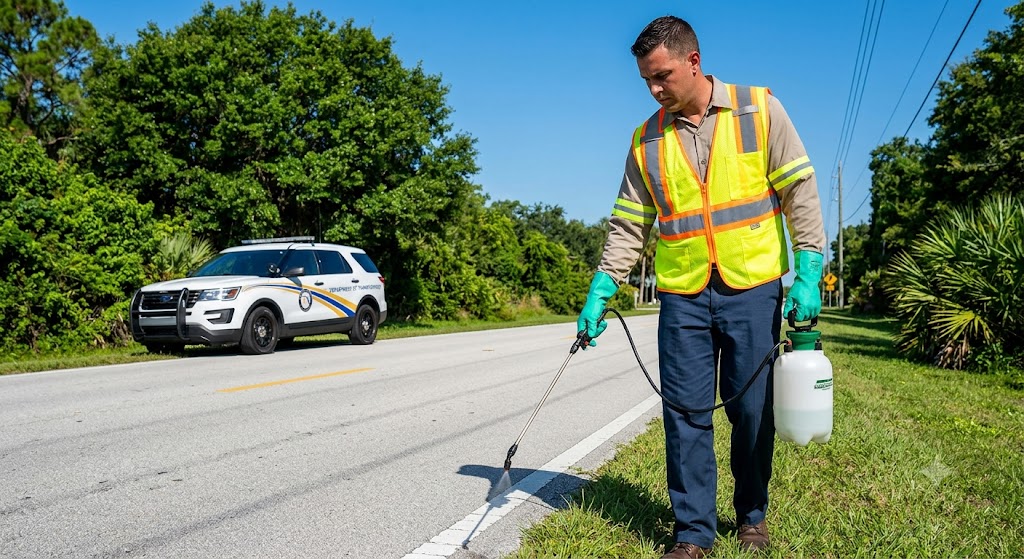
Additional Information
What the Course Entails and Exam Details
Preparing for the Right-of-Way Pest Control exam involves mastering a comprehensive syllabus focused on safe and effective vegetation management.
Candidates will dive deeply into weed biology and identification, learning how to distinguish between annual, biennial, and perennial weeds that commonly disrupt right-of-way zones.
The core topics also encompass herbicide characteristics, chemical classifications, and understanding how different active ingredients interact with the soil and the environment.
Additionally, the curriculum covers vital mechanical skills, including the operation of various application equipment, accurate calibration of sprayers, and proper mixing techniques.
Safety is heavily emphasized, ensuring candidates understand personal protective equipment (PPE), drift control, and the laws governing pesticide use in the state of Florida.
What to Expect in the Final Exam
The Florida Right-of-Way Pest Control exam is a closed-book, multiple-choice assessment regulated by the Florida Department of Agriculture and Consumer Services (FDACS).
To achieve certification, candidates must actually pass two separate exams: the General Standards (Core) exam, which covers foundational pesticide safety, and the specialized Right-of-Way category exam.
The Right-of-Way specific exam consists of 50 multiple-choice questions.
You are generally given a maximum time limit of two hours to complete the test.
To pass and earn your certification, you must achieve a score of at least 70% on both the Core and the Right-of-Way exams.
Calculators are allowed and highly recommended for the calibration and mathematics questions, but smartphones and other smart devices are strictly prohibited in the testing room.
How to Study and Exam Centers
Success on this exam requires a strategic approach to studying, starting with the official manuals provided by the UF/IFAS Extension.
You should thoroughly review the "Right-of-Way Pest Control" training manual, alongside the "Applying Pesticides Correctly" (Core) manual.
Taking multiple practice exams is one of the most actionable strategies you can employ; it helps you familiarize yourself with the phrasing of the questions and the pacing required to finish within the two-hour limit.
Focus heavily on practicing your calibration math, as this is a common stumbling block for many applicants.
When you are ready to test, exams are administered electronically via the FDACS testing portal.
You can schedule and take your exam at local University of Florida IFAS County Extension offices, which serve as the authorized physical testing centers across the state.
You will need to register online beforehand to secure your voucher number and testing appointment.
Job Opportunities from the Course
Earning your Florida Right-of-Way Pest Control certification opens the door to a variety of stable and well-paying career paths in both the public and private sectors.
By holding this license, you demonstrate a specialized, highly regulated skill set that is always in demand.
Some of the prominent job titles and career paths this certification unlocks include:
Right-of-Way Applicator: The most direct career path, involving the daily application of herbicides along highways, railways, and utility lines.
Utility Vegetation Management Specialist: Working for or contracting with power and water companies to ensure infrastructure is not compromised by overgrowth.
Highway Maintenance Technician: Working directly with the Department of Transportation (DOT) or municipal governments to keep roadsides clear, visible, and safe for drivers.
Commercial Pesticide Applicator: Running or working for a private pest control and landscaping business that bids on large-scale government and corporate right-of-way contracts.
Municipal Groundskeeper or Parks Worker: Managing weed control for city or county properties, ensuring public safety and aesthetic appeal.
Environmental Technician: Assisting in the management of invasive species along public corridors to protect native Florida flora and fauna.
Frequently Asked Questions
Reviews
5.0
Based on 0 reviews
Leave a Review
No reviews yet. Be the first to review!