
Fluid Lines and Fittings Practice Test
$69.00
- Buy to unlock unlimited access to all Quiz questions and Answers in this Quiz.
- After purchase you can print a PDF of the whole quiz at any point. The PDF will contain the questions and the correct answers.
About this Exam
The Fluid Lines and Fittings module is a critical component of the Aviation Maintenance Technician (AMT) certification, specifically within the General and Airframe sections.
This rigorous curriculum is designed for aspiring aircraft mechanics, aerospace technicians, and mechanical engineers who must understand how to safely route, install, and maintain essential hydraulic, pneumatic, and fuel systems.
Mastering this subject ensures that technicians can prevent catastrophic fluid leaks and system failures in high-pressure environments.
Whether you are seeking your FAA Airframe and Powerplant (A&P) license or a specialized mechanical certification, this subject forms the backbone of operational vehicle safety and reliability.
Ready to test your knowledge?
Buy Now to Access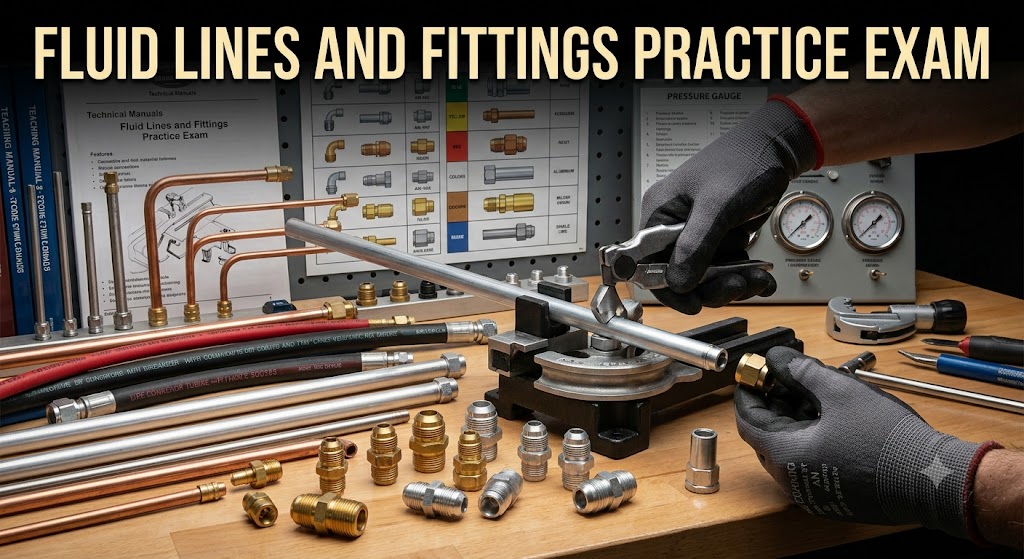
Additional Information
What the Course Entails and Exam Details
This training deeply explores the materials, fabrication, and installation of both rigid tubing and flexible hoses used in complex mechanical and aerospace systems.
Students learn to identify various materials, such as aluminum alloy, steel, titanium, and synthetic rubber, understanding their specific pressure and temperature limitations.
The syllabus covers essential hands-on skills, including cutting, bending, and flaring rigid tubes to exact specifications without compromising structural integrity.
Furthermore, the course delves into the identification and application of standard aviation fittings, such as AN (Army-Navy), MS (Military Standard), and AC (Air Corps) hardware.
Candidates are also tested on proper routing techniques, securing lines with cushion clamps, and inspecting systems for defects, chafing, or internal contamination.
What to Expect in the Final Exam
The final evaluation for fluid lines and fittings is typically divided into two major components: a computerized written exam and a hands-on Oral and Practical (O&P) test.
The written exam consists of multiple-choice questions that test your theoretical knowledge of fluid system principles, material identification, and standard safety practices.
Candidates generally face a strict time limit, usually ranging from 1.5 to 2 hours, depending on the specific certifying body.
A minimum passing score of 70% is standard across most aviation and mechanical certification boards, meaning accuracy is paramount.
During the Oral and Practical portion, examiners will ask you to physically demonstrate your skills, such as correctly flaring an aluminum tube, installing a flexible hose, or identifying faulty fittings in a mock mechanical setup.
How to Study and Exam Centers
Success in this exam requires a balanced approach of studying technical manuals and engaging in extensive hands-on practice.
Begin by thoroughly reviewing official textbooks, such as the FAA's Aviation Maintenance Technician Handbook, focusing heavily on the chapters dedicated to fluid lines.
Use flashcards to memorize the color codes of different fluid lines, thread counts, and the specific torque values for various structural fittings.
Whenever possible, spend time in a workshop environment practicing tube bending and flaring until your physical execution is completely flawless and natural.
For the written portion, you will typically schedule your test through official testing partners like Pearson VUE or PSI, which offer secure online portals to find testing locations near you.
The practical exams must be taken at authorized physical testing centers or certified maintenance schools under the direct supervision of a Designated Mechanic Examiner (DME).
Job Opportunities from the Course
Earning your certification by mastering fluid lines and fittings unlocks a wide variety of lucrative and highly respected technical careers.
Here are the primary career paths you can pursue with this knowledge:
Aviation Maintenance Technician (AMT) / A&P Mechanic: You will be directly responsible for inspecting, repairing, and maintaining the vital hydraulic and fuel lines on commercial, private, or military aircraft.
Hydraulic Systems Technician: This role involves specializing in the high-pressure fluid systems used in heavy machinery, construction equipment, and industrial manufacturing plants.
Aerospace Manufacturing Technician: You will work on the assembly line or in a fabrication shop, custom-building the complex fluid routing systems for newly manufactured aircraft or spacecraft.
Pipeline and Refinery Maintenance Technician: The skills learned in fluid dynamics and high-pressure fittings translate perfectly to the oil, gas, and energy sectors.
Automotive Performance Specialist: High-end and racing automotive shops require highly skilled experts who can custom-fabricate faultless fuel and brake lines for modified performance vehicles.
Frequently Asked Questions
Reviews
5.0
Based on 0 reviews
Leave a Review
No reviews yet. Be the first to review!