
Focus on Child Health Practice Exam
$69.00
- Buy to unlock unlimited access to all Quiz questions and Answers in this Quiz.
- After purchase you can print a PDF of the whole quiz at any point. The PDF will contain the questions and the correct answers.
About this Exam
This practice exam is a crucial preparatory tool designed for registered nurses, healthcare providers, and other professionals aiming to specialize in pediatric care. It mimics the structure, content, and difficulty of official certification exams (such as those offered by pediatric nursing certification boards), validating your knowledge in caring for infants, children, and adolescents. This practice exam helps individuals identify knowledge gaps, build confidence, and ensure they are fully prepared for the final certification challenge.
Ready to test your knowledge?
Buy Now to Access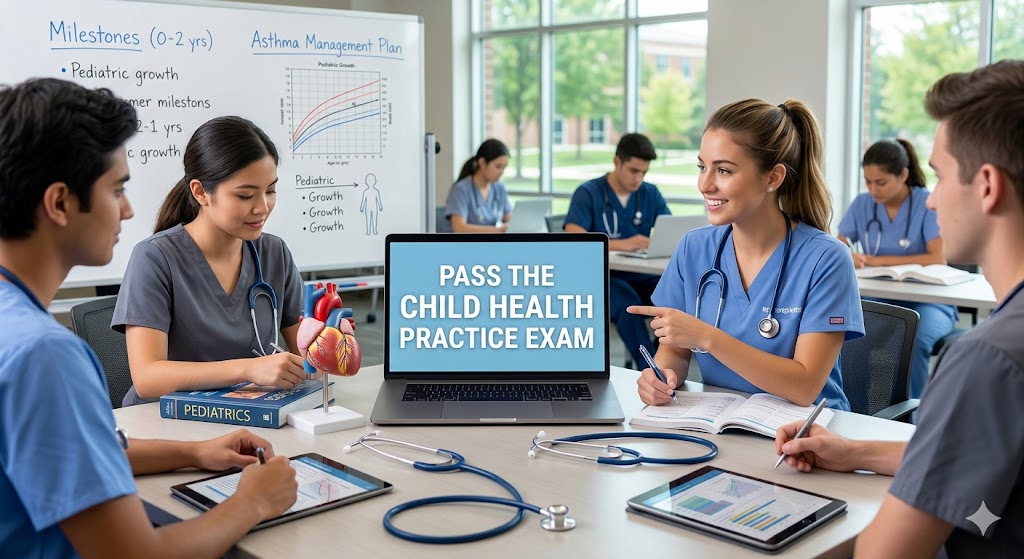
Additional Information
What the Course Entails and Exam Details
The material covered by this practice exam encompasses the core competencies of pediatric healthcare. It is designed to test your understanding of child development, assessment techniques, and the management of both acute and chronic pediatric conditions.
Key topics include: Developmental Stages (from infancy through adolescence), common childhood illnesses (e.g., asthma, infectious diseases, digestive issues), emergency pediatric care, health promotion and preventative care, and specialized procedures. Syllabi typically emphasize family-centered care, therapeutic communication with children and parents, and the management of chronic conditions in young patients. Understanding pediatric pharmacology, dosage calculations, and ethical considerations specific to minors are also core requirements.
What to Expect in the Final Exam
The formal child health certification exam is a comprehensive assessment usually administered in a standardized format, primarily utilizing multiple-choice questions.
Expect the final exam to be rigorous, testing both recall and the application of complex pediatric principles. The number of questions varies by certifying body but typically ranges from 150 to 200 questions, designed to be completed within a 3 to 4-hour time limit. Candidates must achieve a passing score set by the specific credentialing organization (often a scaled score derived from the percentage of correct answers). Specific rules include arriving early, providing valid identification, and strictly adhering to testing center protocol, including restrictions on personal items.
How to Study and Exam Centers
Successful study strategies begin with a structured study plan, utilizing the official examination blueprint and recommended textbooks.
Leveraging comprehensive practice exams is essential; they familiarize you with question types, time constraints, and allow you to track progress. Creating flashcards for key concepts, standard values, and developmental milestones can reinforce memory, while forming study groups provides peer support. The official certification exam is typically taken at professional computer-based testing facilities, such as Pearson VUE centers, located globally. Candidates must register in advance through the certifying body's online portal and schedule their specific time slot at an authorized testing location.
Job Opportunities from the Course
Earning a specialized child health certification unlocks diverse and rewarding career paths in pediatric healthcare. This qualification demonstrates a commitment to excellence and often leads to higher salary potential and increased responsibility.
Job opportunities unlocked by this certification include:
Certified Pediatric Nurse (CPN)
Pediatric Nurse Practitioner (PNP)
School Nurse
Pediatric Clinical Nurse Specialist
Pediatric Emergency Room Nurse
Pediatric Home Health Nurse
Pediatric Unit Manager
Child Health Educator
Clinical Research Coordinator (Pediatrics)
Frequently Asked Questions
Reviews
5.0
Based on 0 reviews
Leave a Review
No reviews yet. Be the first to review!