
Forestry Worker Credential CRI Practice Exam
$69.00
- Buy to unlock unlimited access to all Quiz questions and Answers in this Quiz.
- After purchase you can print a PDF of the whole quiz at any point. The PDF will contain the questions and the correct answers.
About this Exam
The Forestry Worker Credential from the Credentialing Research Institute (CRI) is an essential milestone for individuals looking to build a robust career in forestry and land management.
This certification is meticulously designed for aspiring forestry technicians, conservation workers, and logging professionals.
It validates your foundational knowledge in forest operations, safety protocols, and environmental stewardship.
By earning this credential, you demonstrate to prospective employers that you possess the practical skills and theoretical understanding required to work safely and effectively in diverse woodland environments.
Whether you are just entering the workforce or looking to formalize your years of field experience, this certification serves as a powerful testament to your professional dedication.
Ready to test your knowledge?
Buy Now to Access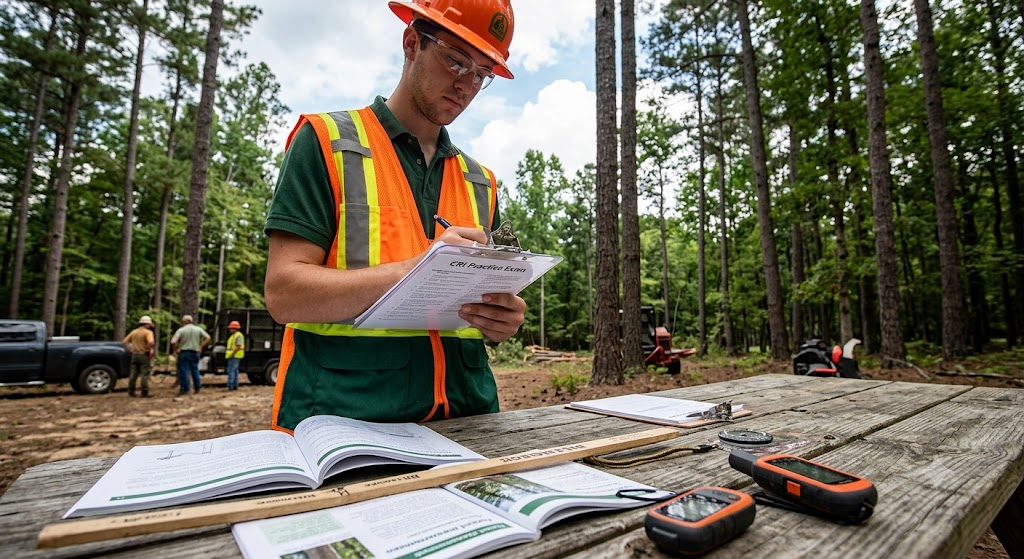
Additional Information
What the Course Entails and Exam Details
Preparing for the Forestry Worker Credential involves mastering a wide array of vital outdoor and analytical skills.
Candidates are expected to have a firm grasp of essential tree identification techniques and basic silviculture practices.
The syllabus heavily emphasizes workplace safety, covering OSHA regulations, hazard recognition, and proper personal protective equipment (PPE) usage.
You will also delve into equipment operation, including the safe handling and basic maintenance of chainsaws and hand tools.
Furthermore, the curriculum covers land navigation, map reading, and compass skills, which are absolutely critical for remote fieldwork.
Environmental conservation principles and best management practices for water quality and soil protection are also core components of the course material.
What to Expect in the Final Exam
The final certification exam is rigorously structured to test both your textbook knowledge and your practical reasoning.
Typically, the assessment consists of a comprehensive multiple-choice written test, often containing between 75 and 100 questions.
You will generally have a strict time limit of 90 to 120 minutes to complete the written portion of the exam.
To achieve certification, candidates must secure a minimum passing score, which is conventionally set at 70% or higher.
In addition to the written test, some testing sites require a practical skills demonstration where you must safely handle equipment and perform field measurements.
You should expect strict proctoring rules, meaning no unauthorized materials, cell phones, or outside assistance will be permitted inside the testing area.
How to Study and Exam Centers
Success on the CRI Forestry Worker exam requires a balanced blend of academic studying and hands-on practice.
Start by thoroughly reviewing the official candidate handbook and utilizing a high-quality practice exam to familiarize yourself with the question formats.
Forming study groups with fellow forestry candidates or seeking mentorship from experienced professionals can significantly boost your retention of complex topics.
Make sure to spend time in the field practicing your tree identification and navigation skills to build muscle memory.
When you are ready to test, exams are typically administered through authorized vocational schools, community colleges with forestry programs, or designated regional testing centers.
Some regions also offer the written portion through secure, proctored online testing portals like Pearson VUE, allowing you to take the exam from the comfort of a qualified local testing facility.
Job Opportunities from the Course
Earning your Forestry Worker Credential unlocks a diverse range of rewarding, nature-focused career paths.
Below is a clear list of the dynamic job titles and opportunities this certification can help you secure:
Forestry Technician: Assist foresters in managing and protecting woodland environments, conducting timber cruises, and collecting vital field data.
Logging Equipment Operator: Safely operate heavy machinery to harvest timber while adhering to strict environmental and safety guidelines.
Wildland Firefighter: Join specialized crews dedicated to preventing, controlling, and extinguishing forest fires, relying heavily on your navigation and safety training.
Arborist Assistant: Work alongside certified arborists in urban forestry to maintain tree health, prune branches, and safely clear debris.
Conservation Worker: Collaborate with state parks and environmental agencies to maintain trails, restore natural habitats, and protect local wildlife ecosystems.
Timber Cruiser: Evaluate forest tracts to estimate the volume, value, and quality of harvestable timber for logging companies.
Frequently Asked Questions
Reviews
5.0
Based on 0 reviews
Leave a Review
No reviews yet. Be the first to review!