
Foundations of Psychiatric Nursing Practice Exam
$69.00
- Buy to unlock unlimited access to all Quiz questions and Answers in this Quiz.
- After purchase you can print a PDF of the whole quiz at any point. The PDF will contain the questions and the correct answers.
About this Exam
The Foundations of Psychiatric Nursing Practice Exam is a pivotal assessment designed for registered nurses seeking to demonstrate their core competencies in psychiatric and mental health nursing. This exam evaluates the knowledge, critical thinking, and clinical decision-making skills essential for providing high-quality, compassionate care to individuals experiencing mental health challenges and psychiatric disorders. The certification is ideal for nurses aiming to specialize in this vital and growing field, recognizing their expertise and commitment to promoting mental wellness.
Ready to test your knowledge?
Buy Now to Access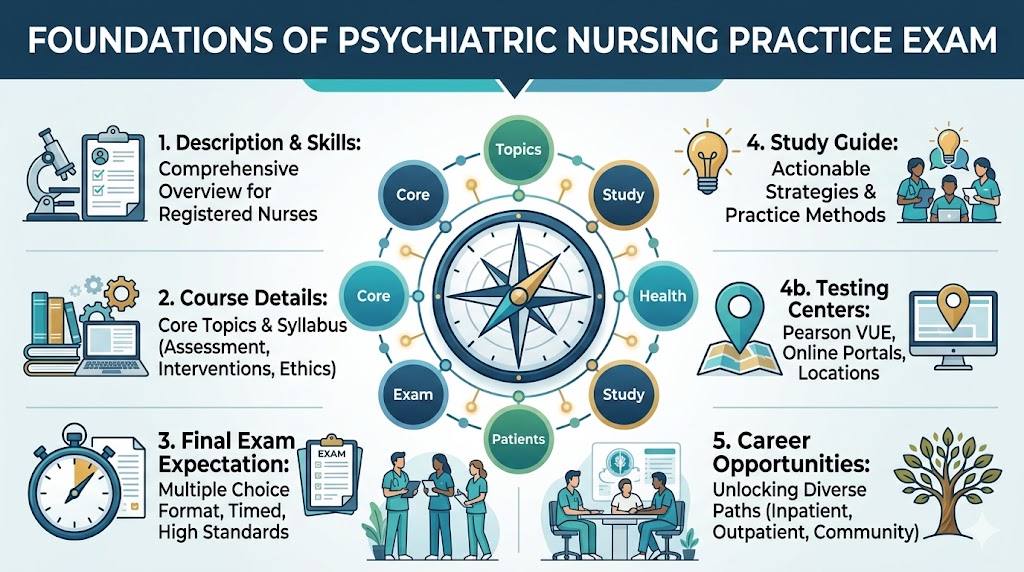
Additional Information
What the Course Entails and Exam Details
This exam covers a comprehensive range of topics fundamental to effective psychiatric nursing practice. Key areas of focus include:
Assessment and Diagnosis: Understanding therapeutic communication, conducting comprehensive mental status examinations, physical assessments within a psychiatric context, and utilizing standardized screening tools for mental health conditions.
Therapeutic Interventions: Principles and techniques for implementing evidence-based psychotherapeutic modalities (individual, group, family), managing psychiatric emergencies (crisis intervention), and promoting patient safety (de-escalation techniques, risk assessment).
Psychopharmacology and Biopsychosocial Interventions: Common psychotropic medications (indications, dosages, monitoring), medication adherence strategies, biological treatments (ECT, MST), and managing side effects.
Legal, Ethical, and Professional Issues: Client rights, confidentiality, informed consent, therapeutic boundaries, advocacy, and ethical frameworks guiding psychiatric nursing practice.
Documentation and Care Planning: Essential components of accurate clinical documentation, developing individualized care plans, interdisciplinary collaboration, and evaluation of patient outcomes.
Cultural Competence and Diversity: Recognizing the impact of cultural beliefs and values on mental health perceptions, seeking to provide culturally appropriate care, and addressing healthcare disparities.
Specific Mental Health Conditions: Understanding and managing various disorders, including anxiety disorders, mood disorders (depression, bipolar disorder), schizophrenia, personality disorders, substance use disorders, trauma-related disorders, and conditions across the lifespan.
What to Expect in the Final Exam
The Foundations of Psychiatric Nursing Practice Exam is typically structured as a comprehensive multiple-choice examination. Here are general details regarding the final exam:
Exam Format: The exam consists of approximately 100 to 150 multiple-choice questions, covering the various domains of psychiatric nursing practice.
Time Limit: Candidates are usually allocated a specific timeframe, typically around 3 to 4 hours, to complete the examination.
Passing Score: The passing score requirements can vary slightly depending on the specific certifying body (e.g., ANCC), but they generally require achieving a predetermined percentage to demonstrate proficiency.
Question Types: Questions are designed to test not only factual knowledge but also critical application and analysis skills through scenario-based clinical questions.
Testing Protocol: Candidates must strictly adhere to the testing center’s rules and regulations, ensuring a secure examination environment.
How to Study and Exam Centers
Preparation is crucial for success on the Foundations of Psychiatric Nursing Practice Exam. Effective study strategies include:
Understand the Exam Blueprint: Thoroughly review the official exam content outline (blueprint) provided by the certifying body to understand the weight assigned to each topic area.
Utilize Official Resources: Use textbooks and official study guides recommended by the certifying organization (e.g., ANCC's Psychiatric-Mental Health Nursing Review and Resource Manual).
Take Practice Exams: Engage extensively with practice exams to familiarize yourself with the question formats, assess your understanding, and improve time management skills.
Develop a Study Schedule: Create a structured study plan that allocates sufficient time for each topic domain, prioritizing areas where you feel less confident.
Join Study Groups: Collaborating with colleagues or joining online forums can provide valuable perspectives and support during your preparation.
Focus on Case Studies: Apply your knowledge by reviewing clinical case scenarios to enhance your clinical reasoning and decision-making abilities.
Exam Centers:
The exam is typically administered through authorized testing centers, often facilitated by organizations like Pearson VUE, which have locations nationwide and internationally. These centers provide a standardized, secure testing environment. In some instances, depending on the certifying body, options for remote proctoring might be available, requiring a stable internet connection and adherence to specific environmental guidelines.
Job Opportunities from the Course
Obtaining certification in Foundations of Psychiatric Nursing Practice opens doors to diverse and rewarding career paths within mental healthcare settings. Common job opportunities include:
Psychiatric-Mental Health Nurse: Working directly in inpatient or outpatient settings providing care to individuals with mental health conditions.
Inpatient Psychiatric Nurse: Caring for patients requiring hospitalization for acute psychiatric crises or stabilization.
Outpatient Psychiatric Nurse: Providing ongoing care, medication management, and support to patients in clinics, community mental health centers, or private practices.
Crisis Stabilization Nurse: Working in emergency departments or dedicated crisis units managing urgent psychiatric assessments and interventions.
Community Mental Health Nurse: Assessing, educating, and supporting individuals in their communities to manage chronic mental illness and prevent relapse.
Correctional Psychiatric Nurse: Providing mental healthcare services within correctional facilities.
Substance Use Disorder Nurse: Caring for patients experiencing addiction and co-occurring mental health disorders.
Geropsychiatric Nurse: Specializing in the unique mental health needs of older adults.
Consultation-Liaison Nurse: Working in general medical hospitals to assess and manage the psychiatric care needs of patients with primary medical diagnoses.
Forensic Psychiatric Nurse: Working at the intersection of nursing and the legal system, caring for individuals involved in criminal proceedings who have mental health conditions.
Frequently Asked Questions
Reviews
5.0
Based on 0 reviews
Leave a Review
No reviews yet. Be the first to review!