
Fresenius Water System Practice Exam
$69.00
- Buy to unlock unlimited access to all Quiz questions and Answers in this Quiz.
- After purchase you can print a PDF of the whole quiz at any point. The PDF will contain the questions and the correct answers.
About this Exam
The Fresenius Water System Certification is a specialized technical credential designed for biomedical technicians, dialysis nurses, and water treatment specialists. As water quality is the most critical component in hemodialysis safety, this program ensures professionals have the advanced knowledge required to operate, monitor, and maintain high-purity water treatment systems.
This certification is designed for those who manage the complex infrastructure that delivers dialysis-quality water. Whether you are seeking to advance your career in a clinical setting or hoping to specialize in biomedical engineering, this course provides the rigorous training necessary to manage compliance, safety protocols, and technical efficiency in Fresenius-based environments.
Ready to test your knowledge?
Buy Now to Access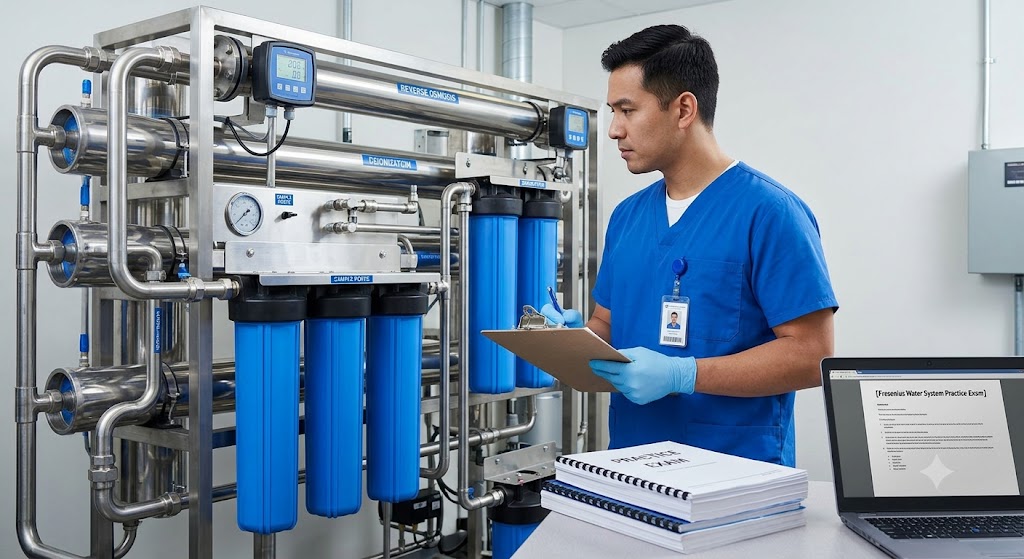
Additional Information
What the Course Entails and Exam Details
This course provides an exhaustive look into the mechanics and chemistry of water purification in a dialysis context. You will learn to navigate the intricate components that convert municipal water into ultrapure dialysis water.
Key areas of study include:
Water Pre-treatment: Understanding the roles of multimedia filters, water softeners, and carbon tanks in removing sediment and chlorine.
Reverse Osmosis (RO) Fundamentals: Mastering the science of semi-permeable membranes, pressure regulation, and rejection rates.
System Monitoring: Learning how to interpret conductivity, total dissolved solids (TDS), and pH levels to ensure adherence to AAMI standards.
Troubleshooting and Maintenance: Developing a systematic approach to identifying flow restrictions, membrane fouling, and mechanical failures.
Regulatory Compliance: Reviewing strict safety protocols mandated for dialysis water systems to prevent patient contamination.
What to Expect in the Final Exam
The Fresenius Water System final exam is designed to test both theoretical knowledge and practical application. It is typically administered as a high-stakes assessment to ensure candidates are ready for real-world scenarios.
Exam Format: The exam consists of multiple-choice questions, which may include situational analysis, diagram labeling, and data interpretation challenges.
Passing Score: Candidates must typically achieve a passing mark of 80% or higher, reflecting the critical nature of patient safety in this field.
Time Limits: You are generally provided with 90 to 120 minutes to complete the assessment.
Rules: The exam is strictly proctored. You will not have access to study notes or external devices. Ensure you review all system protocols thoroughly, as the questions often focus on the "why" and "how" behind specific maintenance actions.
How to Study and Exam Centers
Preparation is the key to success. Because this exam covers highly technical subject matter, relying solely on work experience is often insufficient.
Study Strategies:
Utilize Practice Exams: Engaging with a Fresenius Water System practice exam helps you familiarize yourself with the question style and the depth of technical terminology expected.
Review Technical Manuals: Deeply understand the manuals for the specific RO units and filtration systems you encounter on the job.
Join Peer Groups: Discussing complex technical challenges with other technicians can help solidify your understanding of system troubleshooting.
Exam Centers:
Certification exams are typically managed through secure online portals or designated physical testing centers. Most candidates register through the internal Fresenius educational dashboard or recognized third-party proctoring partners like Pearson VUE, depending on your employer's specific certification pathway. Check with your facility's biomedical department to confirm whether you need to schedule your test through a local authorized training center or via a remote proctoring service.
Job Opportunities from the Course
Earning this certification significantly expands your career horizons within the healthcare sector. It validates your expertise and makes you a high-value asset to any facility utilizing Fresenius systems.
Potential career paths include:
Biomedical Equipment Technician (BMET): Specializing in the maintenance and repair of water treatment systems.
Dialysis Water Treatment Specialist: Dedicated oversight of water quality infrastructure across large clinic networks.
Clinical Engineering Technician: Managing broad medical technology assets, with a focus on life-sustaining water systems.
Facilities Manager (Dialysis Operations): Overseeing the infrastructure and safety compliance of multiple clinical units.
Field Service Engineer: Traveling to different medical sites to install, calibrate, and troubleshoot high-end dialysis equipment.
Frequently Asked Questions
Reviews
5.0
Based on 0 reviews
Leave a Review
No reviews yet. Be the first to review!