
Freshwater Taxonomic Certification Practice Test
$69.00
- Buy to unlock unlimited access to all Quiz questions and Answers in this Quiz.
- After purchase you can print a PDF of the whole quiz at any point. The PDF will contain the questions and the correct answers.
About this Exam
The Freshwater Taxonomic Certification is a specialized credential designed for aquatic biologists, environmental consultants, water quality specialists, and researchers. This certification validates your proficiency in identifying freshwater macroinvertebrates, algae, or fish species to precise taxonomic levels. It is an essential benchmark for professionals working in bioassessment, ecological monitoring, and environmental impact reporting, ensuring that data collected in the field meets rigorous scientific standards.
Ready to test your knowledge?
Buy Now to Access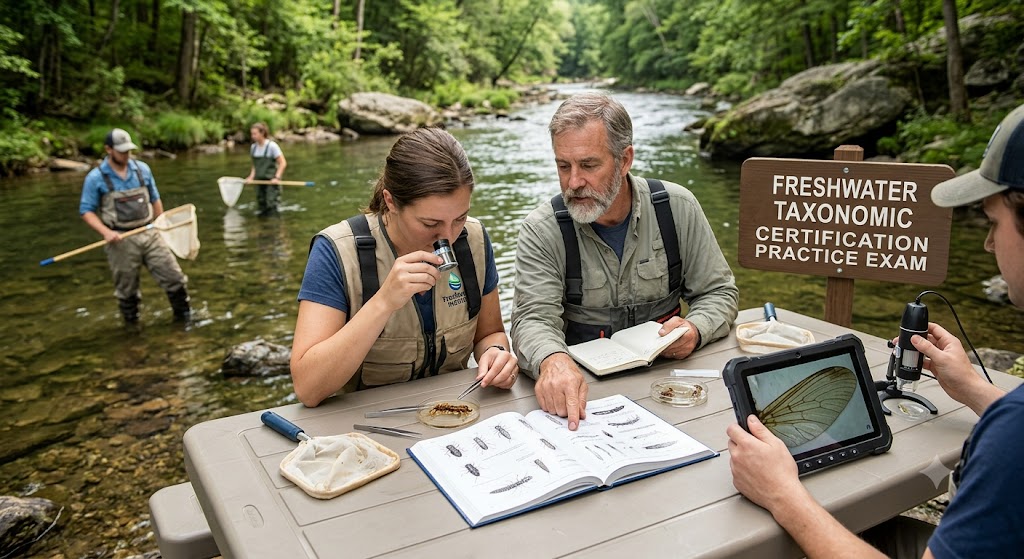
Additional Information
What the Course Entails and Exam Details
This course provides an intensive dive into the morphology, anatomy, and diagnostic characteristics of freshwater organisms. The syllabus typically covers the use of dichotomous keys, regional taxonomy, and the specific life-history traits necessary for accurate identification. You will learn to recognize critical anatomical features—such as gill structures, mouthparts, and abdominal segments—that distinguish closely related species. Furthermore, the coursework emphasizes the practical application of identification skills in environmental health assessments, teaching you how to apply these findings to water quality indices.
What to Expect in the Final Exam
The final exam is a comprehensive assessment of your taxonomic knowledge. It generally consists of a combination of multiple-choice questions, which test your understanding of taxonomic classification and ecological relationships, and a practical identification section. The practical portion often requires you to identify specimens under a microscope or from high-resolution digital images within a strict time limit. Passing score requirements are typically high—often 80% or above—reflecting the precision required for professional work. Time limits vary by level but are designed to test both accuracy and efficiency in your identification process.
How to Study and Exam Centers
To succeed, you should prioritize hands-on practice with preserved specimens, as theoretical knowledge alone is insufficient. Utilize regional identification keys and digital repositories to sharpen your visual recognition of key taxonomic features. Form study groups with peers to practice rapid identification and review problematic taxa that commonly appear in regional water samples. As for exam centers, these certifications are typically hosted by professional organizations, regional environmental agencies, or authorized university laboratories. Depending on the certifying body, exams may be administered in-person at designated workshops or via secure, proctored online portals. Always check the official website of the governing body (such as the Society for Freshwater Science or relevant state agencies) to register for the nearest testing site or proctored digital session.
Job Opportunities from the Course
Earning this certification acts as a professional catalyst, opening doors to highly specialized environmental science careers. Key roles include:
Aquatic Biologist: Conducts field surveys and analyzes freshwater health.
Environmental Consultant: Assists in impact assessments for construction, mining, or restoration projects.
Water Quality Technician: Monitors municipal and industrial water sources for compliance and safety.
Research Technician: Supports long-term ecological studies in universities or government agencies.
Bioassessment Specialist: Translates taxonomic data into actionable ecological reports.
Environmental Field Scientist: Leads sampling teams and oversees biological data collection efforts.
Frequently Asked Questions
Reviews
5.0
Based on 0 reviews
Leave a Review
No reviews yet. Be the first to review!